02 Catalog line · 48x45
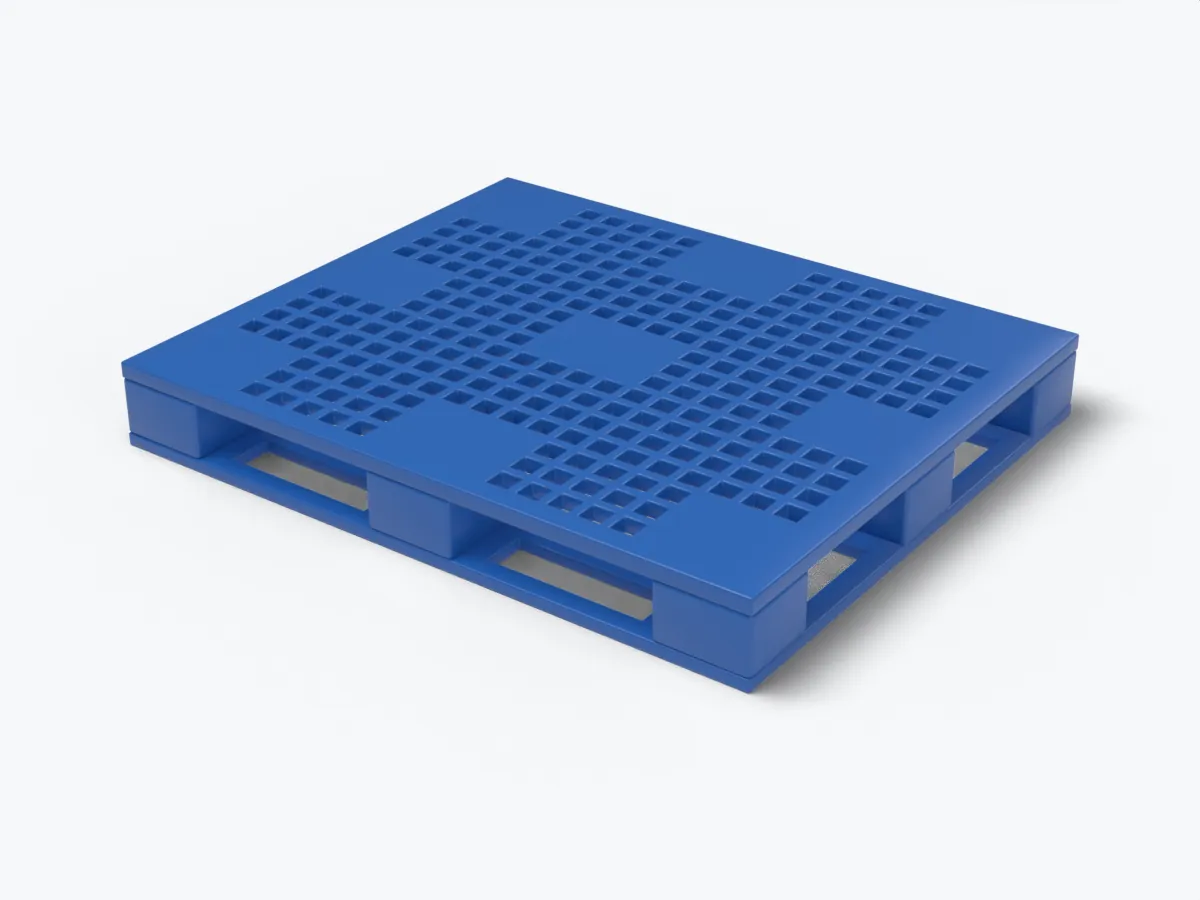
48x45 plastic pallets
48x45 plastic pallets are 48 in long and 45 in wide (1219 x 1143 mm), the footprint automotive parts plants and their returnable packaging loops use. We quote rackable, stackable and heavy-duty 48x45 models; send the parts load, racking plans, quantity and delivery ZIP.
- Dynamic load
- Parts loads run dense; ask for the forklift figure on the exact model
- Static load
- Ask whether the floor rating covers a full sleeve pack stacked on top
- Racked load
- Rack-rated 48x45s exist; confirm the racked load at your beam span
48x45 at a glance
The footprint is 48 in in the runner direction and 45 in across, which is 1219 x 1143 mm. It is 5 in wider than the grocery 48x40, and that extra width is the whole point: it suits the parts racks, totes and bulk containers that the auto trade built for its own lines.
| Item | Figure | How it is worked out |
|---|---|---|
| Length x width | 48 x 45 in | 1219 x 1143 mm |
| 53-ft van, straight | about 26 | 2 across (45 + 45 = 90 in of 100), 630 / 48 = 13 rows |
| 53-ft van, turned | about 28 | 2 across (48 + 48 = 96 in), 630 / 45 = 14 rows |
| 20-ft container | about 8 | 2 across (90 in of 92.4), 231.6 / 48 = 4 rows |
| 40-ft container | about 18 | 2 across, 474 / 48 = 9 rows |
Who uses the 48x45
Automotive is the industry behind this size. Tier suppliers ship stampings, castings, molded trim and wiring harnesses to assembly plants on 48x45 bases, and the empties come back on the same lanes. The size shows up across the Great Lakes auto belt and the newer plants of the Southeast, wherever a supplier feeds a line on a fixed schedule.
Returnable packaging is why plastic took hold here. A pallet that makes dozens of round trips between a supplier and a plant has to come back whole, carry the same tare weight every time, and leave no wood debris near painted or machined parts. A molded 48x45 with a date clock and a part number also makes a fleet easy to count and audit.
Typical loads include door panels, seat frames, brake rotors, bumper fascias, glass, axle shafts and engine castings, each held in dunnage that locates the part on the base.
Types molded in 48x45
Most 48x45 models are built to be racked or stacked under a loaded container, so the catalog leans toward runner and perimeter bases rather than light nestables.
A common pairing is the pallet, sleeve and lid pack: a plastic base, a collapsible sleeve that forms the walls, and a lid. The base is the part that carries the load ratings, so read its sheet, not the sleeve's.
- Rackable bases with three runners or a full perimeter, for selective racking at the plant
- Stackable bases that carry a loaded pack on top of another
- Heavy-duty solid decks for dense castings and machined parts
- Bases with molded pockets or lips that locate a sleeve or bin
- Used 48x45 bases returned from retired parts programs, sold by grade
Returnable loops and fleet tracking
A returnable parts program judges a pallet by trips, not by purchase price. Fleets are tracked by color, hot-stamped part numbers, molded serial plates or RFID tags set in molded pockets, so a plant can count what came back and bill suppliers for losses.
Plants running just-in-time or just-in-sequence schedules depend on empties returning on time. Nestable bases and collapsible sleeve packs take far less trailer space on the return leg than rigid ones.
Clean, dry bases matter near paint shops and electronics assembly, where dust, grease and wood fibers cause defects.
Trailer and container fit in detail
A 53-foot van is about 630 in long and 100 in wide inside. Straight in, two pallets fit across with 10 in to spare and 13 rows go down the length, about 26 positions. Turning them puts the 48 in sides across (96 in) and the 45 in side along the trailer, and 630 / 45 = 14, so about 28.
Containers are tight. Two 45 in sides take 90 in of a 92.4 in interior, so there are about 2.4 in to share between the walls and the pallets. A model that measures over nominal, or a load that bulges past the deck, may not go two across. Mixing orientations does not help here, since 45 + 48 = 93 in is too wide. At 2 across, a 20-foot box holds about 8 and a 40-foot box about 18.
Where 48x45 is used, and where it is not
This is a North American size. European and Asian auto plants run on metric footprints, so a part shipped overseas on a 48x45 usually meets a receiver set up for something else. For export programs, compare the 1200x1000 footprint, which loads a container better and matches more overseas racks.
Inside the US, a 48x45 sits in standard selective racking set for 48 in deep loads, and a pallet jack enters it the same way it enters a 48x40. Grocery and retail distribution centers rarely want it, so do not plan on mixing 48x45s into a 48x40 network.
Ontario, Mexico's Bajío region and the US auto plants trade parts on the same bases across the USMCA lanes.
Quoting a 48x45 fleet
Give us the part or container that rides on the base, the heaviest gross load, whether bases are racked and at what beam span, the deck and any locating features, the quantity and the plant's delivery ZIP. We send back by email the models or used grades that meet it, each with a delivered price. Fleet orders travel on a 53-foot van; small replacement orders go LTL.
Questions buyers ask
What is a 48x45 pallet used for?
Mainly automotive parts and returnable packaging between suppliers and assembly plants. The extra 5 in of width over a 48x40 suits the racks and containers that trade built.
Will 48x45 pallets fit two across a shipping container?
Usually, with the 45 in sides across, but only about 2.4 in is left over in a 92.4 in interior. Check the model's overall size before you count on it.
Can I use 48x45 pallets in a grocery DC?
It is not the size those buildings expect. Grocery and retail distribution run on 48x40.
Can 48x45 bases carry RFID tags?
Many returnable models have molded pockets for RFID tags or labels. Ask which tag format the pocket takes before you order.
Sources
Last reviewed November 8, 2026.