00 Company
About Plastic Pallets For Sale
Plastic Pallets For Sale is a US catalog and quote desk for new and used plastic pallets, listed by footprint, deck and the loads each maker publishes, with a buy-back route for surplus and cracked ones. Buyers send their load case and delivery ZIP; sellers send count, condition and pickup ZIP; we answer both by email.
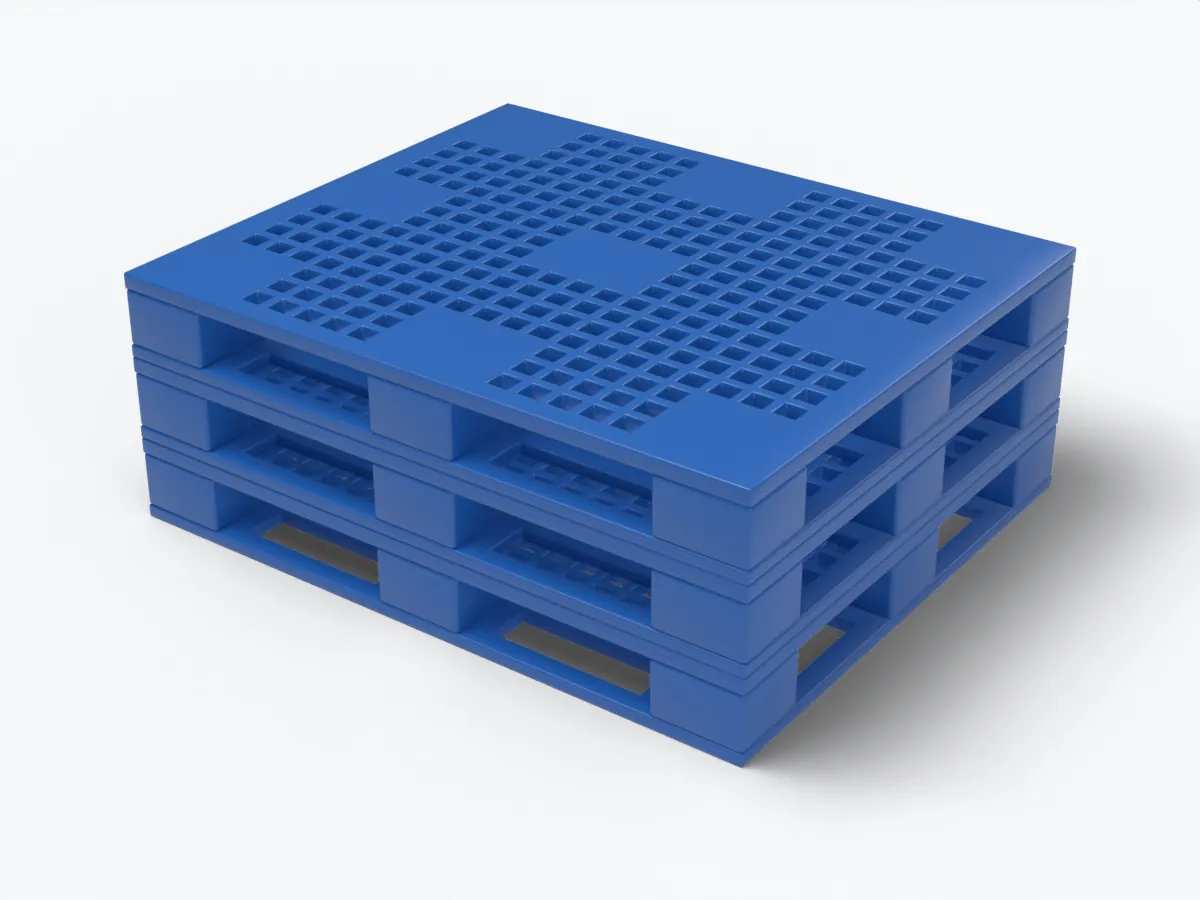
What the desk does
We list plastic pallets the way a parts catalog lists parts: by type, by footprint and by the three rated loads. Nestable, rackable, stackable, food-grade, pharmaceutical, export, RFID, drum and cleanroom pallets each have a page that says what the type is built for and where it falls short.
Buyers come to us with a job for a pallet: a rack in a cold room, a washdown line, a container to a country that inspects wood, a returnable loop between two plants. We match the job to models and used grades and quote each line delivered. When a fleet comes out of service, the same desk buys it back as pallets or as regrind.
Sizes run from quarter and half display decks up to square drum footprints and the ISO metric export sizes.
Why plastic pallets get their own catalog
Wood pallets are sold by the stack, and one 48x40 stringer pallet is much like the next. Plastic ones aren't. Each comes out of an injection mold or a thermoforming line as a numbered model, identical shot after shot, with a resin code and a date clock molded into the underside.
That makes a plastic pallet something you can specify. Its weight, entry, deck pattern and rated loads are printed on a drawing with a title block, the way a bearing or a valve is. Buying one from a wall of photos throws that advantage away, so our pages lead with the spec strip and keep the pictures as drawings.
How a quote works
A quote starts with the buyer's load case, not with a photo grid. The request form asks for the footprint, the pallet type if you know it, the deck, the heaviest load per pallet and whether it sits in a rack, the quantity and the delivery ZIP.
We reply by email. The reply names the models or used grades that meet the load, gives the rating each one is sold on, and states a delivered price for each line. Full truckloads ship on a 53-foot van; smaller orders ship LTL. A quote is an offer that both sides confirm in writing before anything ships.
Selling runs the other way. A seller sends the count, footprint, resin if known, condition and pickup ZIP. Our reply is an offer for the lot as pallets, as regrind or split between the two.
What we claim, and what we don't
A catalog is only useful if its numbers can be trusted, so we hold to a short set of rules.
- Load ratings come from the maker's spec sheet for the exact model. We don't print a blanket figure for a type, because ratings vary widely between models of the same footprint.
- Used grades are our own, written in plain words: Grade A, Grade B and mixed lots each have a definition on the used pallets page, and we apply them the same way when we buy and when we sell.
- We don't call a pallet FDA approved, because that is not an FDA status. The resin rules in 21 CFR 177.1520 cover olefin polymers for food contact; a finished pallet's food-contact standing depends on its maker's documentation.
- We don't claim ISPM 15 compliance for plastic pallets, because the standard covers wood packaging and plastic pallets fall outside it.
- We don't quote prices on the site, promise stock or promise delivery dates in advance; every quote is written for its own order and states its own terms.
- We don't claim certifications, reviews or credentials we can't show you.
Who we work with
Most requests come from food and beverage plants, cold storage operators, pharmaceutical and medical device distributors, contract laboratories, exporters and freight forwarders, automotive and chemical shippers, and grocery and retail distribution centers. On the sell side, they come from facilities holding surplus, worn or cracked pallets: closed DCs, ended returnable programs, plants that changed footprints. Typical first-time plastic buyers are swapping out splintered wood in a sanitary area, or tired of rejected export shipments, and want a plain explanation before committing a budget.
We are not the right desk for a single pallet for a home project, for wood pallets, or for liquidation lots of merchandise sold on pallets.
How to reach us
The quote and sell-back forms are the fastest route, since they ask for everything we need to answer in one reply. For anything else, write to info@plasticpalletsforsale.com. We answer by email so every detail of a quote or an offer stays in writing. Attach drawings, rack placards or customer specifications whenever they exist; precise inputs earn precise replies.
Questions buyers ask
Do you manufacture plastic pallets?
No. We list and quote models from makers' published ranges and source used pallets by grade, so every rating we give comes from the maker of that model.
Do you ship outside the United States?
Our quotes are for delivery to US addresses. Export pallets bought here travel abroad under your own freight, and their footprint should match the container or the receiving country's standard.
Can I see a used lot before I buy?
We don't run a showroom. Ask for photos of the deck, underside and stacks with your quote, and read the grade definitions, which say exactly what each grade allows and rules out.
Is my request shared with anyone?
Only with the suppliers or buyers needed to answer it, such as the source of the pallets or the carrier quoting freight. The privacy policy explains what is kept and why.
Are you affiliated with a particular maker?
No single maker. Quotes can name models from different manufacturers, chosen because their published ratings suit the load.
Sources
- USDA APHIS: wood packaging material and its alternatives
- Cabka: plastic pallets for export and ISPM 15
- 21 CFR 177.1520: olefin polymers in food-contact articles
Last reviewed November 8, 2026.