06 Sell side
How plastic pallet buyers price a lot
A plastic pallet buyer prices a lot from its footprint, maker and model, grade mix, resin, count, pickup location and how it loads, then subtracts freight and sorting. Send those details with photos through the sell-back form, and our emailed offer shows how each one moved the number.
The arithmetic behind an offer
Every buyer runs the same rough sum, even if it never shows the working. It starts with what the lot will bring once resold or ground, and works back to what it can pay you.
First, the buyer estimates the sort: how many pallets will resell as Grade A, how many as Grade B, and how many go to regrind. Second, it puts a resale value on each whole grade and a weight value on the regrind share. Third, it subtracts the costs of getting there: the truck to your dock, the labor to sort and strip, the freight on to the next buyer, and a margin for the risk that the lot isn't what was described.
That is why two lots with the same count can earn very different offers. The count is only one input of many.
What raises and lowers an offer
| Factor | Raises the offer | Lowers the offer |
|---|---|---|
| Footprint | 48x40, the size most US buyers run | Odd or regional footprints with few buyers |
| Maker and model | A current model from a known maker, with its rated loads on the maker's sheet | Unknown or discontinued models nobody can match |
| Grade mix | Mostly Grade A, whole and clean | A high share of cracked or repaired pallets |
| Resin | One resin, code 2 or code 5, read from the underside | Mixed HDPE and PP with no way to tell them apart |
| Type | Rack-rated and heavy-duty models | Light one-way export nestables |
| Count | Enough to fill a 53-foot van | A partial lot that shares a truck or waits |
| Location | A pickup ZIP near buyers, recyclers or a main freight lane | Remote sites far from any buyer |
| Loading | Dock-height loading with a forklift, stacks of one model | Floor-loaded by hand, loose or tangled stacks |
| Branding | Plain pallets or a removable label | Hot-stamped logos a new owner may not want |
| History | Dry goods, clean storage | Chemical, oil or heavy food residue |
Footprint, model and resin
The footprint decides how many buyers can use the pallet. A 48x40 fits the grocery and general distribution systems that run most US freight. A 48x45 has a narrower market in automotive parts, and a 40x40 sells mainly to dairy. A footprint with fewer buyers is worth less because it takes longer to place.
The maker and model decide whether a buyer can trust the pallet. When the model number is legible, a buyer can find its spec sheet and see the dynamic, static and racked loads it was designed for. That makes it far easier to resell than a pallet of unknown design.
The resin decides the floor value. Even a whole lot that nobody wants as pallets is still worth its weight in regrind, and a known single resin keeps that floor high.
Grade and age
Grade is the biggest swing on a whole lot. Our Grade A means a whole deck, intact runners or legs, no repairs and clean enough for its next use. Grade B is structurally sound but marked by scuffs, old labels, faded color or light wear. A cracked pallet is no longer graded as a pallet at all; it is priced as resin.
Age is read from the date clock molded into the part. Age alone doesn't set the grade, but a buyer looks at it, since an older pallet has spent more years under forklift traffic and ultraviolet light. Photos of a few date clocks from different stacks tell a buyer whether the lot was bought at once or built up over time.
Count, location and loading
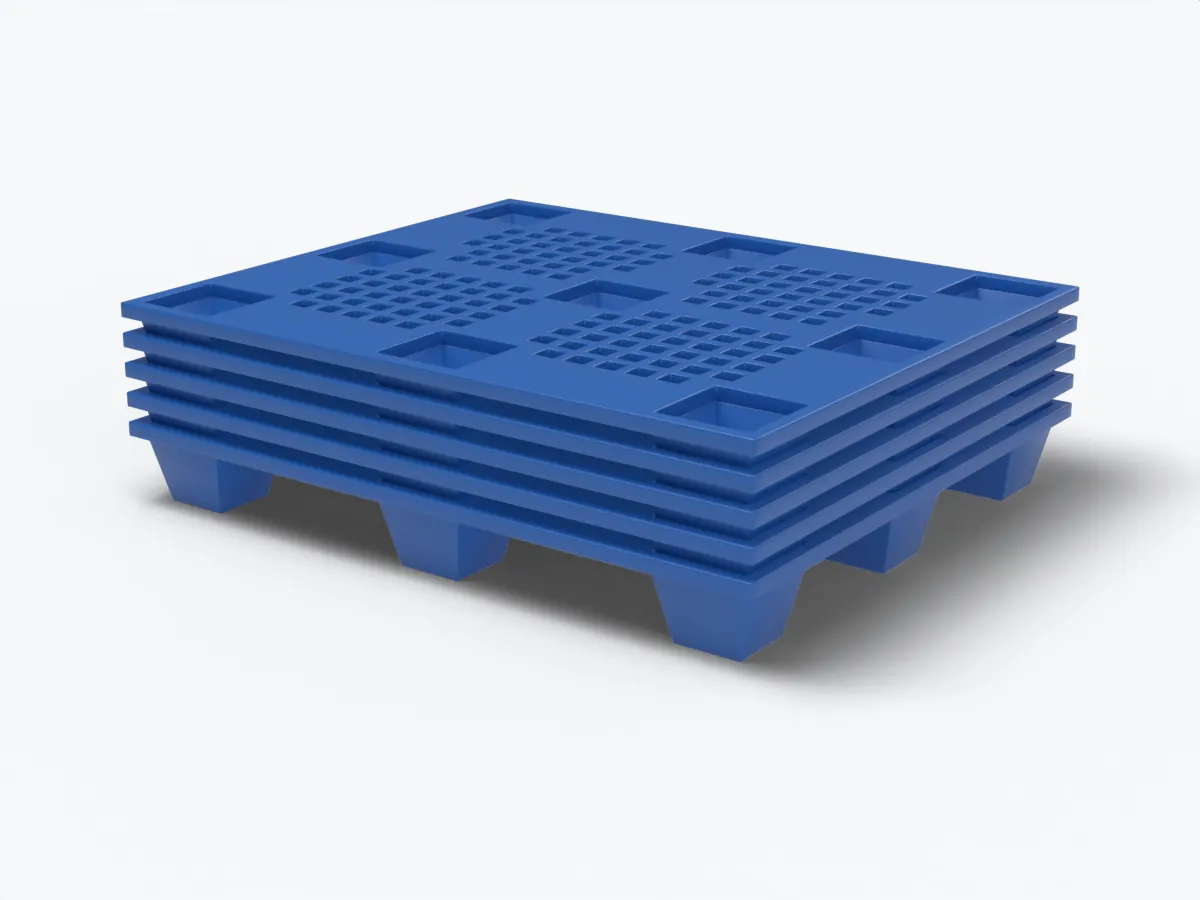
Freight is often the largest cost in a lot, so anything that makes the pickup cheaper raises the offer. A full trailer spreads one truck across many pallets. Nestable pallets ship far denser than stackable or rackable ones, so a nestable lot fills a trailer by cube long before a rackable lot does.
Location works the same way. A pickup ZIP near a metro, a port or a main interstate is easier to serve than a rural one, and a site near a recycler can sell its broken share without a long haul.
Loading is the last piece. A dock door and a forklift let a driver load in one visit. Pallets stacked by model and banded load faster than a mixed heap, and every hour saved at the dock comes off the buyer's cost.
Getting the most from your lot
You can't change your footprint or your resin, but most of the rest is in your hands before anyone quotes.
- Sort whole pallets from cracked ones and count each group.
- Stack each model and footprint separately, so the photos show what the buyer will load.
- Photograph the deck, the underside with its resin code and date clock, and one typical stack.
- Hold a partial lot until it fills a van if more pallets are coming out of service.
- Say plainly what the pallets carried, so nothing changes at the dock.
- Ask every buyer how it handles pallets that don't match the description, and compare offers on the same terms.
Questions buyers ask
How much is a used plastic pallet worth?
There is no fixed figure; it depends on footprint, model, grade, count and pickup location. Send those details and we answer with an offer that explains each line.
Why did my offer change after pickup?
Usually because the sort on arrival didn't match the description, for example more cracked pallets than expected. Our offers say in advance how a mismatch is handled.
Do nestable pallets sell for less than rackable ones?
Light export nestables usually do, since they are built for one trip. Heavy-duty nestables of a current model can sell well, and they are cheap to move because they ship densely.
Does the color of the pallets matter?
Somewhat. A buyer topping up a fleet wants a matching color, and recyclers prefer natural or light colors that can be recolored.
Can I negotiate an offer?
Yes. Point out anything the description missed, such as a forklift on site, more pallets coming, or a newer date clock range, and the offer can be revisited.
Sources
Last reviewed November 8, 2026.