02 Catalog line · 36x36
36x36 plastic pallets
36x36 plastic pallets are a 36 in square (914 x 914 mm), a compact footprint the beverage trade lists as a standard and that suits small, dense loads in tight spaces. We quote stackable and nestable 36x36 models, new or used; send the load, weight, room, quantity and delivery ZIP.
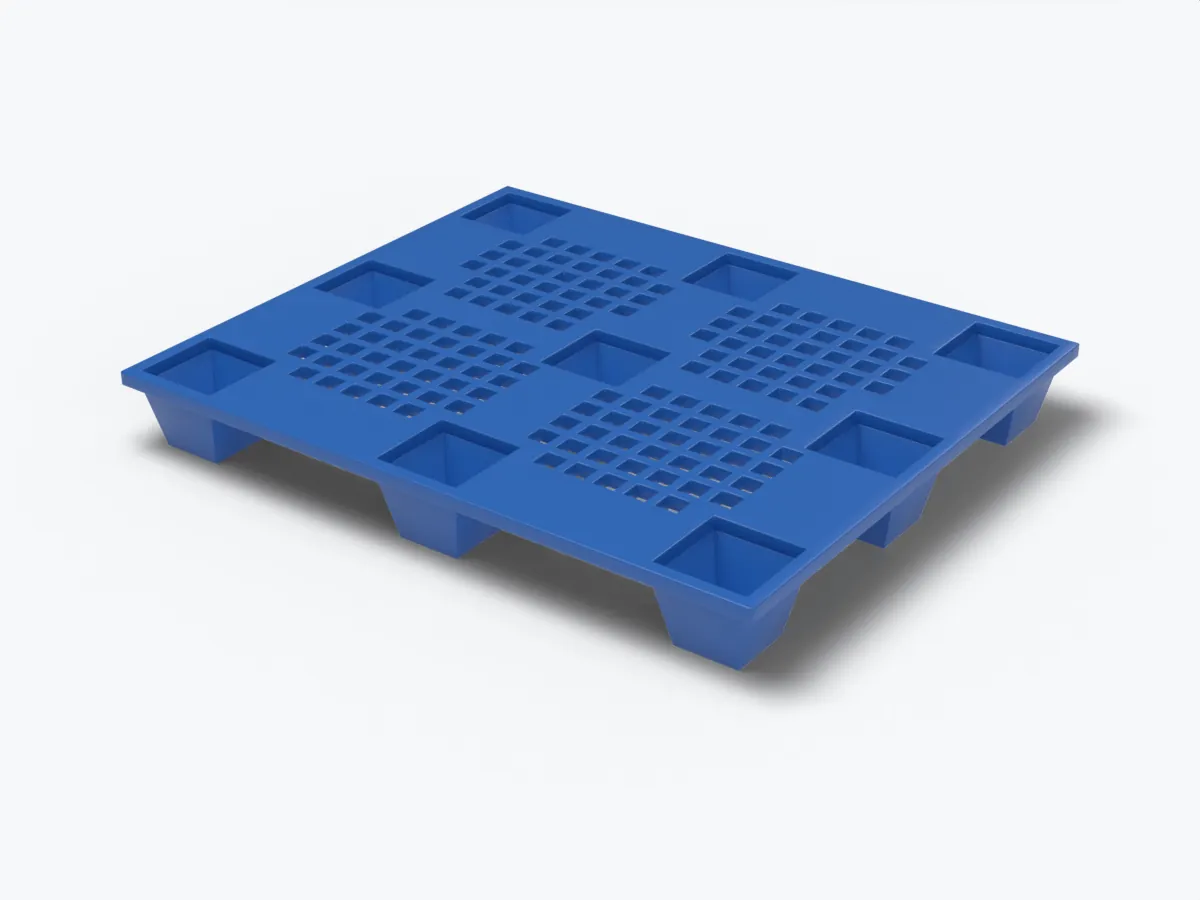
- Dynamic load
- Small but often heavy for its deck; ask for the forklift figure
- Static load
- Ask what the floor rating allows when loaded squares are stacked
- Racked load
- Few 36x36s are rack-rated, and most racks are too deep; ask first
Size, metric equivalent and floor counts
Each side measures 36 in, or 914 mm. The deck has about 1,296 square inches of surface, roughly two thirds of a 48x40's 1,920. Because it is square, any face can lead into a trailer, an elevator or a rack bay.
| Item | Figure | Working |
|---|---|---|
| Footprint | 36 x 36 in | 914 x 914 mm |
| Deck area | 1,296 sq in | 36 x 36 |
| 53-ft van | about 34 | 2 across (72 in; 3 would need 108 of 100), 630 / 36 = 17.5, so 17 rows |
| 20-ft container | about 12 | 2 across (72 in of 92.4), 231.6 / 36 = 6.4, so 6 rows |
| 40-ft container | about 26 | 2 across, 474 / 36 = 13.2, so 13 rows |
Beverage and other small-square users
Pallet size tables list 36x36 under beverage. It suits short stacks of cases, syrup and concentrate boxes, and bag-in-box product headed for restaurants, bars and convenience stores, where a full 48x40 would not fit through the back door or would block an aisle.
Outside beverage, the square earns its place in buildings with little room to spare: freight elevators, mezzanines, older city warehouses with narrow doors, and production cells where parts sit beside a machine. It also works as a base for a single tall item, such as a small tank, a cabinet or a coil, that would leave most of a larger deck empty.
Craft brewers, distillers and soft-drink distributors use small squares for short runs to bars and restaurants, where cases and syrup boxes go in through a side door or down a basement ramp.
Types molded at 36x36
Few makers mold a 36x36, and the models that exist are mostly light to medium stackables and nestables. Read each one's sheet for its three loads; the small deck does not mean a small rating, and it does not mean a large one either.
- Nestable 36x36s with nine legs, for delivery loops where empties ride back in a short stack
- Stackable models with runners or a perimeter frame, for loaded floor storage
- Solid decks for small cartons that would tip into an open grid
- Open-grid decks for wash-and-return use in food and drink
- Used 36x36s, which turn up only now and then and in small lots
Packing a trailer with 36 in squares
A 53-foot dry van is about 100 in wide inside, so two 36 in pallets fit across with 28 in left over and a third would need 108 in. Along the 630 in length, 630 / 36 = 17.5, giving 17 rows and about 34 floor positions. The leftover width is wasted on a full 36x36 load; on a mixed load it can take a row of narrower freight.
Containers work out evenly too. The 92.4 in width takes two across with room to spare. A 20-foot box at about 231.6 in long holds 6 rows, about 12 pallets, and a 40-foot box at about 474 in long holds 13 rows, about 26.
Racks, jacks and the short deck
Standard US selective racks use frames about 42 in deep, built for 48 in pallets. A 36 in pallet cannot reach both beams in that bay, so it needs wire decking, crossbars or a rack set up for shallow loads. Do not rack a 36x36 on bare beams.
Pallet jacks need care as well. Common jack forks are 42 to 48 in long, longer than the pallet, so the fork tips stick out the far side. That is harmless in open floor space and a hazard when the next pallet is close behind. Shorter forks are made for small pallets.
| Equipment | Issue | Fix |
|---|---|---|
| Hand pallet jack, 48 in forks | Tips stick out 12 in | Short 36 in forks |
| Counterbalance forklift | Tines may spear the next load | Fork positioner or careful approach |
| Selective rack, 42 in frames | Deck cannot reach both beams | Wire decking or crossbars |
| Freight elevator | Small cab and door | The square turns in less room |
| Hand truck or dolly | Low clearance under the deck | Ask for entry height on the drawing |
| Walkie stacker or reach truck | Straddle legs need clear sides | Check entry width and underside clearance |
| Scissor lift table | Small platform | A 36 in deck centers easily on compact tables |
Resin, region and end of life
36x36 is a North American size; overseas receivers rarely use it. Most are injection molded from HDPE, resin code 2, or PP copolymer, resin code 5, with the code and a date clock on the underside. When a small-square fleet is retired, cracked units still have value as regrind, and whole ones can be sold back as pallets.
Before selling, strip shrink film, banding, labels and leftover cardboard so the lot grades cleanly.
Asking for 36x36 pallets
Tell us what rides on the pallet and its heaviest weight, where it is stored, whether you need a solid or open deck, the quantity and the delivery ZIP. We email back the models or used grades that fit with a delivered price. A truckload ships on a 53-foot van; a few dozen ship LTL.
Questions buyers ask
What are 36x36 pallets used for?
Beverage is the trade most often listed for them. They also suit small, dense loads in tight buildings, such as freight elevators and narrow docks.
How many 36x36 pallets fit in a 53-foot trailer?
About 34 one high: 2 across the 100 in width and 17 rows down the 630 in length.
Can I put a 36x36 pallet in a standard rack?
Not on bare beams. A 36 in pallet cannot span a typical 42 in deep frame, so it needs decking or crossbars, and a published racked load.
Is 36x36 a good export size?
It fits containers evenly, but it is not a standard footprint for most overseas receivers. Check what the consignee's racks and handling expect.
What resin are 36x36 plastic pallets made of?
Most are HDPE or PP copolymer. The resin code molded on the underside tells you which: 2 for HDPE, 5 for PP.
Sources
Last reviewed November 8, 2026.