01 Catalog line
Grade B used plastic pallets
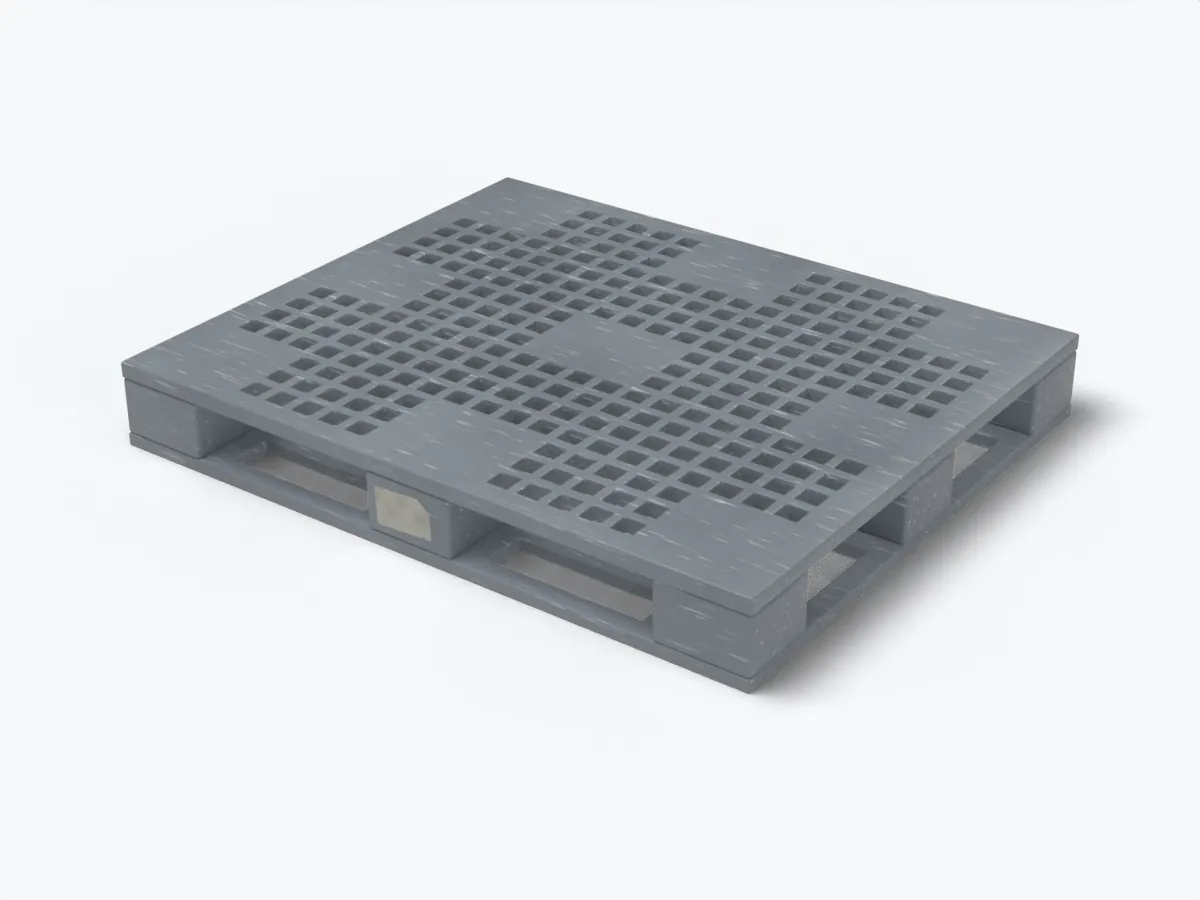
Grade B used plastic pallets are structurally sound, with a whole deck and straight runners or legs, but they carry scuffs, old labels, faded color or minor surface wear. Send the footprint, heaviest load and delivery ZIP, and we'll quote Grade B loads for floor storage, internal moves and one-way shipping.
- Dynamic load
- Use the original model's figure with a wider margin than Grade A
- Static load
- Floor stacking is its main job; keep loaded tiers inside the sheet
- Racked load
- Not for racking unless the model was rated and each pallet checked
Sound structure, honest wear
Grade B is the working grade. Every pallet in a Grade B load has a whole deck and straight legs or runners, and it will carry what its model was built to carry on the floor. What separates it from Grade A is appearance: it has been used hard enough to show it, and nobody has tried to hide that.
The line between Grade B and the cracked pile is structural. A crack that runs through the deck, a missing leg, a broken runner or steel showing through the plastic takes a pallet out of the grade entirely. Those pallets aren't sold for reuse; they go to regrind.
| Condition | In Grade B | Out of Grade B |
|---|---|---|
| Deck surface | Scuffs, fork scrapes, shallow abrasion | A crack through the deck or a hole |
| Color | Faded from sun, uneven between pallets | Chalky, brittle surface that flakes |
| Labels and marks | Old shipping labels, marker writing, placard residue | Nothing; labels never fail a pallet |
| Legs and runners | All present and straight, worn edges | Missing, split or bent |
| Corners and blocks | Rubbed or slightly chipped | Split through or broken off |
| Reinforcement | Covered | Exposed or cut steel |
| Repairs | None | Any repair at all |
Reading the wear
Most Grade B wear is cosmetic and tells a story. Fading means the pallets spent time in an open yard. Layers of labels mean they shipped outbound and came back many times. Fork scrapes along the entry openings are what any working fleet shows.
One kind of wear deserves a second look. Plastic that has had years of ultraviolet exposure can turn chalky on the surface before it shows any crack, and that surface is more brittle than the plastic beneath it. Faded but smooth is fine. Faded and powdery under a thumb belongs nearer the end of its life, and isn't Grade B.
Grade B and racks
Grade B is not for racking unless it has been checked, and checked means more than a glance. The model must be identified from its markings and must have been rack-rated by its maker. Each pallet that goes into a rack must sit flat, have straight runners and show no cracking at the runner joints or corner blocks. Then the load should stay well inside the model's published racked figure.
Most buyers skip all that and use Grade B on the floor, which is what it suits best. If the job needs racks, Grade A of a rack-rated model saves the inspection.
Jobs that suit Grade B
Seasonal peaks suit it too. A retailer or grower who needs extra pallets for a harvest or holiday surge can buy a load for the season without tying capital up in a new fleet. And unlike worn wood, a worn plastic pallet doesn't splinter, shed nails or soak up spills, so even a scuffed one is kinder to cartons and to hands.
Grade B suits less well wherever the pallet is part of the presentation, such as a retail floor display, and wherever a machine expects identical bases, such as an automated storage system. It is also not the grade for direct food contact, since its history and resin paperwork are unknown.
- Block-stacked floor storage in warehouses and plants
- Work in progress moving between machines and stations
- Outbound one-way shipments that won't come back
- Export loads, where plastic needs no ISPM 15 treatment and looks matter less
- Staging and outdoor yard storage
- Replacing worn wood in back rooms and dry storage
Making Grade B presentable, and what it saves
Old labels peel more easily when warm; a heat gun or a pass through a washer softens the adhesive, and a plastic scraper avoids gouging the deck. Marker writing usually lifts with isopropyl alcohol. Faded color can't be restored, but it changes nothing about how the pallet works. Many buyers simply apply their own label over the old ones, or stencil a site code on the block faces.
Grade B costs less because you pay for structure rather than looks. How much less than Grade A depends on the footprint, on demand at that moment and on how many matched loads are around.
What a Grade B load looks like
A Grade B load is usually one model, sometimes a few close models of the same footprint and base style, so stacks build evenly and the pallets handle alike. Expect color to vary through the load, from near-new to sun-bleached, and expect labels you will want to peel or cover before outbound use.
To order, send the footprint, your heaviest load and how high loaded pallets will stack, the quantity and the delivery ZIP. We reply by email with the Grade B loads that fit, the models in each, and a delivered price on a 53-foot van or by LTL.
Questions buyers ask
Is Grade B weaker than Grade A?
Grade B pallets are structurally sound, so on the floor they work to their model's ratings, with a wider margin for age. The difference is mostly appearance and how much checking racking would need.
Do Grade B pallets have cracks?
No. A crack through the deck or base takes a pallet out of Grade B, and those go to regrind instead.
Will Grade B pallets have old labels on them?
Often, yes. Old shipping labels and marker writing are allowed in Grade B, so plan to remove or cover them for outbound loads.
Can Grade B pallets be used outdoors?
Yes, they are often bought for yards, where further fading doesn't matter. Check for a chalky surface on any pallet that has already spent years in sunlight.
Do Grade B nestable pallets still nest?
Yes, wear rarely stops legs from nesting. A slightly deformed leg can make a stack lean, so build tall stacks of empties with care.
Sources
- USDA APHIS: wood packaging material and its alternatives
- Cabka: plastic pallets for export and ISPM 15
- 21 CFR 177.1520: olefin polymers in food-contact articles
Last reviewed November 8, 2026.