01 Catalog line
Plastic pallets with RFID tags and pockets
Plastic pallets with RFID carry passive UHF tags in molded pockets, or have the pockets ready for tags you fit, so a pooled or returnable fleet is counted at the dock door instead of label by label. Send footprint, load, tag requirement and fleet size, and we'll quote models whose option list includes RFID.
- Dynamic load
- From the base model's sheet; confirm the RFID version shares it
- Static load
- Same source; tag pockets are part of the mold, so ask if it differs
- Racked load
- Only if the base model is rack-rated; steel inserts can block reads
What RFID on a plastic pallet means
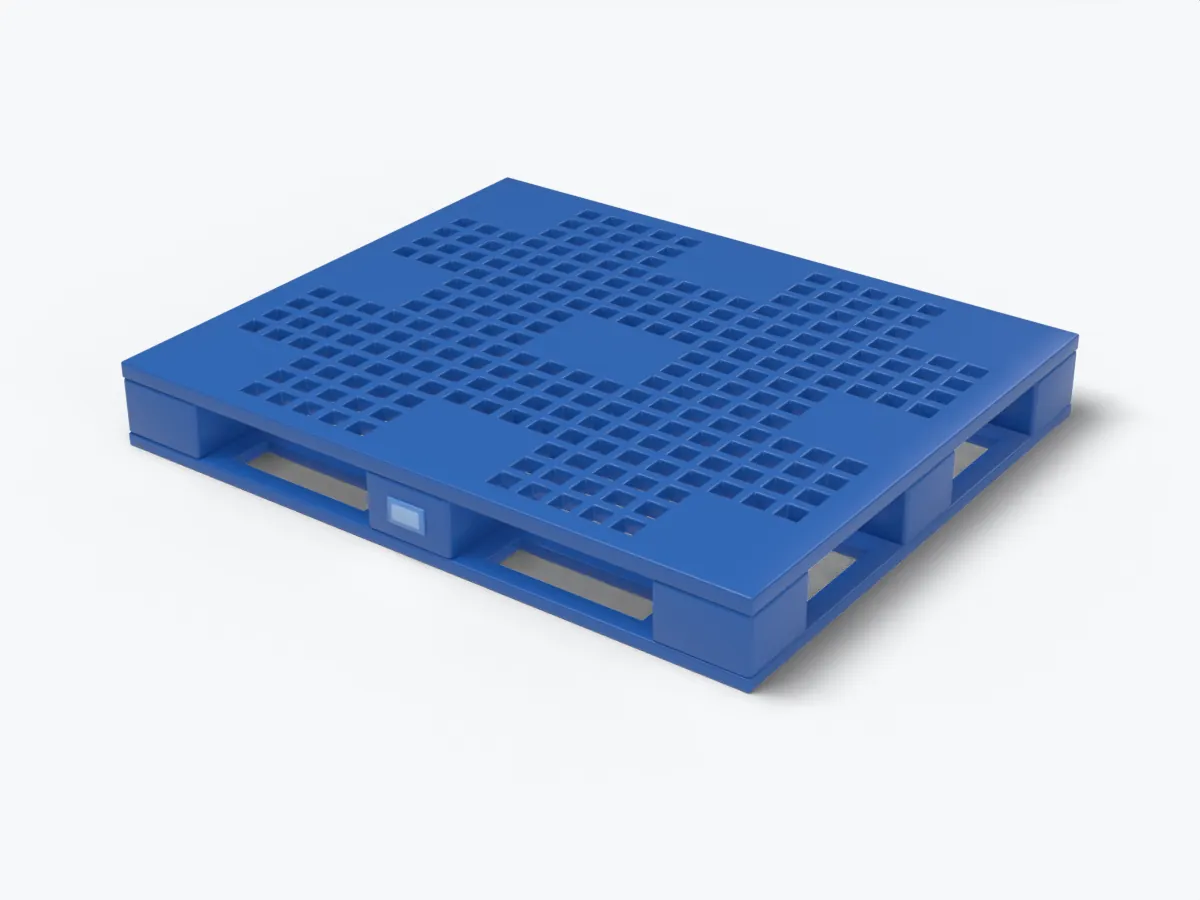
RFID is an option on a pallet model, not a separate type. The pallet underneath is a nestable, stackable or rackable model with its own footprint and ratings. What the option adds is one or more tags, usually passive UHF tags to the EPC Gen2 air protocol, that a reader can pick up from a distance without a line of sight.
Plastic suits RFID better than wood does in one practical way: the tag can sit inside a pocket molded into a block or the deck edge, sealed against forks, weather and washers. The maker designs the pocket into the mold, so the tag stays in the same place on every pallet in the fleet and readers can be tuned to it.
The heavy-duty nestable 40x48 we cite elsewhere lists RFID compatibility among its options, next to colors and hot-stamped logos. That is the usual pattern: you buy the model, then choose the RFID option from the maker's list.
Encoding and numbering a fleet
Each tag holds a number. For returnable assets the GS1 standard is the GRAI, the Global Returnable Asset Identifier, which pairs your company prefix with an asset type and a serial number. Some buyers use their own scheme instead. Either way, decide before the order who encodes the tags: the maker at molding, a tag supplier, or your own team after delivery.
Most fleets also want a human-readable backup. Hot-stamped serial numbers, a printed barcode label and the molded date clock all let a pallet be identified when a tag can't be read. A fleet register that ties each serial to its date of manufacture makes replacement planning straightforward.
- Tag standard and memory size, if your system needs a specific one
- Encoding scheme: GRAI or your own, and who writes it
- Number of tags per pallet and their placement
- Serial range, hot-stamp and barcode text
Where RFID pallets fit, and where they don't
RFID pays where the same pallets cycle between known sites and somebody needs to know where they are: a plant shipping to its own DCs, a supplier loop to an assembly line, a food processor that wants every pallet back. Readers at dock doors count loads in and out, and losses show up as gaps in the serial list rather than as a shortfall at year end.
It pays less on one-way shipments, where the pallet never returns to be read again. It also has physics to respect. Steel reinforcement, metal loads and liquids near a tag can weaken or block a read, so a rack-rated model with steel tubes should have pockets placed away from the metal, and the maker should say how the tag reads on that model.
RFID options are most common on 48x40 and 40x48 models in grocery and manufacturing loops, and on 48x45 automotive pallets that circulate between suppliers and assembly plants. Readers come in three common forms: fixed portals at dock doors, handheld units for cycle counts, and readers mounted on forklifts that log each pick and put-away. Read range depends on the tag, the reader's power, antenna placement and what's stacked on the deck, so a short trial with a few pallets through your own doors is the cheapest way to confirm a setup before a fleet order.
The tags are only half of a tracking system. A warehouse management or asset-tracking platform has to receive the reads, match serials to shipments and flag pallets that haven't been seen for a set period. Decide which system will own the pallet register before encoding starts, so the numbering scheme fits it.
RFID pallet spec table
| Field | What to ask the maker |
|---|---|
| Base model | Model number, footprint, deck and base |
| Ratings | Dynamic, static and racked figures for the RFID version |
| Tag type | Passive UHF, EPC Gen2, or the standard your readers use |
| Pockets | Count, location, and whether in-mold or capped |
| Encoding | Who encodes, which scheme, what serial range |
| Washdown | Whether pockets are sealed for washers |
| Resin | HDPE or PP, resin code and date clock on the part |
| Marking | Hot-stamped serials, logo and color options |
Questions buyers ask
Do plastic pallets come with RFID tags already fitted?
Some models offer tags fitted and encoded by the maker, and others ship with empty pockets. It is an option on the model's list, so ask for it when you name the model.
What RFID tags are used on pallets?
Passive UHF tags to the EPC Gen2 protocol are the common choice, and returnable assets are often numbered with the GS1 GRAI. Your reader system sets the final requirement.
Does steel reinforcement stop RFID from working?
Metal close to a tag can weaken or block a read. On reinforced models, pockets should sit away from the steel, and the maker should confirm read performance.
Can RFID tags survive pallet washing?
In-mold tags and sealed pockets are made for it. Adhesive labels tend to wear off in washers, so they suit short trials better than a washdown fleet.
Can I add RFID tags to pallets I already own?
If the model has empty pockets, yes. Otherwise adhesive or screw-on tag holders are the fallback, with less protection from forks and washers.