03 Industry · Medical Devices
Plastic pallets for medical Devices
Medical device plants use plastic pallets for loads that move between warehouse, cleanroom and sterilizer, where wood fibers and splinters aren't allowed. Send the footprint, deck, load, any sterilization or cleanroom step and your delivery ZIP through the quote form, and we email back models that fit with a delivered price.
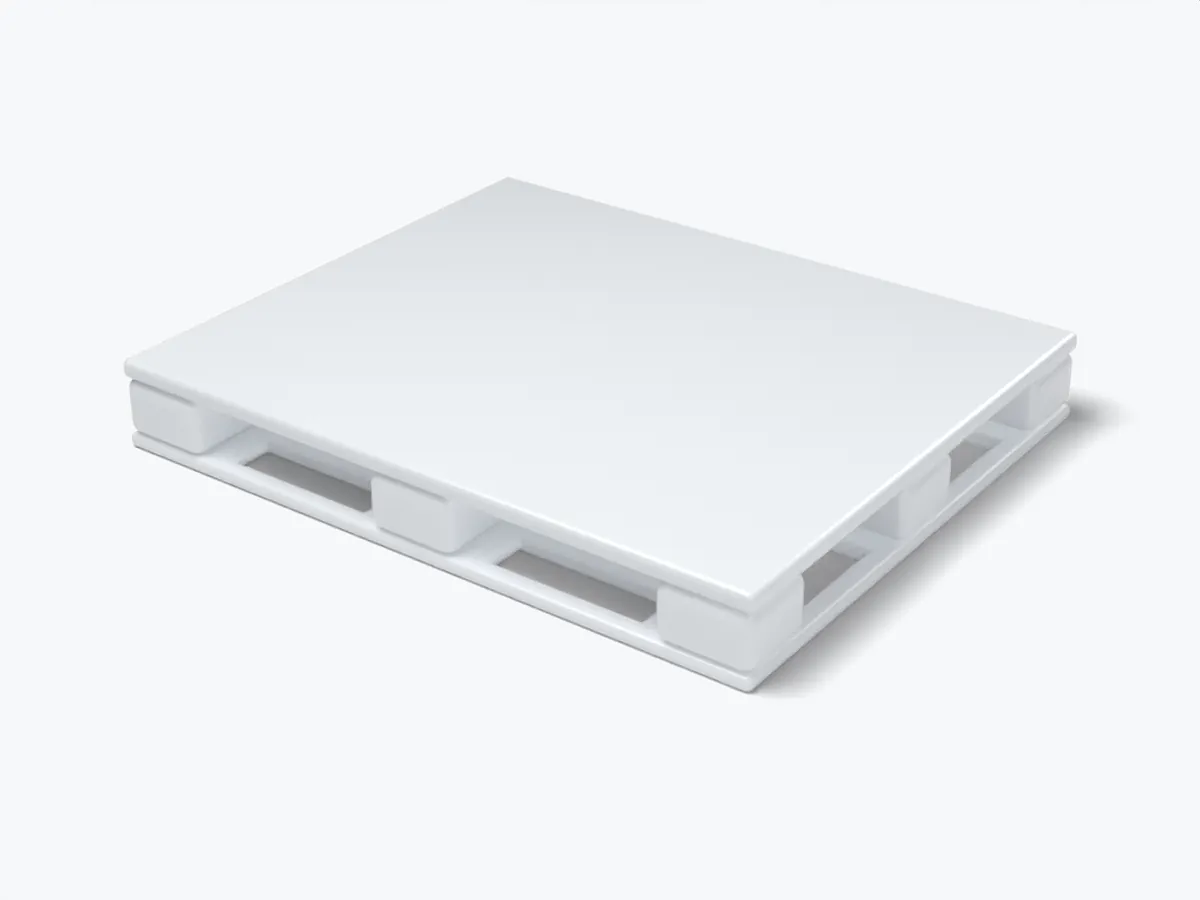
Device loads are light, bulky and valuable
Most device freight is single-use product in corrugated cases: syringes, catheters, tubing sets, gloves, drapes and procedure kits. A pallet of it is tall and light, often well under the weights that drive pallet choice in food or chemicals, but the product on it is high in value and must arrive with its sterile barrier intact.
Raw materials move the other way: resin in bags and gaylords for molding cells, tubing on reels, stamped and machined components in totes. Capital equipment (imaging, surgical and lab systems) ships heavy and crated, usually on a custom base.
Because loads are light, the pallet's own weight and its height matter. A lighter pallet saves effort in manual handling and cost in air freight, and a lower deck fits more product under a sterilizer's chamber height.
Hospital receiving docks are small and often lack forklifts, so distributors build lower, lighter pallets that a hand jack can push through corridors and freight elevators. Consignment stock for surgical suites, such as orthopedic implants and instrument trays, moves in carts and cases more than on pallets.
Crossing into the cleanroom
Assembly and packaging of many devices happens in classified cleanrooms (ISO 14644 classes). Warehouse pallets stay outside. Loads are broken down at a pass-through or staged in an airlock, wiped, and moved onto dedicated clean-side pallets or carts.
A clean-side pallet has smooth surfaces with no open cavities or deep ribs, is molded in virgin resin rather than regrind, and stands up to repeated wiping with isopropyl alcohol, quaternary disinfectants or hydrogen peroxide. White or light gray decks show dirt, which is the point.
Electronics-based devices may also need static-dissipative pallets in assembly areas, which use conductive additives in the resin. Ask for the surface resistance on the maker's sheet.
Sterilization on the pallet
Finished devices are often sterilized in the shipping case, on the pallet, at a contract sterilizer. Ethylene oxide cycles put the whole load through vacuum, humidity, gas and heat; gamma and electron-beam irradiation pass a dose through the boxes. The pallet goes through too.
Not every resin handles that the same way. Repeated irradiation can embrittle some polypropylene grades, and EO cycles need a pallet that doesn't trap gas in closed cavities. Ask the maker whether the model has been used through your sterilization method and how many cycles it is expected to take. Your sterilizer may also set its own pallet footprint and maximum load height for the chamber.
Quality rules and the pallet
Device makers answer to FDA's quality system regulation in 21 CFR 820, which expects documented control of the production environment and of handling and storage. A pallet doesn't need an FDA status, but a plant should be able to say which pallets enter controlled areas, how they are cleaned and how they are kept apart.
Quarantine and release is where color helps. Many plants run one pallet color for product awaiting sterility release and another for released stock, so nobody ships a load early.
Recalls and field corrections bring product back; a returns cage with its own pallet color keeps returned lots away from saleable stock. Sterile packaging dislikes puncture and compression, so a pallet with no protruding edges and a flat top protects blister trays and peel pouches in the bottom tier. Contract manufacturers building for several brands often keep one pallet color per customer too.
Footprints and types for device makers
48x40 is the US shipping size. Plants that export to Europe often build loads on 1200x800 to match distributors there, and sterilizers may specify a size that fills their chamber.
| Area | Footprint | Pallet type | What to check |
|---|---|---|---|
| Raw material warehouse | 48x40 | Rackable | Racked load for resin bags |
| Cleanroom staging | Plant's choice, often 48x40 | Cleanroom pallet, virgin resin | Smooth closed surfaces, cleaning agents |
| Electronics assembly | 48x40 | Static-dissipative | Surface resistance |
| EO or irradiation runs | Sterilizer's spec | Lightweight stackable | Resin and cycle tolerance |
| Quarantine and released stock | 48x40 | Stackable in two colors | Color per status |
| Export to Europe | 1200x800 | Lightweight nestable | Weight for air freight |
What to send us
Give us the footprint, the room the pallet works in, any sterilization method it passes through, the heaviest load, the colors, the quantity and the delivery ZIP. We answer by email with models and a delivered price, shipped LTL for a cleanroom lot or by the 53-foot van for a plant fleet.
Questions buyers ask
Can a plastic pallet go through ethylene oxide sterilization?
Many do, but check with the maker that the model has no closed cavities that trap gas and that the resin suits repeated cycles.
Why use white pallets in a device cleanroom?
A light deck shows dust and residue, so cleaning crews and auditors can see whether it is clean.
Do medical device plants need FDA approved pallets?
No such approval exists. What matters is that your quality system controls which pallets enter which areas and how they are cleaned.
What footprint do contract sterilizers use?
It varies by chamber. Ask the sterilizer for its length, width, load height and gross weight limits before you buy, since a pallet that overhangs the carrier won't be accepted.
Sources
- Cabka: plastic pallets for export and ISPM 15
- 21 CFR 177.1520: olefin polymers in food-contact articles
Last reviewed November 8, 2026.