05 Guide
Plastic pallet manufacturers and processes
Plastic pallet manufacturers make pallets by five main processes: injection molding, structural foam molding, thermoforming, rotational molding and compression molding, and each one shapes the weight, ratings and price of the model. We quote catalog models from makers' published sheets; send your footprint and heaviest load for a quote.
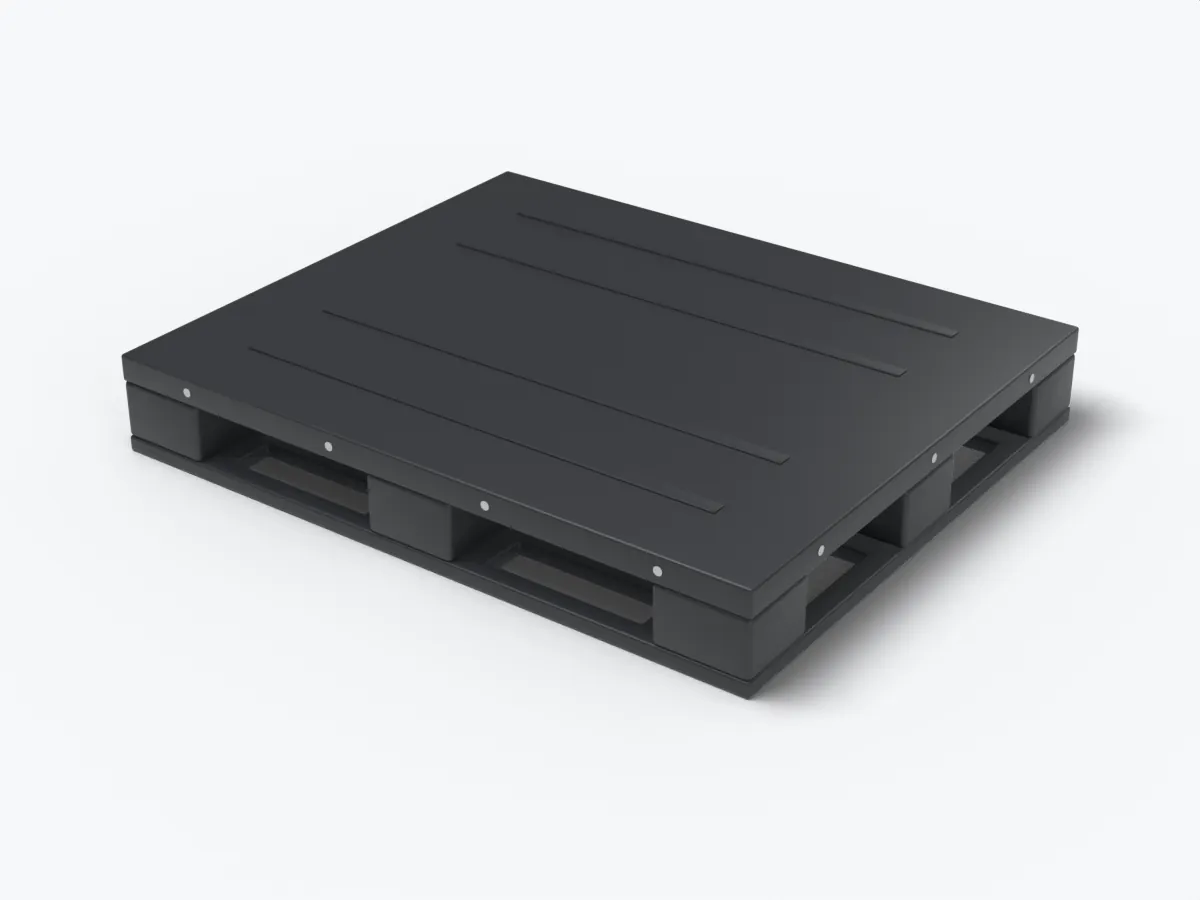
What a pallet maker actually sells
A plastic pallet maker sells numbered models. Each model is one mold, or one set of molds, producing the same part every cycle: the same footprint, height, deck pattern, entry and weight, with a resin code and a date clock molded into it.
The mold is the expensive part. A steel injection mold for a full-size pallet is a large piece of tooling, so makers design a catalog of models that cover common footprints and jobs, then run each one in volume. That is why most buyers choose from existing models rather than commissioning a new one.
Each model comes with a spec sheet. Well-known makers such as Rehrig Pacific, Cabka and ORBIS publish sheets for their models, and that sheet is the document a buyer should compare: dimensions, weight, resin, entry, and the dynamic, static and racked loads where the model is rated for them.
The five molding processes
The process decides how the plastic gets its shape, how thick its walls can be, how heavy the finished part is, and how many a mold can make before the tooling has paid for itself. It also limits which features, like reinforcing bars or a hollow double deck, the model can have.
| Process | How it works | What the pallet is like | Where it fits |
|---|---|---|---|
| Injection molding | Molten resin is forced under high pressure into a closed steel mold, then cooled and ejected | Precise, repeatable dimensions; ribbed decks; fine detail such as date clocks and logos | High-volume nestable, rackable and food plant models |
| Structural foam molding | Resin with a foaming agent fills the mold at lower pressure, leaving a solid skin over a cellular core | Thick walls, stiff and heavy; good for big, rugged parts | Heavy-duty, drum and rackable pallets |
| Thermoforming | A heated plastic sheet is pulled by vacuum over a mold; twin-sheet forming fuses two sheets into one hollow part | Lighter for its size; hollow double-deck designs are possible | Lighter rackable and closed-loop models, shorter runs |
| Rotational molding | Powdered resin tumbles inside a heated, rotating mold and coats the walls | One-piece and hollow with even walls; slow cycle | Specialty and low-volume pallets |
| Compression molding | A measured charge of hot plastic is pressed between two mold halves | Dense parts; tolerant of mixed or recycled feedstock | Recycled-content and export pallets |
Injection molding in more detail
Injection molding is the most common route for full-size plastic pallets in volume. The press clamps the mold shut, injects molten HDPE or PP copolymer, holds it while it cools and opens to drop out a finished pallet. Cycle times are short, so one mold makes a great many pallets.
Because the steel cavity is machined once and reused, every pallet off it matches. That repeatability is what automated lines and conveyors need, and it is why injected models carry detailed features: molded-in date clocks, resin codes, logos, anti-slip pads, drain holes and pockets for RFID tags.
The published Rehrig Pacific heavy-duty nestable 40x48 is an example of the process: injection molded PP copolymer, 48.25 x 40.25 x 6.5 in, 28.5 lb, rated 10,000 lb static and 3,500 lb dynamic, with RFID, colors and hot-stamped logos offered as options.
Why the process matters to a buyer
You do not need to know how a mold works to buy a pallet, but the process explains differences you will see on a sheet. Structural foam models tend to weigh more because their walls are thick. Twin-sheet thermoformed models can be light and stiff because a hollow double deck acts like a box section. Injected models hit tight dimensions shot after shot.
Process also bears on what is possible later. Steel or composite reinforcing members are often added to rackable designs to lift the racked load. Color, logos and RFID options are easier on high-volume molded models. A custom footprint means new tooling, and new tooling only makes sense at fleet scale.
Recycled content is a process question too. Some processes accept regrind and mixed feedstock more readily than others, and a pallet's recycled content affects its color, its consistency and sometimes its food-contact paperwork.
- Weight: thick-walled structural foam is heavier; twin-sheet is lighter
- Dimensions: injection molding holds the tightest repeat tolerances
- Features: date clocks, logos and RFID pockets come easiest on injected parts
- Custom models: new tooling, so volume decides whether it is worth it
Reading a maker's spec sheet
Compare models on their sheets, not on photos. A sheet should name the footprint and height, the weight, the resin, the molding process, the deck type, the entry, and each load rating it claims, with the conditions behind it.
Pay attention to what is left blank. A racked cell with no number means the model is not rated for racks. A sheet that lists only a static load tells you nothing about forks or beams. A food-contact claim should come with the maker's statement for that model, since 21 CFR 177.1520 governs the resin and not the finished pallet.
| Line | Why it matters |
|---|---|
| Footprint and height | Fit in racks, trailers and containers |
| Weight | Freight cost and hand lifting |
| Resin and process | Cold toughness, stiffness, washing limits |
| Deck and entry | Product support and fork or jack access |
| Dynamic, static, racked | Which jobs the model can do |
| Options | Color, logo, RFID, anti-slip |
Buying through us
We are a catalog and quote desk, not a maker. We match your job to published models and to graded used pallets, and we quote them delivered. Send the footprint, type, deck, heaviest load and whether it is racked, the quantity and the delivery ZIP. We reply by email with the models that meet it and a price; truckloads ship on a 53-foot van and smaller orders go LTL.
Questions buyers ask
How are plastic pallets made?
Mostly by injection molding, with structural foam molding, thermoforming, rotational molding and compression molding used for other designs. Each process gives the pallet different weight, stiffness and detail.
Who manufactures plastic pallets?
Several makers publish catalogs and spec sheets, for example Rehrig Pacific, Cabka and ORBIS. Compare their models on the sheet for the exact model, not on photos.
Can I get a custom plastic pallet made?
A custom footprint or design means new molds, which only pays off at large fleet volumes. Most buyers pick an existing model and add color, logos or RFID.
Do you make the pallets you sell?
No. We quote catalog models from makers' published sheets and graded used pallets, delivered to your ZIP.
Sources
- Cabka: plastic pallets for export and ISPM 15
- 21 CFR 177.1520: olefin polymers in food-contact articles
- Rehrig Pacific: 40 x 48 heavy duty nestable pallet sheet
Last reviewed November 8, 2026.