01 Catalog line · Cleanroom
Cleanroom plastic pallets
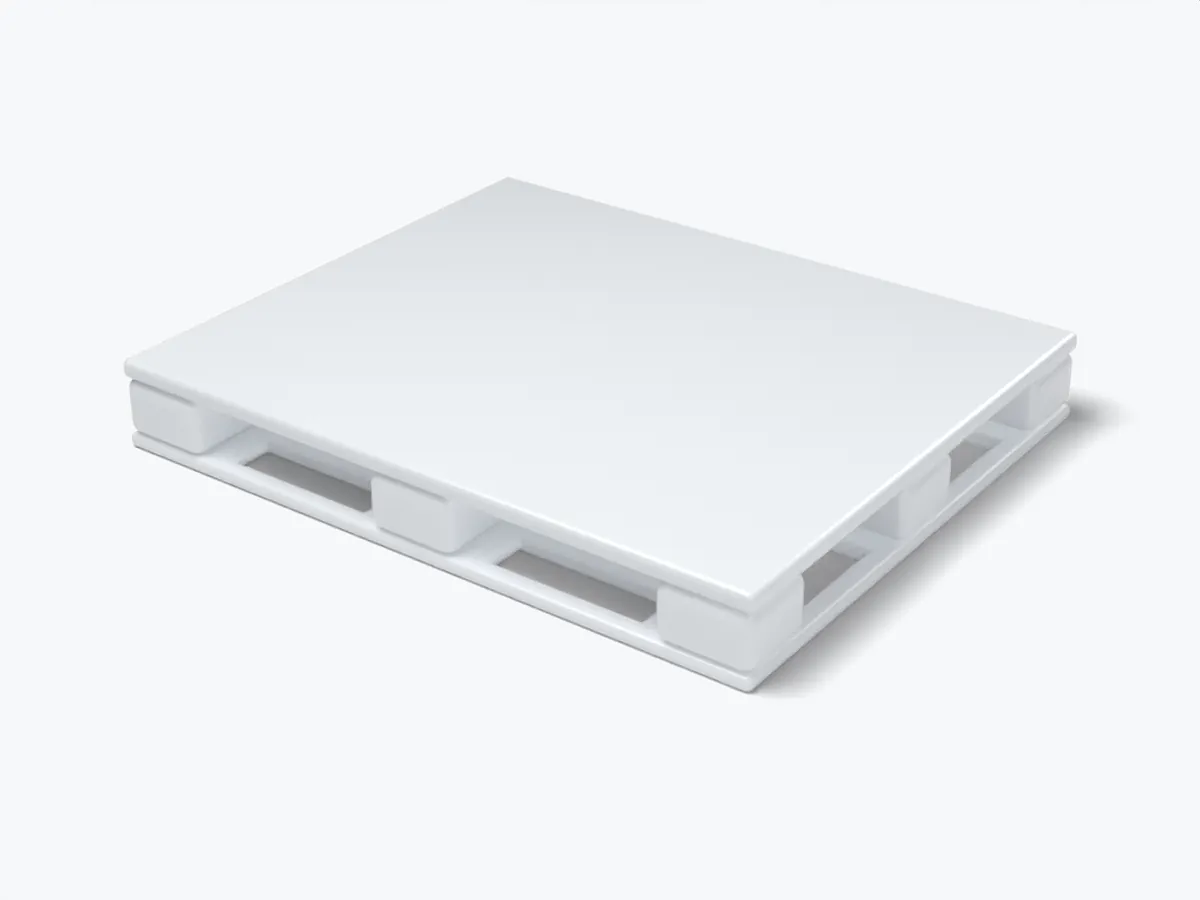
A cleanroom plastic pallet has smooth, closed surfaces with no hollow cavities, is molded from virgin resin and stands up to repeated wiping with disinfectants. Tell us the room class, cleaning agents, footprint, load and delivery ZIP on the quote form, and we email back models that fit with a delivered price.
- Dynamic load
- Most carry light to medium loads; check the figure for your cart
- Static load
- Ask for the stacked figure if pallets are staged two high
- Racked load
- Few are rack-rated; cleanroom staging is mostly on the floor
What sets a cleanroom pallet apart
In a classified room, anything that can hold particles, liquid or microbes is a problem. Ordinary pallets have open legs, ribbed undersides and hollow channels that collect dust and cleaning solution and can't be wiped dry. A cleanroom pallet removes those places.
The usual build is a closed, two-piece unit: top and bottom decks welded at the perimeter into one sealed part, so the inside never sees air. Others are single-shot molded with shallow, open surfaces that a wipe can reach. Corners and edges are radiused, the deck is smooth or lightly textured, and there are no screws, labels or inserts to trap dirt.
The resin is virgin HDPE or PP, not regrind. Recycled flake carries unknown history and specks that can shed or outgas. Light colors such as white and pale gray are standard because they show residue.
Options for special rooms
Electronics, semiconductor and some device assembly areas need static control. Static-dissipative or conductive pallets use carbon or other additives in the resin; the maker states a surface resistance range. Black or dark gray is common for these, since carbon colors the part.
Flame-retardant grades are available for areas where fire load is a concern. They can change weight, stiffness and color, so compare the sheet with the standard grade.
Chemical resistance matters more than usual. Ask whether the resin tolerates your agents (isopropyl alcohol, quaternary ammonium, sodium hypochlorite, hydrogen peroxide, peracetic acid) at your cleaning frequency.
Gowned operators lift and slide pallets by hand more often than warehouse crews do, so the pallet's weight and its grip slots matter.
Cleanroom pallet spec points
Use this list when comparing quotes; each model's own sheet supplies the actual figures.
| Feature | Typical for cleanroom use | Check on the sheet |
|---|---|---|
| Body | Closed, welded two-piece or shallow open molding | No hollow spaces open to air |
| Resin | Virgin HDPE or PP | No regrind, resin and colorant grade |
| Surface | Smooth or fine texture, radiused corners | Cleanability, slip resistance |
| Color | White, light gray; dark for ESD grades | Matches your zone plan |
| Static control | Standard, dissipative, conductive | Surface resistance range |
| Base | Perimeter or runners | Fits carts, conveyors, pass-throughs |
Jobs it suits, and jobs it doesn't
It suits staging, transfer and short-term storage inside ISO-classified rooms in pharmaceutical fill-finish, medical device assembly, semiconductor and electronics plants, and hospital sterile supply. It also serves as the clean-side pallet at a pass-through, where loads move off warehouse pallets.
It is a poor fit for heavy racked storage, outdoor yards and anything leaving the building on a truck. Use it inside the controlled area and keep a separate, ordinary fleet for the dock. A cleanroom pallet that goes out to a trailer comes back as a warehouse pallet.
Typical users include aseptic fill-finish suites, cell and gene therapy manufacturing, wafer fabs, optics and flat-panel lines, sterile compounding pharmacies working to USP 797, and aerospace assembly of precision parts.
Cleaning, inspection and lifespan
Cleanroom SOPs set a wipe or wash schedule and a check before each entry. Scratches and gouges hold particles and resist wiping, so a pallet with deep fork scars should leave the classified area. Many sites run pallets through automated cabinet washers with a deionized rinse, then dry them in a clean zone.
Vaporized hydrogen peroxide used in transfer hatches reaches smooth faces well but struggles in crevices, another reason closed construction matters. Molded-in identification or a laser mark beats paper labels that peel. Track age from the date clock and replace pallets on a set interval rather than waiting for visible wear.
Sizes and ordering
48x40 and 1200x800 are the most common, with 1200x1000 in European-built plants and smaller sizes for carts, isolator pass-throughs and benches. Pick the footprint from your doors, airlocks and carts, not the trailer.
Send the room class, cleaning agents, the heaviest load, whether you need static control or flame retardancy, the footprint, the quantity and the delivery ZIP. We answer by email with models and a delivered price. Cleanroom pallets ship new, usually LTL; we don't sell used ones for this job.
Questions buyers ask
Why can't recycled resin be used for cleanroom pallets?
Regrind can carry contaminants and specks that shed or outgas. Virgin resin gives a known, clean surface.
What color should cleanroom pallets be?
White or light gray shows residue. Static-dissipative grades are often black or dark gray because of the carbon in them.
Can cleanroom pallets be autoclaved?
Don't assume so. HDPE softens near autoclave temperatures, and even a PP pallet can warp in a steam cycle, so ask the maker before steam sterilizing any model.
Are cleanroom pallets rack-rated?
A few are, but most are made for floor staging and transfer. Ask for a racked figure if you need one.
How is a cleanroom pallet different from a pharmaceutical pallet?
They overlap. Pharmaceutical pallets cover GMP warehouses and production broadly; cleanroom pallets are the sealed, virgin-resin subset made for classified rooms.