01 Catalog line
Plastic export pallets
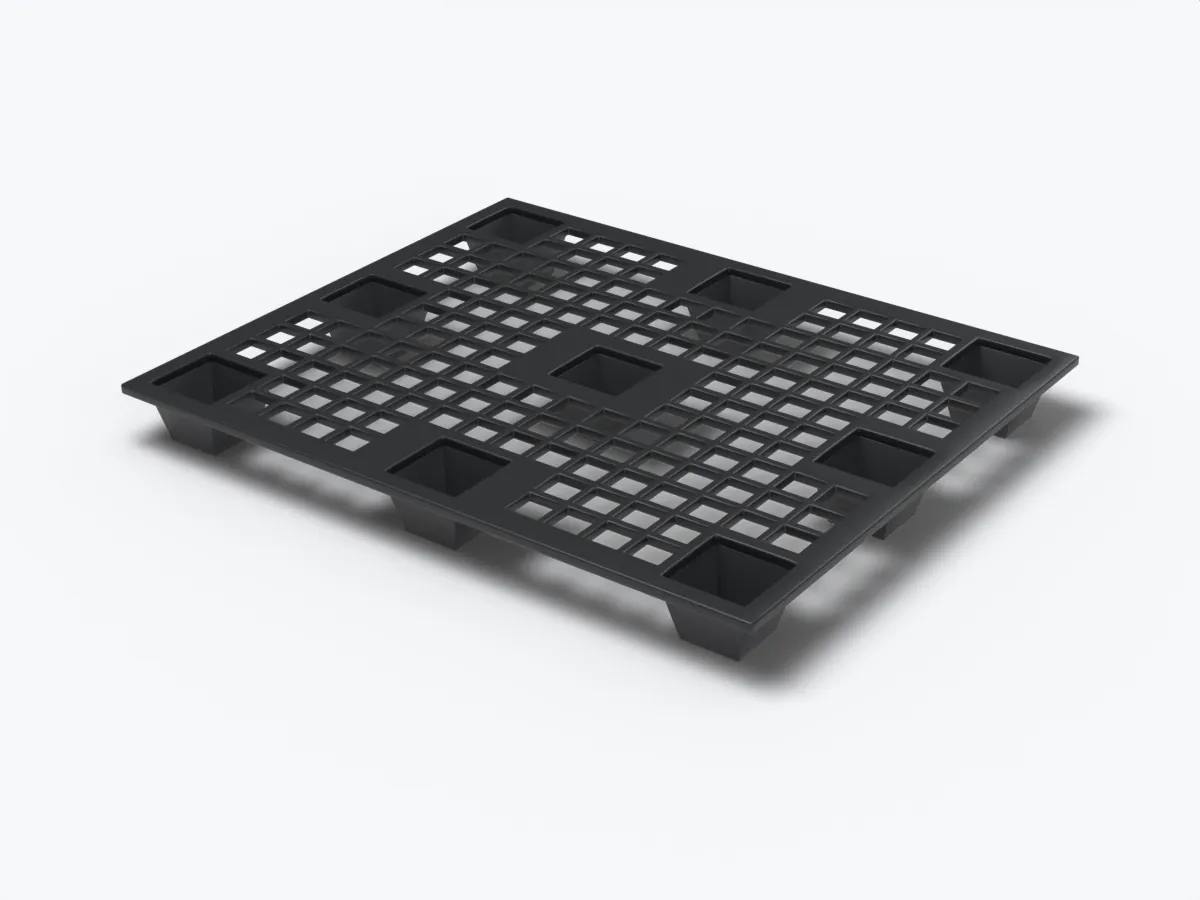
Plastic export pallets carry freight across borders with no ISPM 15 heat treatment or IPPC stamp, because USDA APHIS lists plastic pallets among the alternatives to wood packaging that it does not regulate. Tell us the mode, footprint, load and whether the pallets come back, and we'll quote light one-way or returnable models.
- Dynamic load
- Light one-way models rate lower; check the figure against your load
- Static load
- Double-stacking in a container is a static case; ask for that figure
- Racked load
- Light export nestables are rarely rated; ask if the receiver racks
Why plastic skips ISPM 15
ISPM 15 is the international standard for treating wood packaging material so it can't carry pests across borders. Wood pallets, crates and dunnage are heat treated or fumigated and stamped with the IPPC mark before they ship to countries that enforce it. The standard is about wood, and a molded plastic pallet is outside it.
USDA APHIS lists plastic pallets and metal frames under its alternatives to wood packaging material and states that they are not subject to its WPM regulation. Pallet maker Cabka makes the same point from the shipping side: plastic is simpler to export because it needs no ISPM 15 treatment. There is no stamp to check, no treatment record to keep and no risk of a load being held for a missing mark.
One caution. If the same container carries wood blocking, bracing, crates or dunnage, that wood still needs to be ISPM 15 treated and marked. A plastic pallet doesn't exempt the rest of the load.
One-way or returnable
On air freight, weight is billed directly, so a light pallet pays back on every shipment. In an ocean container, weight matters when the load is dense enough to reach the container's payload limit before it fills the floor.
| One-way export pallet | Returnable export pallet | |
|---|---|---|
| Build | Light nestable legs, thin ribbed deck | Runners or perimeter base, heavier deck |
| Process | Injection molded or thermoformed | Injection molded or structural foam |
| Weight | As light as the load allows | Heavier, built for many trips |
| Racked load | Rarely published | Often published |
| Best for | Shipments that won't come back | Loops between your plant and an overseas site |
| Weakness | Limited loads, no racking | Weight on every trip and the cost of return freight |
Footprints and the container floor
There is no single export pallet size. The right footprint depends on the container or on the standard pallet in the receiving country, and a US exporter often chooses between the familiar 48x40 and an ISO size the receiver already handles. Inside, a 20-foot container is about 19.3 ft long and a 40-foot about 39.5 ft, both about 7.7 ft (roughly 92 in) wide. The width is what decides fit, because it sets how many pallets stand side by side.
Mixing footprints in one box wastes floor and invites shifting. If the receiver takes two sizes, ship them in separate containers where the volume allows.
| Footprint | Inches | Where it's standard | Two across a 92-in floor |
|---|---|---|---|
| 48x40 | 48 x 40 | US and Canada | Yes with the 40-in side across, leaving about 12 in |
| 1200x1000 | 47.2 x 39.4 | UK and much of Europe | Yes with the 1000 mm side across |
| 1200x800 | 47.2 x 31.5 | Europe (the Euro pallet) | Yes with room to spare; often mixed orientations |
| 1100x1100 | 43.3 x 43.3 | Japan, Korea and much of Asia | Yes, about 87 in across |
| 1140x1140 | 44.9 x 44.9 | Sized for container floors | Yes, about 90 in across |
| 1165x1165 | 45.9 x 45.9 | Australia | Only just; check the container's exact width |
Where export pallets fit, and where they don't
They fit exporters and forwarders shipping to countries that enforce ISPM 15, air shippers paying by weight, and companies with an overseas plant that can send the pallets back. Light nestables also stack into a small bundle for the trip home if a returnable loop does form.
They don't fit loads that exceed a light model's ratings, receivers that will rack the pallet when it arrives, or warehouses at the far end whose racking and conveyors expect a different footprint. Ask the receiver what they handle before you choose the size, and ask whether the pallet goes into a rack at their end.
Loading the box and the aircraft
Ocean freight moves as a full container load, which you stuff yourself, or as less than container load, where your pallets share a box consolidated at a container freight station. LCL cargo is handled more often, by forklifts at the station and again at destination, so the dynamic rating and four-way entry matter more than on a full load that travels sealed from your dock.
Reefer containers have a T-bar floor that pushes chilled air up through the cargo. An open-grid deck lets that air pass instead of blocking it, and HDPE or PP copolymer models stay tough at frozen temperatures. A high cube container adds about a foot of inside height, which can allow a second tier of light cartons, a static case for the pallet underneath.
Air cargo rides on the airline's own unit load devices, so the export pallet is a base for building the shipment rather than the unit the carrier lifts. A low, light pallet leaves more of the contour for goods and adds little to the chargeable weight. Strapping and stretch wrap hold the load to the deck; ask whether the model has strap slots or a rim if the cargo is loose cartons.
What to put in an export pallet quote request
We reply by email with export models that meet the load and footprint, their weight per pallet, and a delivered price to your loading site.
- Destination country and mode: ocean container, air or truck
- Container type, if ocean: 20-foot, 40-foot or high cube
- Footprint the receiver handles, or ask us to suggest one
- Heaviest load per pallet, and whether pallets are double-stacked in the box
- Whether the receiver racks the pallets
- One-way or returned
- Quantity and the ZIP where the pallets should be delivered
Questions buyers ask
Do plastic pallets need ISPM 15 treatment for export?
No. ISPM 15 covers wood packaging, and USDA APHIS lists plastic pallets as alternatives to wood that it does not regulate.
Do plastic export pallets need a stamp?
No IPPC mark is needed on the plastic pallet. Any wood dunnage or crating in the same shipment still needs its own ISPM 15 mark.
What size pallet is best for a shipping container?
It depends on the container and the receiver. Square 1100x1100 and 1140x1140 pallets use container floors closely, while 48x40 and 1200x1000 suit receivers who already handle those sizes.
Are export pallets strong enough to reuse?
Light one-way models are built for a single trip and modest loads. Returnable export pallets are heavier and carry higher ratings for repeated use.
Can plastic export pallets go in a reefer container?
Yes. HDPE or PP copolymer models suit chilled and frozen cargo, and an open deck lets the reefer's air move through the load.
Sources
- USDA APHIS: wood packaging material and its alternatives
- Cabka: plastic pallets for export and ISPM 15
Last reviewed November 8, 2026.