05 Guide
How to read a used plastic pallet
Read a used plastic pallet from its underside: the resin code says HDPE or PP, the date clock gives the month and year it was molded, and the maker's name and model number lead to its rated loads. Then check legs, runners and deck for cracks, sag and repairs. Send us footprint and use for a quote on graded used pallets.
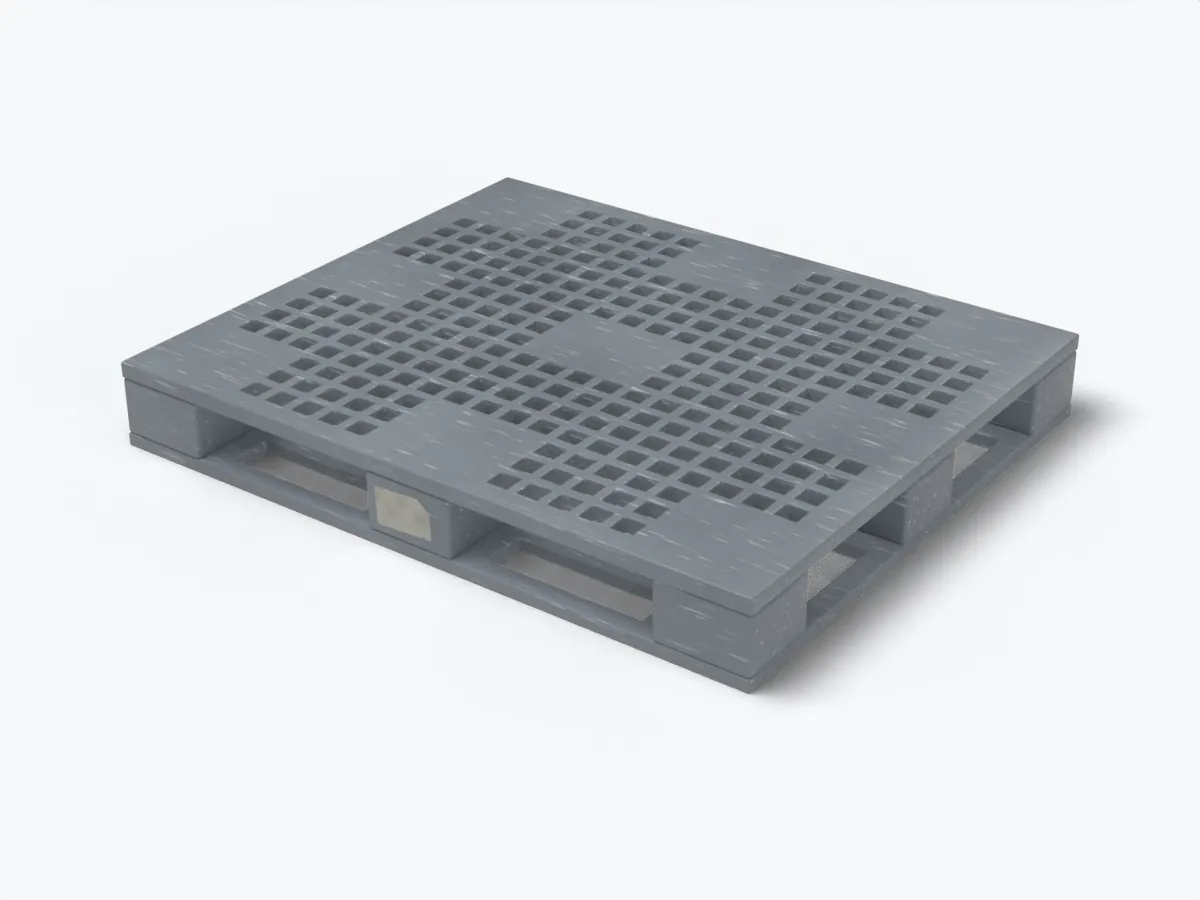
Turn it over first
Everything a used pallet can tell you about where it came from is molded into it, usually on the underside of the deck, inside a leg pocket or along a runner. Flip one pallet from the lot, wipe the area with a rag and read it before you look at anything else.
Molded marks do not wear off the way a label does. Paint, shrink wrap and old stickers can hide them, but the raised or recessed characters stay in the plastic for the life of the part.
| Mark | What it looks like | What it tells you |
|---|---|---|
| Resin code | Chasing-arrows triangle with a number inside | 2 is HDPE, 5 is polypropylene |
| Date clock | Small round dial with numbers around the edge and a year in the middle | Month and year the part was molded |
| Maker name or logo | Raised lettering or a molded logo | Who made it, so you can find the spec sheet |
| Model or part number | Letters and digits near the logo | The exact model and its published loads |
| Ownership mark | Words such as property of, or a pool or company name | Whether the pallet belongs to someone else |
| Hot stamp or brand | Printed or heat-stamped logo on the deck edge | The fleet it last ran in |
Reading the date clock
A date clock is a small molded dial. The year usually sits in the center as two digits, and an arrow points to one of twelve months around the rim. Some clocks split the year across the center or use dots for the months, but the pattern is the same.
Age matters less than condition. A pallet molded years ago that ran inside a clean warehouse may be in better shape than a newer one that spent months in a freezer dock taking fork hits. Still, age helps you sort a lot: pallets from one model and one period usually wore the same way.
If the clock is unreadable, look for the model number instead. The maker's sheet for that model will at least tell you the loads it was rated for new.
From model number to rated loads
A used pallet carries the ratings of its model, no higher. Once you have the maker and the model number, find the sheet and read the dynamic, static and racked figures. If the model was never rack-rated, the used pallet is not rack-rated either, however solid it looks.
Ratings for a used pallet are an upper bound, not a promise. Creep from years of loads, heat exposure and impact damage all take something away. That is why we only offer Grade A, on a rack-rated model, for racking.
Check the ownership mark before buying any lot. Pallets molded with the name of a pooling company or another business as owner are usually not the holder's to sell, so leave them out of any lot you buy or offer.
Where used pallets fail
Plastic pallets fail in predictable places. Work around one pallet in the same order every time and most problems show up quickly.
- Leg-to-deck joints: cracks where a leg meets the deck, often from fork strikes
- Runners: cracks, breaks or bends, and runners pulled away from legs
- Deck surface: holes, punctures, missing grid sections or a broken lip
- Flatness: set it on a flat floor and press each corner; a rocking pallet is warped
- Sag: sight along the deck; a bowed middle means it was racked beyond its limit or left under load
- Fork entries: chewed or torn openings where tines have hit
- Repairs: welds, screws, metal plates or bolted patches
- Contamination: chemical staining, oil, odors or residue that will not wash off
How we turn that into a grade
Used grading is not standardized across sellers. Marketplace listings often put a grade in the title without defining it, so we define ours in plain words and grade every lot against them.
A lot is graded by its worst common condition, not its best pallet. A load of mostly clean pallets with a run of cracked runners is not Grade A.
| Grade | What it means | Racking |
|---|---|---|
| Grade A | Whole deck, legs and runners intact, no repairs, clean enough for its next use | Only if the model was rack-rated |
| Grade B | Structurally sound; scuffs, old labels, faded color, minor surface wear | Not for racking unless checked |
| Mixed lots | Assorted makers, models and colors, sorted only by footprint, sold by the load | No |
| Cracked or broken | Damaged legs, runners or deck | Sell side only, valued as regrind |
Sorting a load at the dock
Checking every pallet in a truckload by hand is slow, so most receivers sample. Pull a set number from different heights and positions in the trailer, not just the rear tier, and flip each one. Note the maker, model, date clock year and any defect on a simple tally sheet.
Photograph anything that fails, with the molded marks visible. Set rejects aside in a quarantine pile away from good stock so they are not reused by accident before the seller responds.
If the sample shows one model and one era, the rest of the load probably matches. If it turns up three makers and a spread of years, treat it as a mixed lot and price it that way.
Buying or selling a used lot
Buying: send the footprint, the type, the deck, the heaviest load and whether it will be racked, the quantity and the delivery ZIP. We reply by email with the used grades and models that meet it, and a delivered price.
Selling: flip a few pallets and note what you read. Send the count, the footprint, the resin code if you found one, the condition and the pickup ZIP. We answer with an offer as pallets or as regrind. Photos of the underside marks help, because they tell us the maker and model without a site visit.
Cracked pallets are worth reporting too. Broken HDPE and PP still have value as regrind, so a damaged stack belongs on the sell form, not in a dumpster.
Questions buyers ask
How do I read the date on a plastic pallet?
Find the date clock, a small molded dial usually on the underside. The two digits in the center are the year and the arrow points to the month.
How can I tell what a used plastic pallet is rated for?
Read the maker and model number molded into it, then check that model's spec sheet. A used pallet never carries more than its model's ratings.
Can I rack used plastic pallets?
Only if the model was rack-rated new and the pallet is whole, flat and unrepaired. We offer Grade A for racking on that condition and no other grade.
What does Grade B mean?
Our Grade B is structurally sound with scuffs, old labels, faded color or minor surface wear. It is not for racking unless checked.