05 Guide
ISPM 15 and plastic pallets
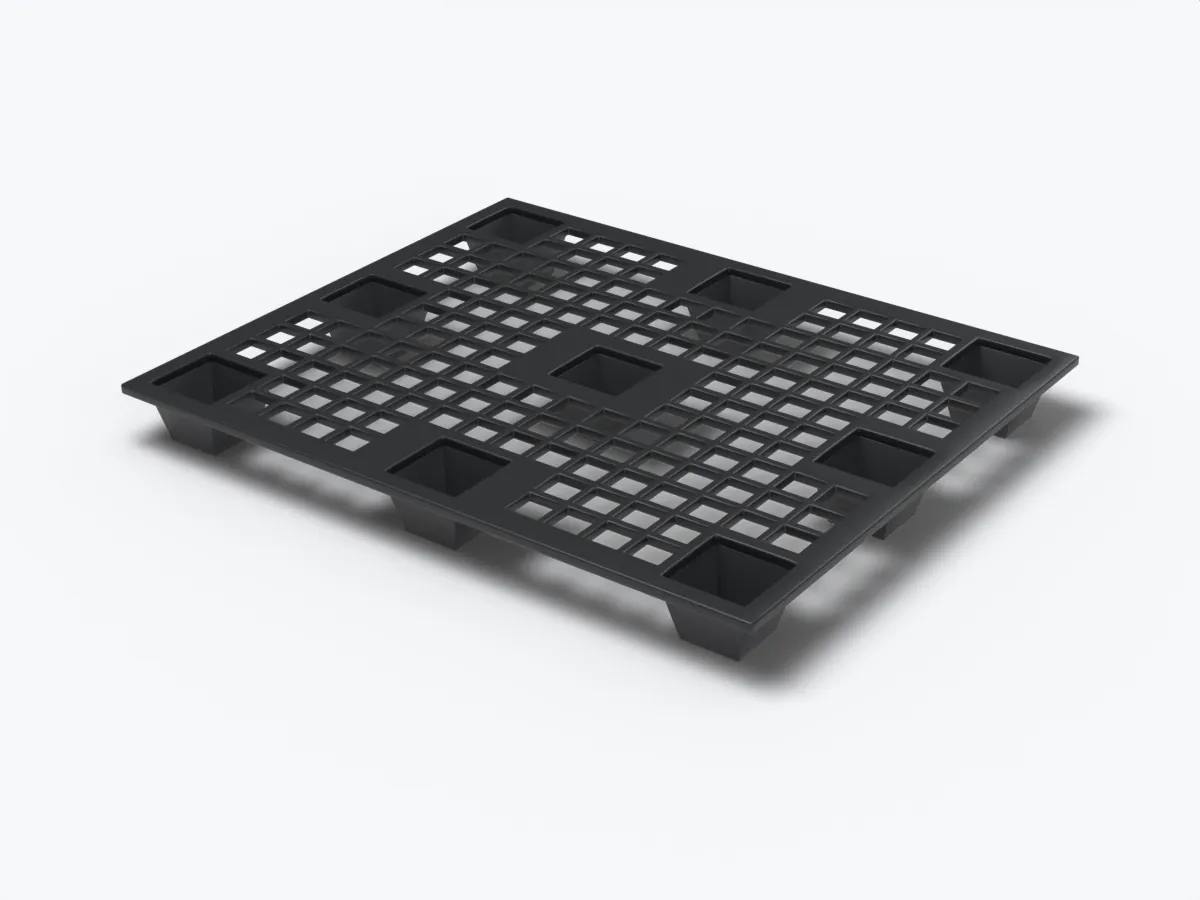
ISPM 15 is the international standard for treating and marking wood packaging, and it does not apply to plastic pallets: USDA APHIS lists plastic pallets as alternatives to wood packaging material that it does not regulate. Plastic export pallets need no heat treatment or IPPC stamp; send us your container and destination footprint for a quote.
What ISPM 15 covers
ISPM 15 is a phytosanitary standard published under the International Plant Protection Convention. Its job is to stop wood-boring insects and plant diseases from travelling inside pallets, crates, skids and dunnage made of solid wood.
Under the standard, wood packaging has to be treated, usually by heat treatment or by fumigation, and then stamped with the IPPC mark. The mark carries a country code, a producer number and a code for the treatment used. Customs and plant protection officers at the destination look for that stamp.
The standard is about the material, not the shipment. It exists because raw wood can carry live pests. Molded plastic cannot, so it sits outside the scope.
| Question | Solid wood pallet | Plastic pallet |
|---|---|---|
| Covered by ISPM 15 | Yes | No |
| Treatment before export | Heat treatment or fumigation | None required |
| IPPC mark on the pallet | Required | Not applicable |
| USDA APHIS status | Regulated as wood packaging material | Listed as an alternative, not subject to APHIS WPM rules |
| Risk of rejection for a missing stamp | Yes, at many borders | Not from the pallet itself |
What wood shippers go through instead
The standard exists because insects such as the Asian longhorned beetle and the emerald ash borer have crossed oceans inside untreated crates and pallets. Heat treatment under ISPM 15 means bringing the core of every piece of wood to 56 degrees Celsius for at least 30 continuous minutes, then marking it.
Fumigation with methyl bromide is the other approved treatment, but many countries restrict or discourage it because the gas damages the ozone layer. The wood must also be debarked, and a treated pallet that is later repaired with untreated boards loses its compliance.
Each of those steps is a cost, a delay or a document. With an all-plastic pallet none of them apply.
Where plastic pallets stand
USDA APHIS keeps a page on wood packaging material that lists plastic pallets and metal frames under alternatives to WPM, which it states are not subject to APHIS regulation. That is the US government's own position, and the standard itself is written for wood.
Cabka, a plastic pallet maker, puts the practical side plainly: plastic pallets are simpler to export than wood because they are exempt from ISPM 15 treatment. There is no heat chamber to book, no fumigation certificate to file and no stamp to check before the container is sealed.
That is the main reason exporters and forwarders buy plastic. A rejected wood pallet at the destination can mean the whole load is held, re-palletized or sent back, and a plastic pallet removes that line from the risk list.
The exceptions that still catch shippers
A plastic pallet is only outside ISPM 15 if it is all plastic. A composite pallet with wooden blocks, stringers or a wood deck is wood packaging for those parts, and they need treating and marking like any other wood.
Everything else in the container still counts. Wooden crates, bracing, blocking and dunnage loaded around plastic pallets fall under the standard on their own. A shipment on plastic pallets can still be stopped for an unmarked wooden brace.
Some importers, brokers or destination authorities ask the shipper for a packing declaration stating what packaging is in the load. Ask your forwarder what the destination expects, and describe the pallets as plastic on the paperwork so nobody goes looking for a stamp.
The standard also says nothing about the goods. Food, chemicals and regulated products carry their own import rules, and a plastic pallet does not change those.
- All-plastic pallet: outside ISPM 15
- Plastic pallet with wood blocks or deck boards: the wood parts are regulated
- Wooden crates, bracing and dunnage in the same load: regulated
- Packing declaration: ask your forwarder whether the destination wants one
Choosing a footprint for export
There is no single export pallet size. As Cabka notes, the right footprint depends on the container or on the standard pallet of the receiving country. A 48x40 pallet suits a US customer's racks, while a European receiver may expect 1200x800 or 1200x1000.
Container fit is the other half. A 20-foot container is about 19.3 ft long and a 40-foot container about 39.5 ft, both about 7.7 ft wide inside. Square footprints such as 1165x1165 and 1100x1100 come close to half that interior width, so two sit side by side with little lost floor.
| Footprint | Where it is the usual size | Note for export |
|---|---|---|
| 48x40 in | US grocery and consumer goods | Fits US receivers' racks; check container layout |
| 1200x800 mm | Europe, the Euro pallet size | Choose when the receiver runs Euro pallets |
| 1200x1000 mm | Europe and other ISO 6780 markets | Choose when the receiver standardized on it |
| 1100x1100 mm | Asian markets, ISO 6780 size | Two across leave a little side gap |
| 1165x1165 mm | ISO 6780 size | Two across fill a container's width closely |
| 1067x1067 mm | ISO 6780 size, 42x42 in | Square, for drums and paint |
One-way or returnable export pallets
Most export pallets never come back, so the buyer wants the lightest pallet that carries the load safely to the destination. Light nestable export models suit that job: low weight keeps freight cost down and a nested stack ships to the packing site compactly.
Where the same customer receives loads every week and returns empties, a heavier rackable or stackable model may earn its price over many trips. Tell us which case you have, because it changes the model we quote.
Check the racked figure if the receiver will put your pallets straight into its racks. A light one-way nestable usually carries no racked rating, and the receiving warehouse may re-palletize goods that arrive on it.
Quoting an export pallet
Send the footprint, or the destination country and container size if you are not sure, the heaviest load per pallet, whether it is one-way or returned, whether the receiver racks it, the quantity and the ZIP where the pallets should be delivered for packing. We reply by email with the models that meet it and a delivered price.
Questions buyers ask
Do plastic pallets need ISPM 15 certification?
No. ISPM 15 applies to wood packaging, and USDA APHIS lists plastic pallets as alternatives that are not subject to its wood packaging rules. There is no IPPC stamp for a plastic pallet.
Can a shipment on plastic pallets still be held at the border?
Yes, for other reasons. Unmarked wooden crates or dunnage in the same load, wooden parts on a composite pallet, or problems with the goods themselves can all stop a container.
What size plastic pallet should I use for export?
There is no single export size. Match the receiver's standard pallet or the container floor; 48x40, 1200x800, 1200x1000 and 1100x1100 are common choices.
Are export pallets usually nestable?
Often, because most export pallets make one trip. A light nestable keeps freight weight down, but it is rarely rack-rated.
Sources
- USDA APHIS: wood packaging material and its alternatives
- Cabka: plastic pallets for export and ISPM 15
Last reviewed November 8, 2026.