01 Catalog line
Recycled plastic pallets
Recycled plastic pallets are new pallets molded from regrind: flake from broken pallets, crates and molding scrap, used alone or blended with virgin HDPE or PP. Send the footprint, heaviest load, recycled-content goal and delivery ZIP, and we'll quote models whose makers publish both the ratings and the content.
- Dynamic load
- Published per model, as with virgin; ask for the blend being sold
- Static load
- Mixed blends can creep more; ask for the long-term stacking figure
- Racked load
- Rack only models with a published racked figure for that blend
Recycled is not the same as used
A used pallet is an existing part that has already been in service. A recycled pallet is a brand-new part, fresh from the mold, made from plastic that had a life before. It has no wear and no history of its own, but its resin does, and that history shapes what the pallet can do.
The raw material is regrind. Broken pallets, crates, drums and production scrap are shredded and ground into flake, washed where needed, and fed back into a molding machine. Cracked HDPE pallets are a common source, which is why a broken fleet still has value.
Where the resin comes from
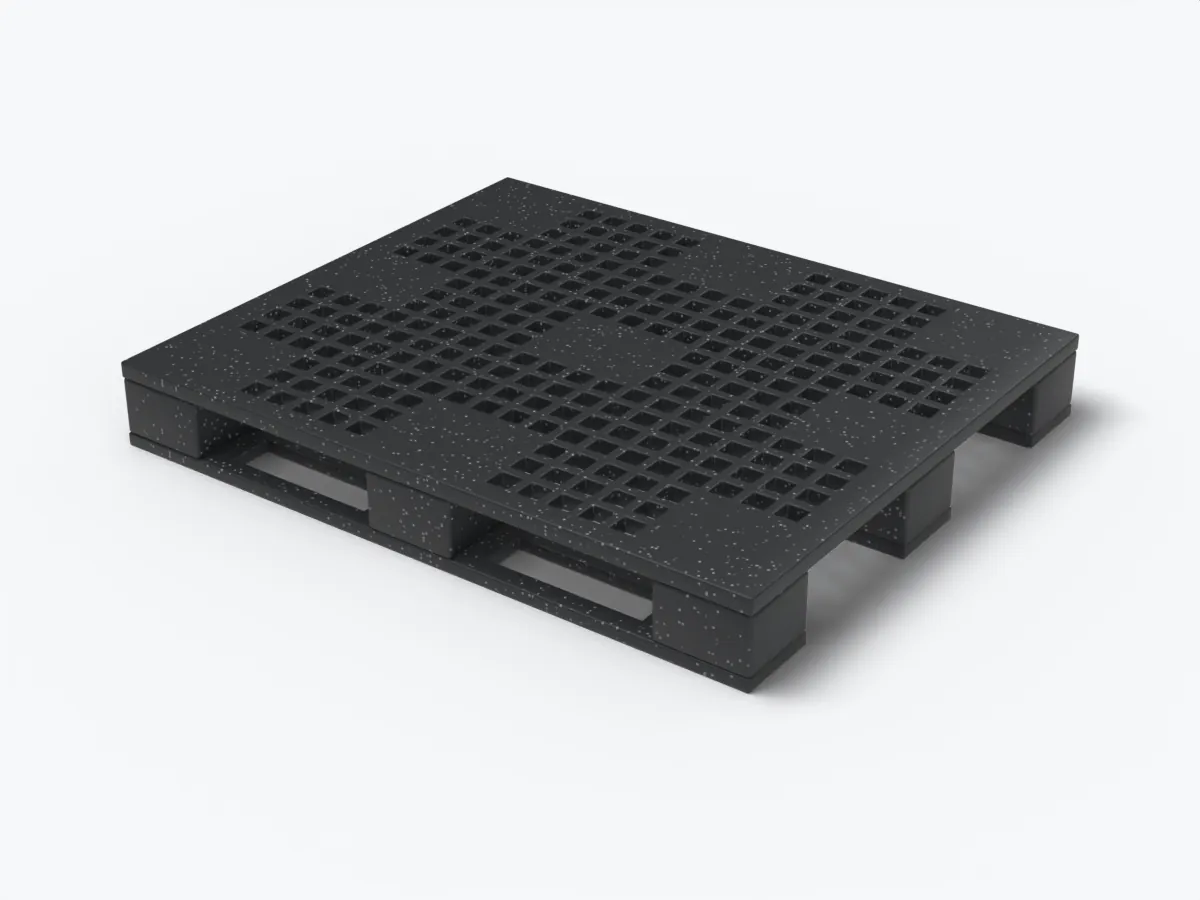
Most recycled pallets are black or dark gray. Mixed colors blend dark, and dark pigment hides the variation. A maker that sorts regrind by color can offer blue or other shades in some models.
The part itself often shows its origin. A recycled pallet may have flow lines, specks of other colors, or a matte, slightly uneven surface where different regrind melted together. Its resin code may read 2 or 5 like a virgin part, or 7, the code for other plastics, when the blend mixes polymers.
None of these marks is a defect on its own. They tell you where the material came from, and the maker's sheet tells you what the finished model is rated to carry. A specked or streaked surface matters only where a site wants uniform color for zoning or for appearance at a retail door.
| Source | What it is | Consistency | Typical use in pallets |
|---|---|---|---|
| Post-industrial | Sprues, runners, rejected parts and trim from molding plants | High; one resin, known grade | Blended with virgin in standard models |
| Closed-loop pallet regrind | Broken pallets of known makers ground back to flake | Good if sorted by resin code | Back into pallets of the same resin |
| Post-consumer | Crates, bottles, containers and mixed packaging | Lower; mixed grades and colors | Compression-molded or heavier injection designs |
| Mixed plastics | HDPE, PP and other polymers together | Lowest | Thick, heavy pallets for floor use |
How recycled pallets are molded
Injection molding works well with clean, single-resin regrind and with blends of regrind and virgin, and it gives the same fine ribbing as a virgin model. Compression molding tolerates mixed and dirtier feedstock, pressing it into thick, solid sections. Structural foam also accepts regrind blends and gives the thick walls a recycled design often needs.
Because recycled blends vary more from batch to batch than virgin resin, makers usually design recycled models with thicker sections or extra ribbing to reach their published figures. That often makes a recycled pallet heavier than a virgin model of the same footprint and rating.
Contamination is the main enemy of a regrind batch. Labels, stretch film, metal fasteners and dirt left in the flake become weak spots in the molded part, which is why careful recyclers wash, float-separate and screen their flake before it reaches the press.
Recycled pallet spec table
| Field | What to ask |
|---|---|
| Recycled content | The share of recycled resin the maker states, and post-industrial or post-consumer |
| Resin | HDPE, PP or a mix, and the resin code molded on the part |
| Ratings | Dynamic, static and racked figures for the recycled version |
| Weight | Weight per pallet, compared with the virgin equivalent |
| Cold use | Impact behavior in a freezer, if it goes there |
| Color | Black, gray or a color-sorted option |
| End of life | Whether the maker takes the pallet back for regrind |
Where recycled pallets fit, and where they don't
Recycled models are most common in 48x40 and in square 48x48 sizes, with ISO 1200x1000 and 1200x800 versions for export. Price follows resin: recycled feedstock often costs less than virgin, which can bring the pallet price down, but resin markets move and a heavier design can take back some of the saving.
- Fit: industrial and manufacturing loads on the floor
- Fit: one-way shipments and export, where plastic needs no ISPM 15 treatment
- Fit: companies with a stated recycled-content or waste goal
- Fit: dry storage and outdoor yards where looks don't matter
- Don't fit: direct food contact, where virgin resin with a compliance letter is the norm
- Don't fit: GMP areas and cleanrooms that require known resin and a light color
- Don't fit: racking, unless the model carries a racked figure
Recycled content claims and outdoor life
If you report recycled content, the maker's statement is your document. Ask whether the figure is by weight, whether it separates post-industrial from post-consumer material, and whether it holds for every batch or is an average across production. Customers with sustainability reporting may also ask where the resin came from and whether the pallet can return for regrind at the end of its life.
Pallets kept in outdoor yards see ultraviolet light, which slowly degrades polyolefins that have no protection. Carbon black, the pigment behind the usual black color, screens much of that light, which is one practical upside of a dark recycled pallet. If a model will live outside, ask whether it carries a UV stabilizer as well.
Weight is the other trade-off to plan around. A heavier recycled model needs more effort to handle by hand, and on dense freight it can reach a truck's weight limit sooner than a lighter virgin pallet would.
What to put in a recycled pallet quote request
Give the footprint, the heaviest load, and whether the pallet will be racked or stacked loaded. Tell us any recycled-content level you have to document, and whether color matters. Add the quantity and the delivery ZIP. We reply by email with recycled models that meet the load, the content each maker states, and a delivered price.
When the pallets wear out, they can go back to regrind. Cracked and broken HDPE and PP pallets have resin value, and we buy them through the sell side.
Questions buyers ask
Are recycled plastic pallets as strong as virgin ones?
A recycled model can reach the same published ratings, usually by using more material. Compare the maker's figures for the exact model rather than the resin source.
Can recycled plastic pallets be used for food?
Usually not for direct contact, because regrind of mixed history won't come with a resin compliance letter. They suit packaged goods in dry areas.
Why are recycled plastic pallets usually black?
Regrind of mixed colors blends to a dark shade, and black pigment hides the variation. Color-sorted regrind allows other colors on some models.
Do recycled plastic pallets hold up outdoors?
Dark recycled pallets tolerate sunlight better than many light-colored ones because carbon black screens ultraviolet light. Ask whether the model also has a UV stabilizer.
What does resin code 7 on a pallet mean?
Code 7 stands for other plastics. On a pallet it usually means a blend of polymers rather than a single HDPE or PP grade.
Sources
- USDA APHIS: wood packaging material and its alternatives
- Cabka: plastic pallets for export and ISPM 15
- 21 CFR 177.1520: olefin polymers in food-contact articles
Last reviewed November 8, 2026.