01 Catalog line · Drum
Drum plastic pallets
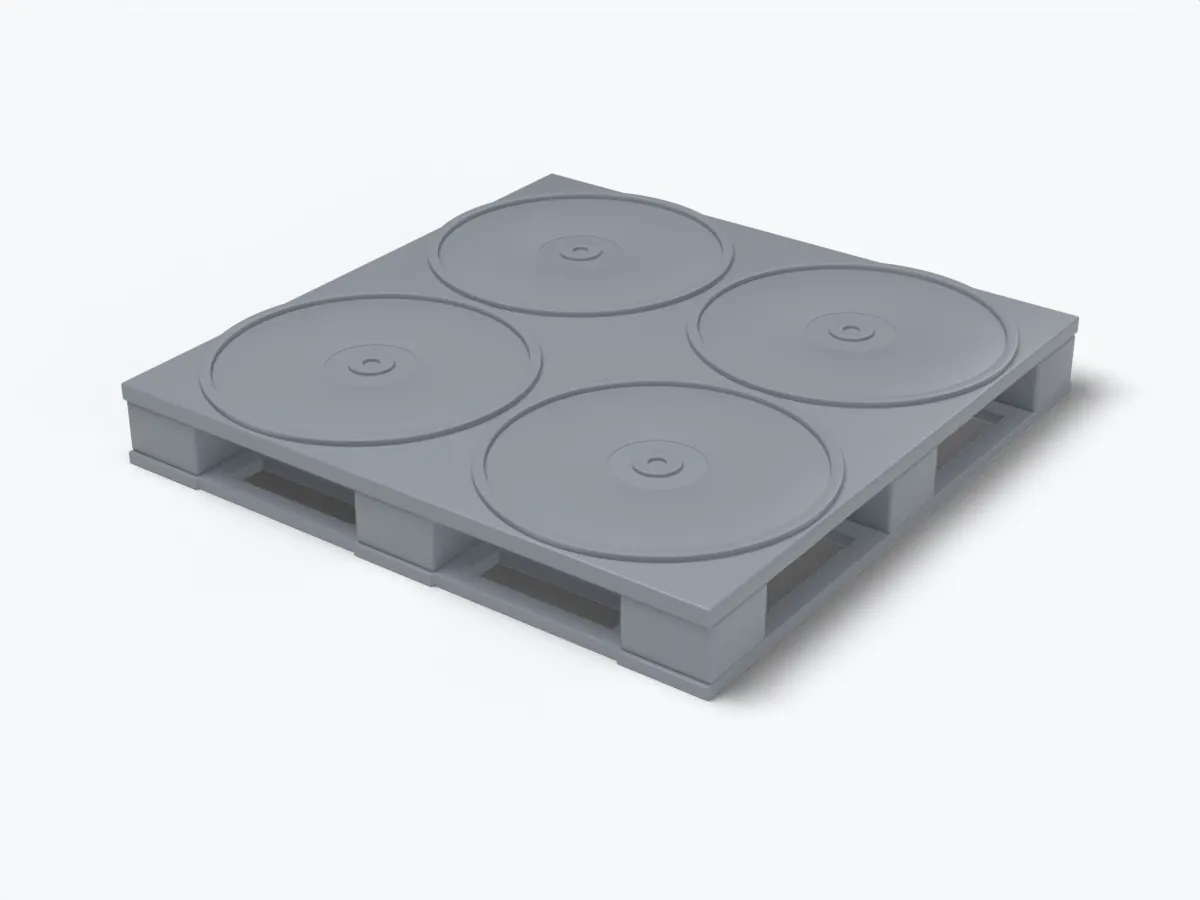
A drum plastic pallet is a square deck, usually 48x48, built to carry four 55-gallon drums on their rims without the deck dishing between them. Send the drum count and full weight, footprint, rack or floor use and delivery ZIP on the quote form, and we email models that carry it with a delivered price.
- Dynamic load
- Four full drums can pass a ton; check the figure with ring loads
- Static load
- Ask for the stacked figure if drums go two pallets high
- Racked load
- Only reinforced models carry drums across beams; get the number
What makes a pallet a drum pallet
A standard 55-gallon drum is about 23 inches across, so four of them in a square need roughly 46 inches each way. That is why 48x48 became the drum footprint, with 44x44 used for tighter patterns and some plastic drums, and 48x42 or 1200x1000 in parts of the chemical trade.
The load is unusual. A drum stands on its chime, a narrow ring at the bottom edge, so all of its weight goes into the deck along that ring. A full drum of water-weight liquid is roughly 500 lb, and denser products weigh more. Four drums put about a ton onto four circles, which a deck built for evenly spread cartons may not support between its legs.
Deck, base and reinforcement
Drum pallets use a stiff, thick deck. Many have molded drum locators, circular recesses or raised rings that hold each drum in its quarter of the deck so the four don't walk together under vibration. Others have a flat solid top that works for drums, pails and totes alike.
Bases vary. Nine-block designs give four-way entry and carry drums well on a floor. Three- or five-runner and full perimeter bases are needed for racking and conveyors. For beam racking, look for steel or fiberglass reinforcement in the deck and a published racked load for four full drums.
HDPE is the common resin, chosen for impact strength and resistance to many acids, bases and salts. PP copolymer appears in stiffer designs. Either can be attacked by some solvents and oxidizers, so check compatibility with what may spill.
Drum pallet specs at a glance
Loads come from each model's own sheet.
| Feature | Options | Why it matters |
|---|---|---|
| Footprint | 48x48, 44x44, 48x42, 1200x1000 | Fits four drums with little overhang |
| Deck | Flat solid, drum locator rings, open grid | Holds drums in place, drains or contains |
| Base | Nine block, three runners, five runners, perimeter | Floor, rack or conveyor use |
| Reinforcement | None, steel tubes, fiberglass rods | Whether it can be racked under drums |
| Resin | HDPE, PP copolymer, UV-stabilized grades | Chemical, impact and outdoor resistance |
Where drum pallets work, and where they don't
- Good: shipping and storing filled drums in chemical, coatings, lubricant, food ingredient and flavor plants
- Good: export of drums, since plastic needs no ISPM 15 treatment
- Not for: secondary containment of hazardous liquids; that is a spill pallet with a sump, a different product
- Not for: 30-gallon or 5-gallon loads where a smaller footprint wastes less space
- Not for: whiskey or wine barrels, which rest on steel racks or wooden ricks in their own aging houses
Getting drums on and off
Drums are loaded by forklift drum attachments, below-hook lifters, drum hand trucks and parrot-beak grippers. A raised lip around the deck can foul a hand truck's nose plate, so check that loaders can tip a drum on from the side you use.
Banding or stretch hooding ties four drums together. Notches or slots at the deck edge let steel or polyester strapping pass without cutting into the pallet.
Fiber and poly drums are lighter, flex more than steel and sit flatter on their bottoms, so a locator ring sized for a steel chime may not suit them. Hazardous contents need DOT-compliant drums and labels; the pallet isn't the hazmat package, but receiving inspectors still reject loads on cracked or dirty bases.
| Drum | Bottom | Deck that suits it |
|---|---|---|
| Steel tight-head, bung openings | Rolled chime ring | Locator rings or flat solid |
| Steel open-head, lever-lock or bolt ring | Rolled chime ring | Locator rings or flat solid |
| HDPE tight-head | Molded base, slightly wider | Flat solid or larger rings |
| Fiber drum | Flat bottom, metal edge | Flat solid, kept dry |
| 30-gallon steel | Smaller ring | Square 42x42 or a 48x40 with four |
| 85-gallon salvage overpack | Wide base | One or two per pallet, flat deck |
Totes, pails and other square loads
A 48x48 drum pallet also suits 5-gallon pails, square-based bulk bags and cartons of that footprint. Intermediate bulk containers have their own integral base and need no pallet.
Drum dollies, cradles and overpacks are separate handling gear. The pallet's job is unitizing: grouping drums so one forklift trip, one trailer position or one rack slot moves four at once.
Honey, fruit concentrate, vegetable oils, syrups and pharmaceutical intermediates also travel in 55-gallon drums, so drum pallets turn up well beyond chemical plants. Food drums want a washable base and the maker's resin letter on file.
If your plant runs drums and cartons, two footprints may be cheaper than forcing one: 48x48 for drums and 48x40 for everything that goes to a grocery or retail customer.
Requesting drum pallets
Tell us the drum size and how many go on each pallet, the full weight of the heaviest drum, the footprint, whether pallets are racked, stacked or kept outside, the quantity and the delivery ZIP. We reply by email with models and a delivered price. Used drum pallets in Grade A or B are an option for floor storage.
Questions buyers ask
Is a drum pallet the same as a spill containment pallet?
No. A spill pallet has a sump that holds leaks; a drum pallet is a base for shipping and storage.
Can drum pallets go in racks?
Reinforced models with runners and a published racked load can. A nine-block drum pallet without that rating should stay on the floor.
How much does a pallet of four full drums weigh?
Work it out: about 8.3 lb per gallon for water-weight product, times 55, plus the empty drum, times four. Solvents run lighter, acids and brines heavier; take the specific gravity from the product's safety data sheet.
Sources
- USDA APHIS: wood packaging material and its alternatives
- Cabka: plastic pallets for export and ISPM 15
Last reviewed November 8, 2026.