03 Industry · Exporters and Forwarders
Plastic pallets for exporters and Forwarders
Exporters and freight forwarders use plastic pallets to skip ISPM 15 heat treatment and stamping, to match the destination's footprint and to cut weight on one-way loads. Send the footprint or destination, the load, the box or aircraft, quantity and delivery ZIP through the quote form; we email matching models with a delivered price.
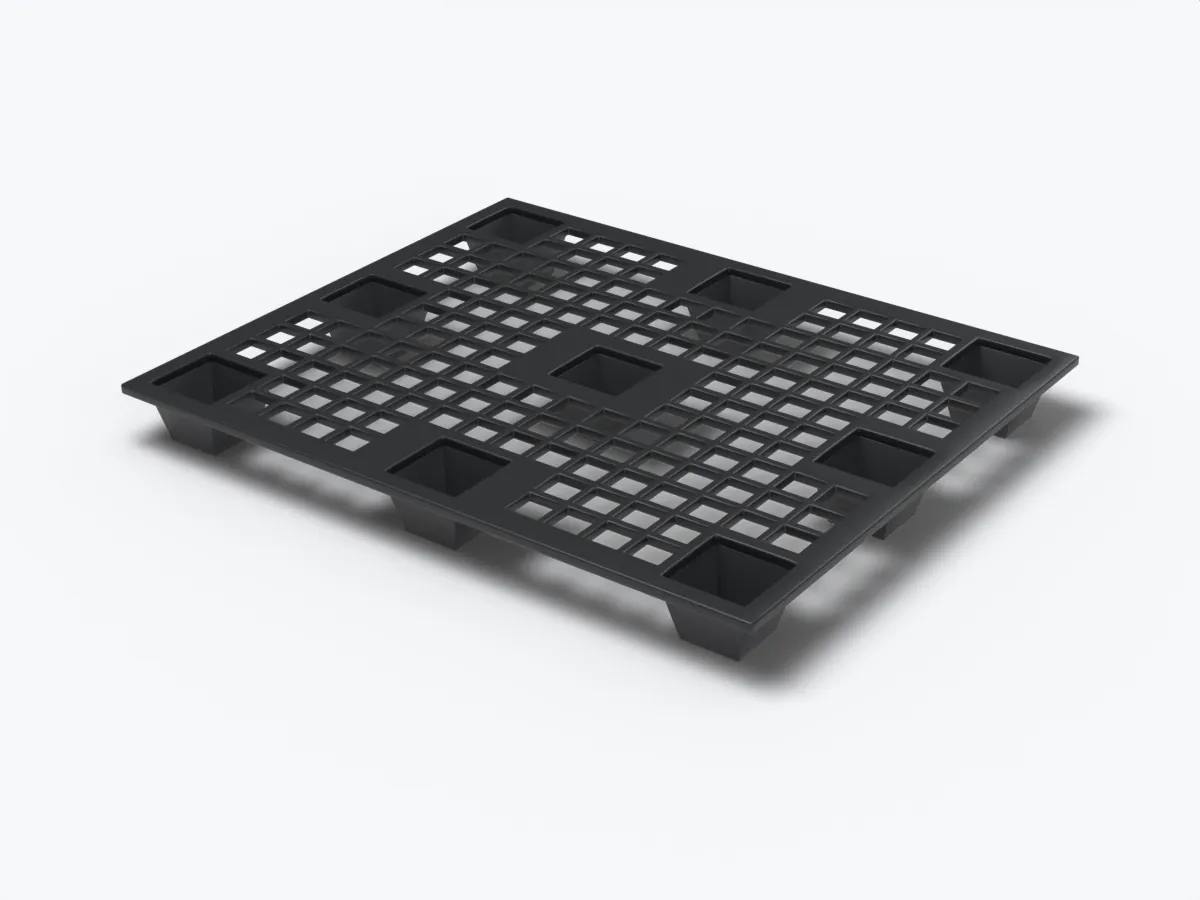
Why plastic simplifies an export load
ISPM 15 is the international standard for wood packaging. Solid-wood pallets crossing borders must be heat treated or fumigated and carry the IPPC mark, and a missing or doubtful stamp can mean a refused, re-exported or destroyed shipment at the port of entry.
Plastic is outside that standard. USDA APHIS lists plastic pallets among the alternatives to wood packaging material, and states those alternatives are not subject to its WPM regulations. Pallet makers say the same: no treatment to arrange, no stamp to inspect, no bark or insects to find.
Engineered wood such as plywood or presswood is also exempt, so it is the other common route. Plastic adds washability and a consistent weight.
No single export size
There isn't one export pallet. The right footprint depends on the container and on what the consignee's racks and trucks take. Europe runs on 1200x800 and 1200x1000; Japan and Korea favor 1100x1100; Australia uses 1165x1165; 1067x1067 (42x42) and 1140x1140 are the other ISO 6780 squares.
For a North American receiver, 48x40 is still the answer. For a shipment going to a distributor in Germany, building on 1200x800 saves a restack at the other end.
| Footprint (mm) | Inches, approx. | Region or use |
|---|---|---|
| 1200x800 | 47.2x31.5 | Europe, the EUR size |
| 1200x1000 | 47.2x39.4 | Europe, UK, chemicals |
| 1219x1016 | 48x40 | North America |
| 1100x1100 | 43.3x43.3 | Japan, Korea, much of Asia |
| 1165x1165 | 45.9x45.9 | Australia |
| 1067x1067 | 42x42 | North America, Europe, Asia |
| 1140x1140 | 44.9x44.9 | Container-optimized square |
Fitting the container
A 20-foot box is about 19.3 ft long and 7.7 ft wide inside; a 40-foot box is about 39.5 ft long at the same width. On the floor that is roughly 10 pallets of 48x40 in a 20-foot and about 20 in a 40-foot, with 1200x800 fitting about 11 in a 20-foot. Squares such as 1140x1140 were sized to use that 7.7-ft width efficiently.
Height matters as much as footprint. A lower-profile pallet leaves more cube for cargo under the door header, and a nestable stack of empties fills far less of a box when pallets are being repositioned.
High-cube boxes stand about a foot taller outside, 9.5 ft against 8.5 ft, which fits taller loads or double-stacked light cargo. Open-top and flat-rack units carry out-of-gauge machinery that rarely sits on a pallet at all.
One-way pallets, weight and air freight
Most export pallets never come back. That favors lightweight nestables, often in recycled resin, priced to be given away with the freight. Their legs carry loads well on a floor but most aren't rated for racking, so ask what the consignee will do with them.
In air freight, tare weight is billed. A light molded pallet can weigh well under a wood one of the same footprint, and the saving repeats on every shipment. Ask for the pallet's weight on the maker's sheet and compare it with your current base.
Inspection, bracing and paperwork
Inspectors at a port of entry look for wood: bark, insect holes, a missing or illegible IPPC stamp. On a plastic base that check has nothing to find. Solid-wood dunnage, crates and bracing still need ISPM 15 treatment, though, so a plastic pallet under a lumber crate doesn't exempt the crate.
Forwarders consolidating less-than-container cargo at a container freight station gain from uniform bases: loads block, brace and lash faster, and straps grip a perimeter better than bare legs. Some importing countries also check packaging for soil, which a washed deck passes easily.
Keep the pallet maker's spec sheet with the shipping documents, so a consignee asking about racking or food contact can see the model and resin. On tropical ocean routes, condensation inside a box wets cargo; plastic adds no moisture of its own the way green lumber can.
Returnable cross-border loops exist too, such as a US plant trucking parts to its own sister plant in Mexico or Canada and getting empties back. There a sturdier rackable earns its higher cost over many trips.
Pallet types forwarders ask for
- Lightweight nestable export pallets for one-way sea and air loads
- Rackable export pallets for consignees that put loads straight into racks
- Drum pallets in 48x48 or 1200x1000 for chemical exports
- Hygienic pallets for food exports where the importer inspects for cleanliness
What to send for an export quote
Give us the destination country or the footprint the consignee wants, the cargo weight per pallet, whether it ships by sea or air, the quantity and the ZIP the pallets should reach. We reply by email with models and a delivered price, on a 53-foot van to your dock or LTL for a smaller lot.
Questions buyers ask
Do plastic pallets need an ISPM 15 stamp?
No. ISPM 15 covers wood packaging, and USDA APHIS lists plastic pallets as alternatives not subject to its wood packaging rules.
What is the best pallet size for export?
The one the consignee's country uses. 1200x800 and 1200x1000 for Europe, 1100x1100 for much of Asia, 1165x1165 for Australia.
How many pallets fit in a 40-foot container?
About 20 of 48x40 on the floor, a few more of the smaller European size. Exact counts depend on the box and how the load is turned.
Can plastic pallets ship by air?
Yes. Cargo built on a light plastic base keeps billed tare down on airline unit load devices; ask your forwarder for the height and weight limits of the aircraft.
Sources
- USDA APHIS: wood packaging material and its alternatives
- Cabka: plastic pallets for export and ISPM 15
- 21 CFR 177.1520: olefin polymers in food-contact articles
Last reviewed November 8, 2026.