01 Catalog line · Cold Storage
Cold Storage plastic pallets
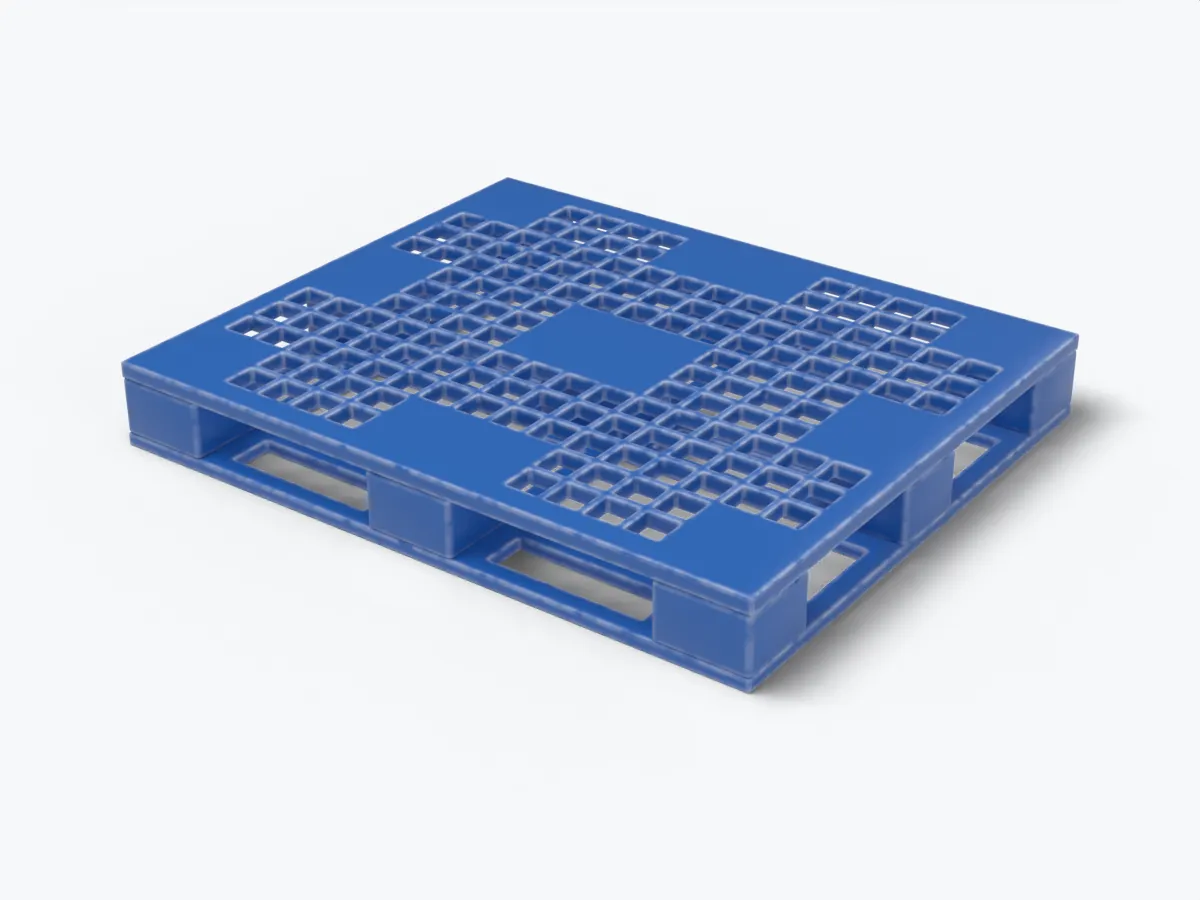
Cold storage plastic pallets are molded from resins that keep their impact strength below freezing, with reinforced decks for freezer racking and open tops for blast cooling. Send the room temperature, footprint, rack type, heaviest load and delivery ZIP through the quote form; we email back cold-rated models with a delivered price.
- Dynamic load
- Ask for the figure at your room temperature, not 70 F
- Static load
- Usually holds up in the cold; confirm stack limits with the maker
- Racked load
- Needs reinforcement and a freezer-temperature racked figure
What the cold does to a pallet
Plastics get stiffer as they cool, which slows creep under a racked load. They also lose toughness. A fork tine that bounces off a pallet at room temperature can crack the same part at minus 10 F. Cold storage pallets are built around that tradeoff.
Resin is the first choice. HDPE (code 2) stays tough well below freezing and is the most common cold-room resin. Impact-modified PP copolymer (code 5) is stiffer and also works in freezers. PP homopolymer turns brittle in the cold and doesn't belong there. Some makers add impact modifiers or use blends for deep-freeze grades.
Construction for coolers and freezers
Decks come open or solid. Open-grid decks let refrigerated air reach the bottom layer of cases, which speeds blast freezing and keeps temperatures even in storage. Solid decks suit bagged product and areas washed often, but slow the bottom tier's cooling.
For racking, the deck carries steel tubes or fiberglass rods molded or slid into channels. Steel is stiffer; fiberglass won't rust if the deck is cracked and water gets in. Both let the maker publish a racked load. Bases are three or five runners, or a full perimeter, so the pallet sits on beams, drive-in rails and flow-lane rollers.
Lead edges take the fork strikes, so better freezer models thicken or reinforce the perimeter and the entry openings. Chamfered entries help drivers in gloves and fogged visors find the pocket.
Cold storage pallet specs
Compare models on these points, then confirm each figure for the exact model on its sheet.
| Feature | Choices | Effect in the cold |
|---|---|---|
| Resin | HDPE, impact-modified PP copolymer | Toughness below freezing |
| Deck | Open grid, vented, solid | Airflow through the load vs. bag support |
| Reinforcement | Steel tubes, fiberglass rods, none | Racked rating, creep resistance |
| Base | Three runners, five runners, perimeter | Beams, rails, flow lanes |
| Edges | Standard, thickened, reinforced | Survival of fork strikes |
| Options | RFID pockets, anti-slip pads, colors | Tracking, load grip on frosted decks |
Jobs it suits
- Captive fleets in freezer and cooler racking, where pallets never leave the building
- Blast freezing of cased meat, poultry, seafood and bakery dough, with an open deck
- Automated high-bay freezers that need identical, flat bases
- Ice cream and frozen dessert storage at the coldest settings, with HDPE
- Wet coolers for produce and dairy, where wood swells and molds
- Vaccine freezers and 2 to 8 C pharmaceutical rooms, where clean decks and even temperature mapping matter
Frost, condensation and age
When a pallet leaves a freezer for a warm dock, moisture condenses on it and can freeze again when it goes back in. Molded surfaces don't hold that water, but deep pockets collect ice, so a draining design with few closed recesses stays lighter. Anti-slip pads or textured tops keep cases from sliding on a frosted deck.
Washing happens at room temperature with hot water and sanitizer, and the pallet should dry before returning to a freezer, or the film freezes into a skin. The date clock on the underside gives the month and year of molding, useful for retiring old freezer stock before brittleness shows up as cracks.
Where it isn't the right pallet
A cold storage pallet is overbuilt for one-way shipping to a customer who keeps it. Light nestables cost less to lose. A reinforced rackable also weighs more than an unreinforced stackable, which adds up in manual handling.
Sprinkler codes are the other limit. Unlisted plastic pallets are treated as a more severe fire hazard than wood in storage, and freezers use dry-pipe or preaction systems. Ask the maker for the model's fire listing before switching a racked freezer.
Footprints and ordering
48x40 is the main size, matching US racking. Cold-rated models also come in 40x40 for dairy, 48x45, 48x48 and 1200x1000 for import and export loads.
On the quote form, give the coldest room temperature, the rack type, the heaviest load, the deck you want, the quantity and the delivery ZIP. We answer by email with models whose published figures meet it, plus a delivered price.
Questions buyers ask
Which plastic is best for freezer pallets?
HDPE is the usual choice because it stays tough below freezing. Impact-modified PP copolymer also works; plain PP homopolymer doesn't.
Are load ratings the same in a freezer?
Not always. Most sheets list figures at room temperature, so ask the maker for ratings and impact data at your room temperature.
Should a freezer pallet have an open deck?
For blast freezing, yes, so cold air reaches the bottom cases. For bags or frequent washing, a solid deck can be better.
Do steel-reinforced pallets rust in coolers?
Tubes sealed inside the deck stay dry until the part cracks. Once water reaches them, corrosion can split the pallet further, so retire cracked reinforced units promptly.
How long do plastic pallets last in a freezer?
Handling decides that more than temperature. Fork strikes, drops and overloading end most freezer pallets; track the date clock and damage rate to set a replacement cycle.
Sources
Last reviewed November 8, 2026.