05 Guide
Washing and sanitizing plastic pallets
Plastic pallets are washed by scraping off debris, washing with detergent by hand, pressure washer or tunnel washer, rinsing, sanitizing and drying before reuse, all within the water temperature and chemistry limits the maker sets for that model. Solid decks clean fastest. Send us your wash method and loads for a quote on washable models.
Why plastic can be washed and wood cannot
HDPE and PP copolymer do not absorb water. Milk, brine, blood, syrup and wash water sit on the surface of a plastic deck and run off it, while wood soaks them up and holds them in the grain. That single property is why washdown rooms run on plastic.
Cleanability is also a rule, not just a preference. FDA's FSMA sanitary transportation rule requires vehicles and transportation equipment used for food to be suitable and adequately cleanable for their intended use, and it applies to shippers, loaders, carriers and receivers moving food by motor or rail in the US.
A plastic pallet that is easy to clean still has to be cleaned. The rule asks for equipment that can be kept clean; your sanitation program decides how and how often.
The wash sequence
Most plants follow the same five steps whether they wash by hand or run a tunnel washer. The order matters: sanitizer does little on a surface still carrying film or debris.
| Step | What happens | What to check |
|---|---|---|
| 1. Dry clean | Pull off stretch film, labels, tape and loose debris; scrape or blow out the leg pockets | Nothing left in pockets or drain holes |
| 2. Wash | Detergent applied by hand, pressure washer or tunnel washer spray bars | Chemistry approved by the maker for the resin |
| 3. Rinse | Clean water removes detergent and loosened soil | No foam or residue on the deck |
| 4. Sanitize | Sanitizer applied at the concentration in your sanitation program | Contact time and concentration logged |
| 5. Dry | Drain, air-dry or pass under air knives; tip so water runs out of pockets | No standing water before stacking or loading |
Temperature and chemistry: follow the maker's limit
Hot water and steam clean faster, but every plastic softens as it heats. Each model has a maximum wash temperature set by its maker, based on the resin, the compound and the design. Going above it can warp a deck or bow the runners, and a warped pallet will rock on the floor, hang up on conveyors and lose its racked rating.
Stacking hot pallets makes the risk worse. A stack of freshly washed pallets carries the weight of the pallets above while the plastic is still warm, and the bottom units can take a set. Let them cool before stacking, or stack fewer high.
Chemistry needs the same care. Strong caustics, chlorinated cleaners, acid descalers and quaternary sanitizers are common in food plants; most are compatible with HDPE and PP, but concentration, contact time and temperature together decide that. Ask the maker for the chemical compatibility of the exact model before changing your cleaner.
- Maximum wash water temperature for the model
- Steam use allowed or not
- Approved detergents, sanitizers and their limits
- Whether stacking hot is allowed, and how high
- Any inserts, labels or RFID tags that need protecting
Pallet designs that wash well
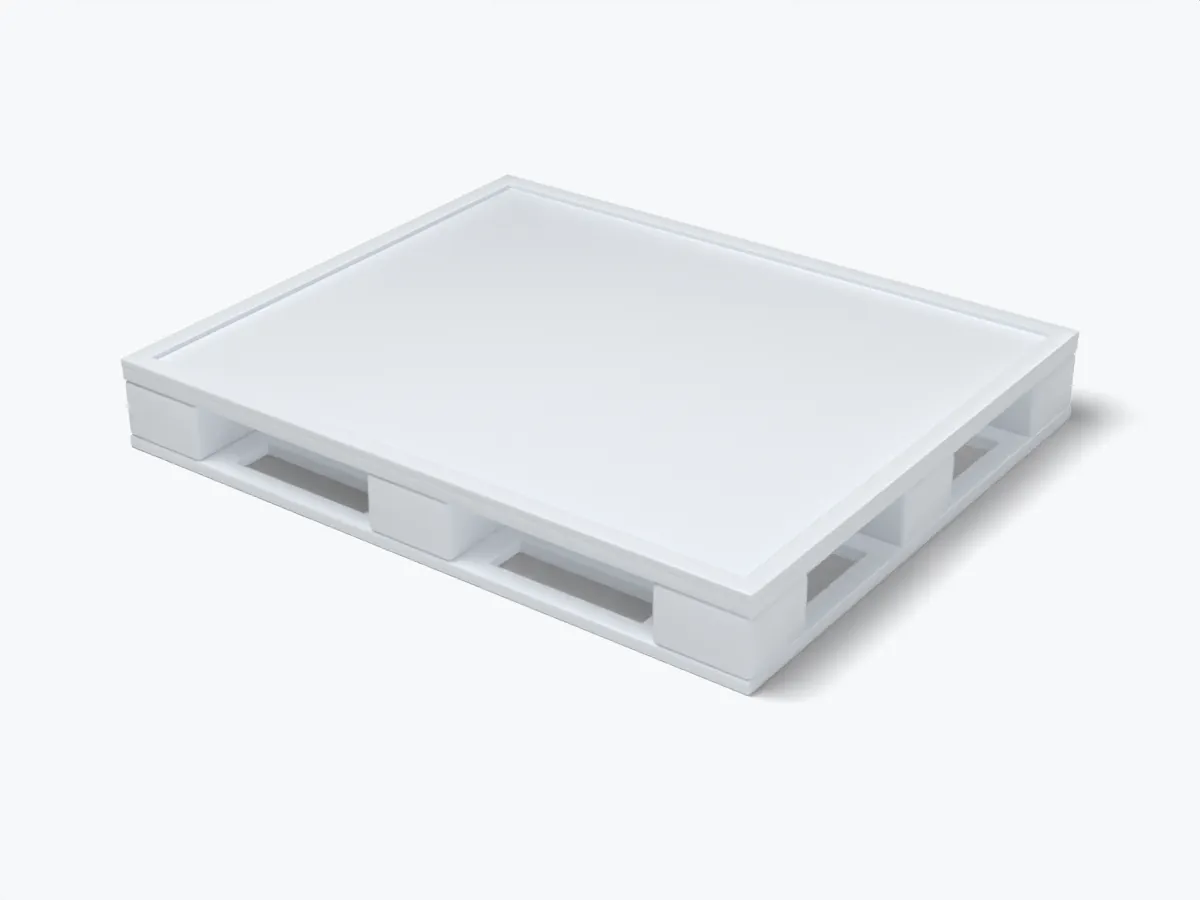
A solid, smooth deck is the fastest to clean: no grid to scrub, nothing for soil to lodge in, and it dries in sheets. Food, dairy and pharma pallets often use solid decks with drain holes for that reason.
Open grid decks drain better and weigh less, but each opening is a corner to clean. They wash well in a tunnel washer with spray from above and below, and slower by hand.
Hollow designs need care. A twin-sheet or other hollow pallet that is punctured can take on water inside the deck, which does not drain and is hard to sanitize. Retire punctured hollow pallets from food areas.
Nestable legs and runner pockets collect debris. Washers with underside spray, or a pressure wand run through each leg pocket, deal with that.
| Deck | Washes | Watch for |
|---|---|---|
| Solid, smooth | Fastest by hand or machine | Water pooling if there are no drain holes |
| Solid with lip | Well; lip keeps product from sliding | Soil trapped along the lip corner |
| Open grid | Well in a tunnel washer, slower by hand | Every opening is a corner to reach |
| Hollow or twin-sheet | Well while intact | Punctures letting water inside |
In-house washing or a wash service
Plants with a steady volume of returning pallets often install a tunnel washer at the return dock: pallets ride a conveyor through wash, rinse, sanitize and air-knife zones and come out ready to reuse. Plants with fewer pallets wash by hand with a pressure washer in a drained bay.
Pooled and closed-loop fleets are often washed between trips by whoever manages the loop. If you buy used pallets for food use, budget a full wash before their first trip, whatever grade they arrive in, since our Grade A means clean enough for its next use, and a food plant's next use sets a higher bar.
Records and when to retire a pallet
Keep washing in the plant's written sanitation program: who washes, how, with which chemistry and at what concentration, and how it is verified. Customers and auditors ask to see it.
Retire a pallet from food areas when it has deep gouges, cracks or punctures that hold soil, a warped deck, or staining that will not wash out. Those pallets can still serve in dry storage, or go back as regrind.
For a quote on washable models, send the footprint, deck, heaviest load and whether it is racked, how you wash and at what temperature, the quantity and the delivery ZIP. We reply by email with models whose makers rate them for that regime, and a delivered price.
Questions buyers ask
Can plastic pallets be washed in hot water?
Yes, up to the maximum temperature the maker sets for that model. Above it the deck or runners can warp, especially if hot pallets are stacked.
What is the best way to sanitize plastic pallets?
Clean first, then sanitize: dry clean, wash with detergent, rinse, apply sanitizer at your program's concentration and contact time, and dry before reuse.
Do plastic pallets meet FSMA sanitary transportation rules?
The rule requires equipment that is suitable and adequately cleanable. A non-absorbent plastic pallet can meet that if it is kept clean under your sanitation program.
Should used pallets be washed before food use?
Yes. Wash and sanitize any used pallet before its first trip in a food area, whatever grade it arrived in.
Is washing pallets a safety job?
Yes. Wash crews handle caustic and acid chemistry and high-pressure water, so goggles, gloves and boots, the cleaner's safety data sheet and a drained, non-slip bay belong in the procedure. Allergen changeovers may also call for a dedicated wash.
Sources
Last reviewed November 8, 2026.