03 Industry · Bakeries
Plastic pallets for bakeries
Bakeries use plastic pallets to keep wood splinters, nail heads and flour-beetle hiding spots out of ingredient rooms, and to color-code allergens. Tell us the footprint, deck, heaviest bag load and delivery ZIP on the quote form, and we email back the models that meet it with a delivered price.
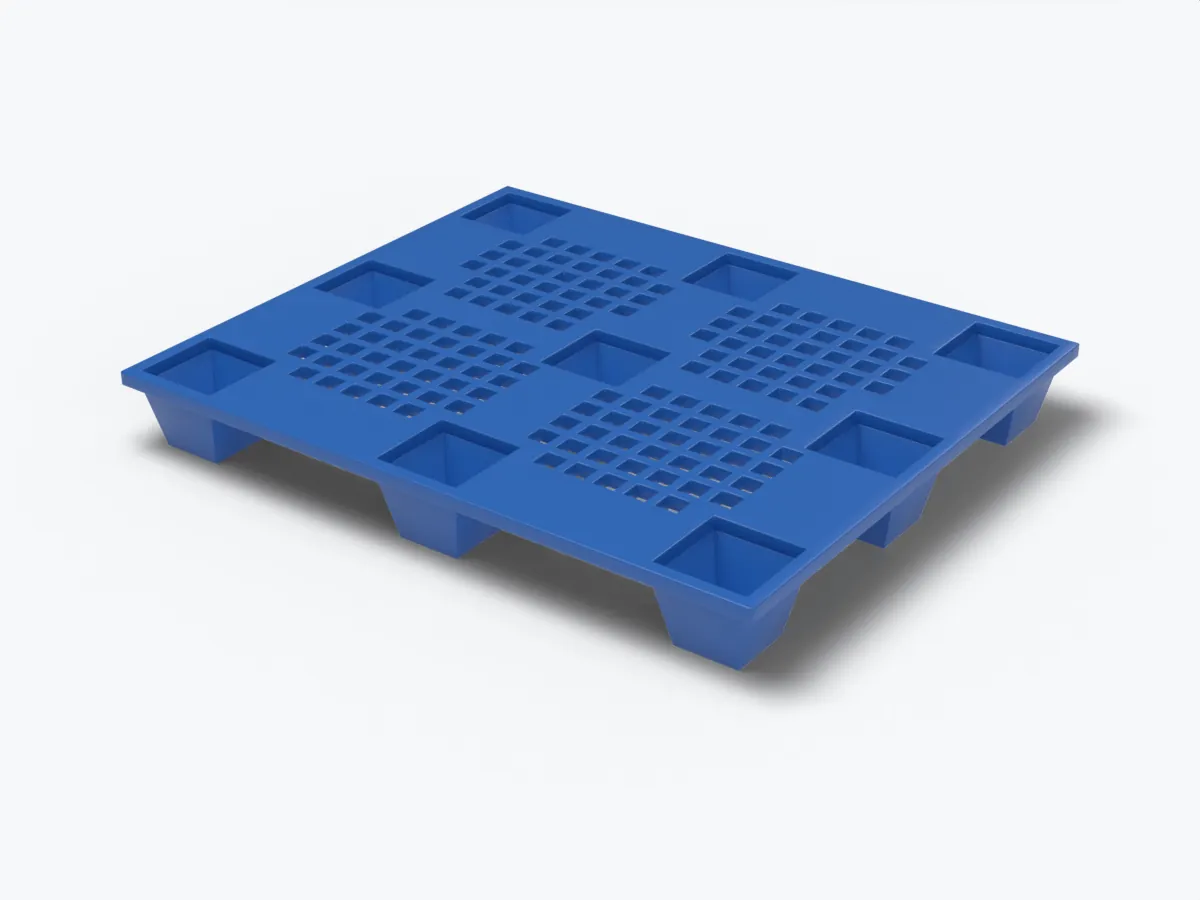
Bags, pails and cases: the bakery load
Most of what a bakery stores on pallets arrives in multiwall paper bags: flour, sugar, dough conditioners, seeds and mixes, commonly 50 lb each. A full pallet of bags is heavy, soft-sided and prone to slumping, so the deck matters as much as the rating.
Large plants take bulk flour by tanker or railcar into silos and keep bags for minor ingredients. Shortening comes in cubes and pails, fillings and icings in pails and drums, yeast in refrigerated cases. Blends and sugar sometimes come in bulk bags, which hang from a discharge frame over the mixer and then go back down onto a pallet half full, lopsided and soft.
On the way out, bread and buns usually leave in stackable plastic bakery trays on dollies or rolling racks for store-door routes. Pallets carry the rest: packaged cakes, cookies, crackers and tortillas in corrugated cases to retailer DCs, and frozen dough or par-baked product in cases to freezers.
Why bakeries move off wood
Wood pallets split, and a splinter in a mixer is a foreign-material incident a metal detector won't catch. Loose nail heads are the other worry. A molded pallet has neither.
Stored-product insects such as flour beetles shelter in the cracks and gaps of wood. Plastic gives them far fewer places to hide, and a smooth deck can be vacuumed clean between loads.
Allergen control is the third reason. Plants that handle peanut, tree nut, sesame, egg or milk often assign a pallet color to each allergen zone, so an almond-flour pallet is never set down in the plain-bread line. Molded pallets come in solid colors, which wood can't match without paint.
Dry cleaning, proof rooms and the freezer
Bakery floors are mostly cleaned dry, by vacuum and brush, because water and flour make paste and mold. A solid-top deck catches spilled flour where it can be vacuumed; an open grid lets it fall through to the floor. When a scheduled wet wash comes, plastic dries without swelling.
Proof rooms run warm and humid. Wood takes on moisture there and loses it again in the oven hall, which loosens fasteners. Plastic doesn't change weight or shape with humidity.
Frozen dough and par-baked lines put pallets in freezers. HDPE keeps its impact strength below freezing; plain PP homopolymer does not, so ask for HDPE or PP copolymer for any pallet that crosses into a blast cell or freezer.
Tortilla, chip and cracker plants run fryers and seasoning tumblers, so floors get oily and slick; a textured or friction-padded deck keeps cases from skating during turns. Commissary kitchens supplying cafes and donut shops move sheet pans on rolling racks, and only dry stores reach a pallet.
Rules a bakery pallet answers to
Under FSMA's preventive controls rule, a bakery's food safety plan has to account for physical hazards, and pallet fragments are one of them wherever pallets enter production. FSMA's sanitary transportation rule separately requires vehicles and equipment that move food to be adequately cleanable, which covers inbound ingredient loads and outbound finished goods.
21 CFR 177.1520 sets out which olefin resins may touch food. A finished pallet doesn't carry an FDA approval; ask the maker for its letter on the resin and colorants in that model.
Footprints and types for bakeries
Mills and ingredient suppliers ship on 48x40, and retailer DCs receive on it, so it is the bakery's working size. Half pallets (24x40) show up for in-store displays of packaged snacks.
| Room or job | Footprint | Pallet type | Deck |
|---|---|---|---|
| Ingredient warehouse, bags racked | 48x40 | Rackable with runners | Solid top, smooth |
| Allergen zone staging | 48x40 | Stackable in a zone color | Solid top |
| Mixing room floor | 48x40 | Hygienic stackable | Solid or closed, no recesses |
| Frozen dough freezer | 48x40 | HDPE rackable | Open or solid |
| Packaged cases to DCs | 48x40 | Nestable or rackable | Open grid |
| Store display of snacks | 24x40 | Half pallet | Solid |
Quoting for a bakery
Send the footprint, the color you need for each zone, the heaviest bag stack and whether it is racked, the quantity and your delivery ZIP. We come back with models and a delivered price. Larger orders fill a 53-foot van; a zone's worth of colored pallets can go LTL.
Questions buyers ask
Should a bakery pallet have a solid or an open deck?
Solid tops suit bagged ingredients and dry cleaning, since spilled flour stays where a vacuum can reach it. Open grids suit outbound cases and anything that gets washed.
Can we get pallets in a separate color for each allergen?
Yes, most models are molded in several colors. Tell us the colors and the count per zone on the quote form.
How often should bakery pallets be cleaned?
Your sanitation schedule sets that, not the pallet. Most plants vacuum ingredient pallets between lots and wash them on a fixed cycle or after any spill of a wet filling or allergen.
Are used plastic pallets fine in a bakery?
Grade A used can work in the dry ingredient warehouse. For mixing and packaging rooms, buy new so the resin paperwork matches the pallet and there is no unknown history.
Sources
- 21 CFR 177.1520: olefin polymers in food-contact articles
- FDA: FSMA rule on sanitary transportation of human and animal food
Last reviewed November 8, 2026.