03 Industry · Fresh Produce
Plastic pallets for fresh Produce
Growers, packers and produce DCs use plastic pallets that let cold air through the deck, stay sound when soaked by hydro-coolers and ice, and carry RPCs and vented cartons. Send footprint, deck, load and delivery ZIP on the quote form, and we email back the models that fit and a delivered price.
Produce loads, from field to store
Produce starts in field bins and harvest totes, moves through a packing shed and leaves in vented corrugated cartons or reusable plastic containers (RPCs). Each package is light, but a full pallet of melons, potatoes or citrus is not.
Loads are often loose-stacked and tall, with corner boards and netting rather than full stretch wrap, so cooling air can reach the product. That makes deck flatness and edge strength important; a sagging edge tips a column of cartons.
Wet loads are normal. Leafy greens, broccoli and sweet corn are often iced or hydro-cooled, and the water runs straight down through the pallet.
Soft fruit is the other extreme. Berries, cherries and grape tomatoes travel in clamshells packed into shallow flats, light and fragile, where a pallet that flexes under a jack crushes the bottom tier. Stiffness under a modest load matters more there than a big dynamic figure.
Pre-cooling, cold rooms and ripening rooms
Forced-air cooling pulls chilled air through vented cartons stacked against a fan wall. An open or vented deck lets air move under the bottom layer; a solid deck leaves the bottom row warm. Hydro-coolers and ice injection soak everything, which swells and stains wood but leaves plastic dimensionally stable.
Cold rooms in a packing house run from just above freezing for most vegetables to warmer settings for tropical fruit. HDPE and PP copolymer both handle that range.
Ripening rooms for bananas and avocados use ethylene gas and tight temperature control. Pallets there are stacked in rows with airflow gaps, and a consistent footprint and height help the room's air pattern work.
Potato, onion and apple storages hold bins for months under controlled atmosphere, with low oxygen and high humidity. Pallets and bins there mustn't rot, warp or harbor fungi between seasons. Watermelon and pumpkin shippers load bulk bins far heavier than any carton pallet.
Rules that touch produce pallets
FDA's FSMA sanitary transportation rule requires vehicles and equipment that carry food to be suitable and adequately cleanable. It covers shippers, loaders, carriers and receivers moving produce by road or rail in the US. A pallet that can be hosed and inspected between loads makes that easy to show.
The FSMA Produce Safety Rule also expects growers to keep equipment that touches covered produce clean. Field bins and harvest pallets are part of that, and a molded pallet is far easier to sanitize than wood after a muddy harvest day.
Produce exported in plastic pallets avoids the ISPM 15 heat treatment and mark that wood needs; USDA APHIS lists plastic pallets as alternatives to wood packaging that its WPM rules don't cover.
Footprints and pallet types for produce
48x40 is the size retailers receive, and RPC and carton footprints are designed to cube out on it. Export produce to Europe or Asia may need 1200x1000 or 1200x800 for the receiving country.
| Job | Footprint | Pallet type | Deck |
|---|---|---|---|
| Forced-air cooling of cartons | 48x40 | Rackable or stackable | Open or vented |
| Hydro-cooled and iced loads | 48x40 | Food grade with drainage | Open grid |
| RPC loads to retail DCs | 48x40 | Rackable with runners | Flat, open |
| Ripening rooms | 48x40 | Stackable, consistent height | Open |
| Export produce | 1200x1000 or 1200x800 | Nestable export pallet | Open |
| Empty returns to the shed | 48x40 | Nestable | Any |
Closed loops and empty returns
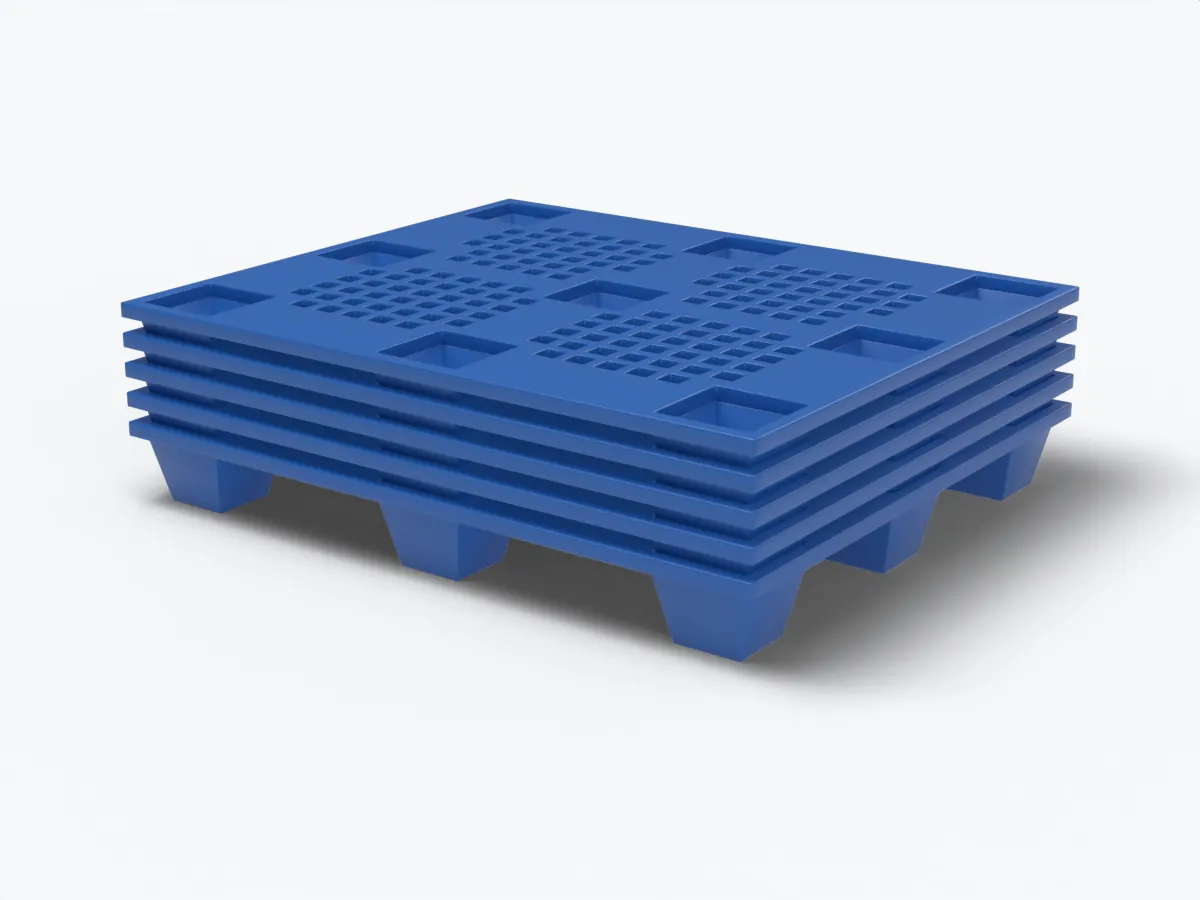
Plastic pays for itself in produce when the pallet comes back: a grower shipping to its own DC, or a packer with a retailer program that returns empties on the backhaul. Nestable models stack empty at a fraction of their loaded height, so a returning truck carries far more of them.
For one-way loads to a customer who keeps the pallet, a lighter nestable or a recycled-resin model costs less to lose.
Field use is rougher than shed use. Harvest pallets sit on dirt rows in sun and rain and get picked up by tractor-mounted forks. Ask for UV-stabilized resin if they live outdoors between seasons, and pick a model with a bottom deck or runners if it rides on soft ground, since bare legs sink and tip.
Quoting for a packer or grower
Send the footprint, the deck, the heaviest pallet weight, whether the load is iced or hydro-cooled, the quantity and the delivery ZIP. We email the models that meet it with a delivered price, on a 53-foot van for a full load or LTL for less.
Questions buyers ask
Does the deck matter for forced-air cooling?
Yes. An open or vented deck lets chilled air reach the bottom layer of cartons; a solid deck slows cooling there.
Do plastic pallets handle hydro-cooling and ice?
They do. Plastic doesn't absorb the water or swell, and an open grid drains it. Wood takes on weight and stains.
Can a packing shed buy used plastic pallets?
Yes, for cartons and RPCs that aren't racked, Grade B used pallets are a common choice. Wash them before they go under product, and check the date clock if age matters to you.
What size pallet do produce exporters use?
It depends on the destination. Many receivers in Europe and Asia want 1200x1000 or 1200x800 instead of 48x40.
Do plastic pallets help with farm food safety audits?
They are easier to clean and inspect, which auditors working to GAP and GFSI schemes look at. The pallet itself carries no certification.
Sources
- USDA APHIS: wood packaging material and its alternatives
- Cabka: plastic pallets for export and ISPM 15
- FDA: FSMA rule on sanitary transportation of human and animal food
Last reviewed November 8, 2026.