03 Industry · Beverage Bottlers
Plastic pallets for beverage Bottlers
Bottlers, brewers and water plants need plastic pallets that carry dense case and keg loads, block-stack three high on a warehouse floor and shrug off a wet filling hall. Send the footprint, the heaviest pallet weight, stack height and delivery ZIP, and we email the models that meet it with a delivered price.
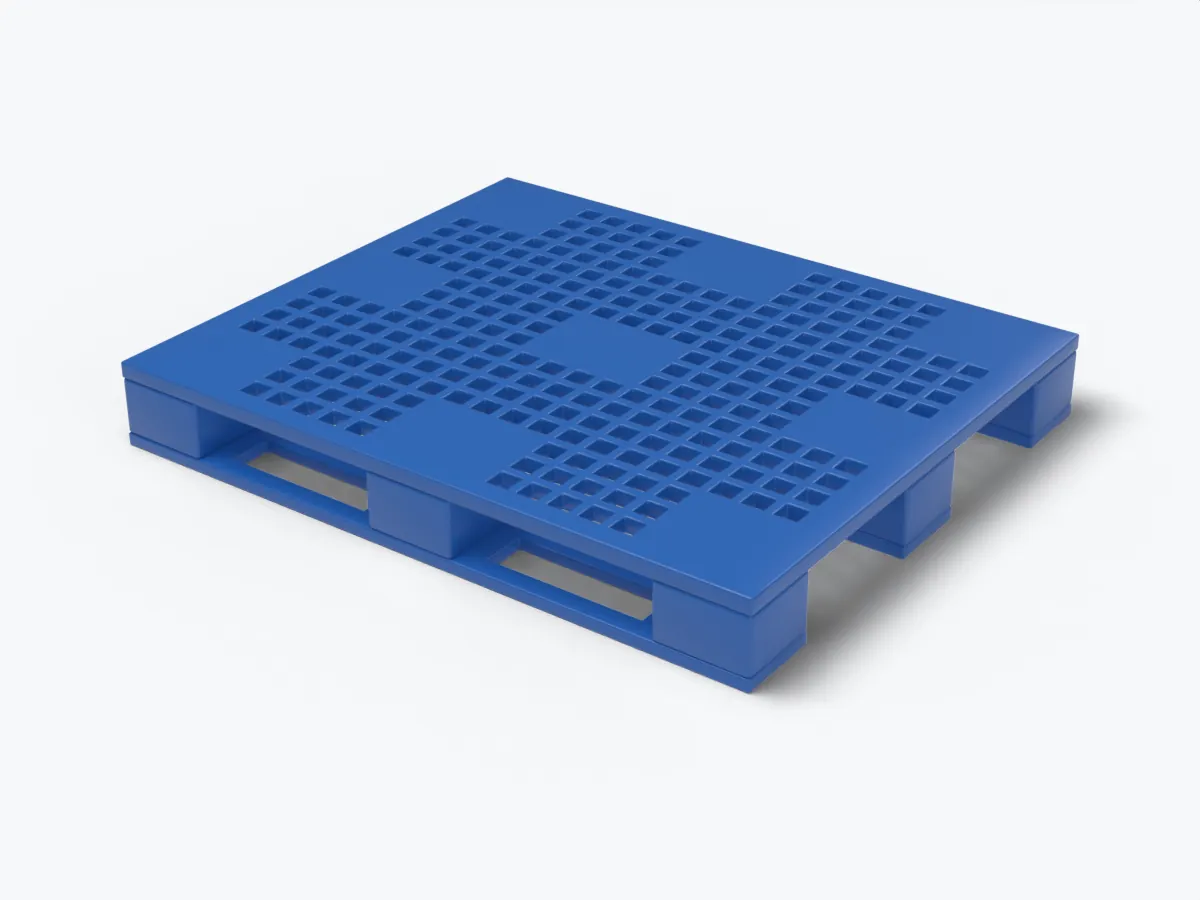
Liquid is the heaviest freight on the dock
Water weighs about 8.3 lb per gallon, and most drinks are close to it. A pallet of bottled water or canned soda is one of the heaviest single loads a lift truck moves in a grocery supply chain, so beverage fleets are bought on dynamic and static rating first.
Loads come in several shapes. Shrink-wrapped trays and corrugated cases of cans and bottles stack in tiers with slip sheets. Bundles of bottled water are dense and tall. Kegs stand upright, half barrels and sixth barrels, on a flat deck that keeps the chime from catching. Bag-in-box syrup for fountain accounts ships in cases.
Inbound, can makers and glass plants deliver empties in tiers on pallets with tier sheets and a top frame. Those pallets cycle back to the supplier, which makes the empty-return leg part of the spec.
Block stacking and static load
Many beverage warehouses store full pallets on the floor, two or three high, rather than in racks. That puts the whole stack's weight on the bottom pallet's deck, so the static rating has to cover two or three full loads above it, not just one.
The bottom of the pallet matters too. A full perimeter base or three runners spread the load onto the deck of the pallet below; nine-leg nestables concentrate it on nine points and can dent the cases underneath. For block stacking, ask for a stackable or rackable model with runners and the static figure for the stack height you run.
Racked storage still has its place for slower SKUs and kegs. A model spanning two beams needs a published racked load, and that number is usually the lowest of the three.
Filling halls, keg coolers and route trucks
Rinsers, fillers and beer pasteurizer tunnels keep the filling hall wet. Wood pallets there swell and grow mold; plastic doesn't. Keg coolers for unpasteurized draft beer stay cold all year, where HDPE keeps its toughness.
End-of-line automation is the quiet reason many bottlers switch. Robotic palletizers, pallet dispensers, conveyors and stretch wrappers expect every base to be identical in height, squareness and bottom pattern. A warped board or a missing block jams a dispenser; an injection-molded deck comes out the same, shot after shot. Glass lines add broken-bottle debris, which lodges in wood but hoses off a molded deck.
Direct-store-delivery routes are hard on pallets. Side-bay trucks, liftgates and pallet jacks at the back door add impact and dragging. A pallet with a closed perimeter and a reinforced lead edge lasts longer than an open nestable on those routes.
Craft brewers, cideries, distilleries, kombucha makers and juice pressers buy smaller lots, often a few dozen pallets for a cold room or the back of a taproom. Malt sacks, hops, spent grain and keg fleets are their usual loads, and many want a brand color.
Rules for beverage pallets
Beverages are food under FDA's rules. The FSMA sanitary transportation rule requires equipment that carries food to be adequately cleanable. It also exempts food completely enclosed in a container that doesn't need temperature control, which covers much of a can or bottle line; ask your compliance lead how it reads for each product.
Beverage pallets that sit under open product at the filler, or carry empties into the filling hall, are worth buying with the maker's letter that the resin meets 21 CFR 177.1520.
Beverage footprints and pallet types
48x40 is the grocery standard, and soft drink and beer distributors use it for warehouse loads. The beverage trade also runs 48x42, 36x36 and 48x36 in parts of the business, and half pallets (24x40) and smaller display bases put product straight on a store floor.
| Load | Footprint | Pallet type | Rating to check |
|---|---|---|---|
| Cans and bottles, block stacked | 48x40 | Stackable with perimeter base | Static at full stack height |
| Bottled water bundles | 48x40 or 48x42 | Heavy duty stackable | Dynamic and static |
| Kegs in a cooler rack | 48x40 | Rackable, flat solid deck | Racked load |
| Store floor displays | 24x40, 36x36 | Half or display pallet | Static with a full display |
| Empty cans from the supplier | Supplier's size | Nestable or stackable | Return trailer count |
What to send for a beverage quote
List the footprint, the gross weight of your heaviest pallet, how many high you block stack, whether any go in racks, the quantity and the delivery ZIP. We reply with models that carry it and a delivered price, by the truckload on a 53-foot van or LTL for a smaller run.
Questions buyers ask
Why do beverage pallets need a high static rating?
Full pallets are often block stacked two or three high, so the bottom pallet carries every load above it. Check the static figure against that total.
Are nestable pallets good for bottled water?
They save space on the return trip, but their legs concentrate weight. For floor stacking, a pallet with runners or a perimeter base spreads the load better.
What deck works under kegs?
A flat, solid or closed top that the chime ring can't drop into. Open grids with wide gaps let a keg rim catch and tip when the pallet is jacked.
What size are beverage display pallets?
Half pallets of 24x40 are common, and 36x36 shows up in beverage too. Tell us the display footprint and we quote models in it.
Do bottlers buy used plastic pallets?
Some do for floor storage, choosing Grade B with straight runners. For fillers and robotic palletizers, new pallets of one model avoid jams.
Sources
- 21 CFR 177.1520: olefin polymers in food-contact articles
- FDA: FSMA rule on sanitary transportation of human and animal food
Last reviewed November 8, 2026.