02 Catalog line · 40x40
40x40 plastic pallets
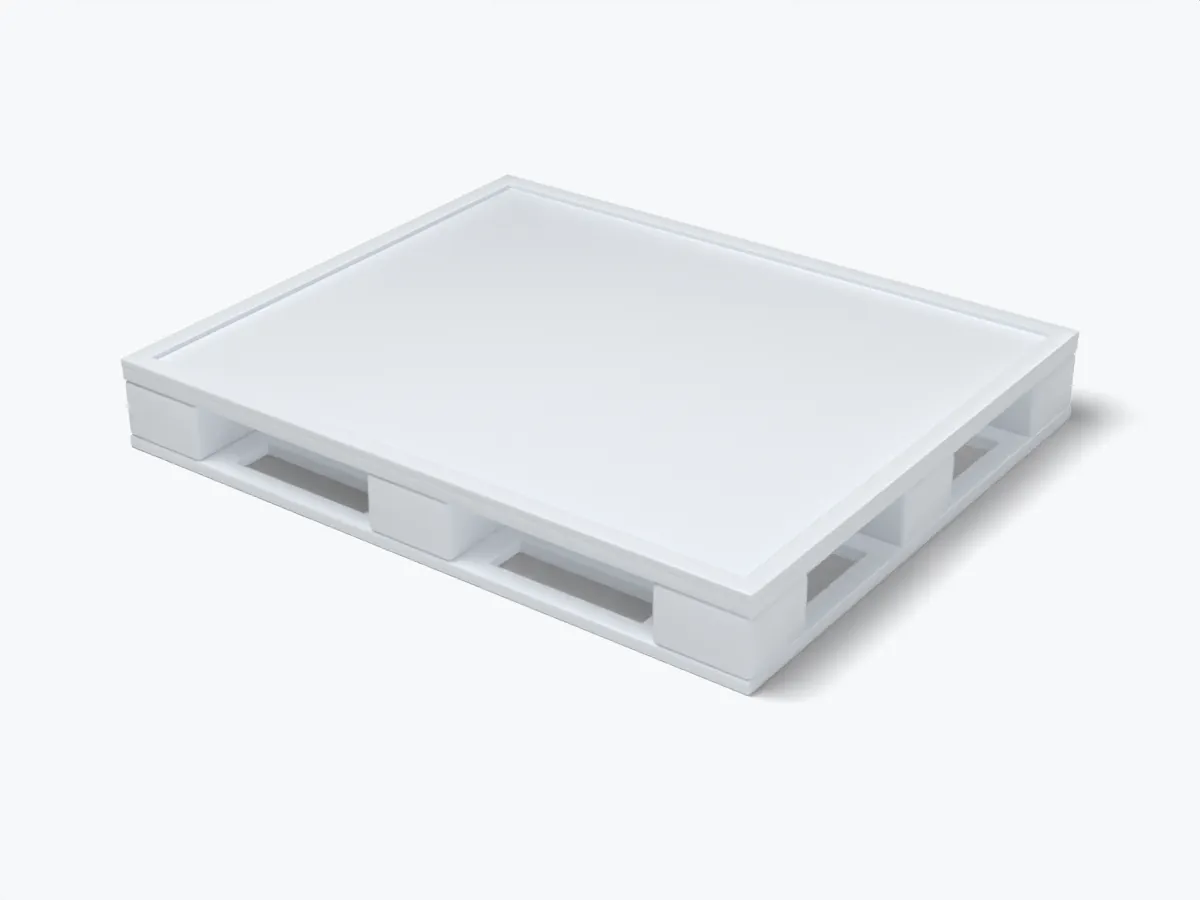
40x40 plastic pallets are a 40 in square (1016 x 1016 mm), the footprint dairy plants and milk distributors settled on. We quote open-deck and solid-deck 40x40 models in HDPE or PP for coolers and washdown rooms; send your load, room temperature, racking plans, quantity and delivery ZIP.
- Dynamic load
- Crated milk is heavy for the size; ask for the model's figure on forks
- Static load
- Ask for the floor rating at cooler temperature, not room temperature
- Racked load
- Most dairy 40x40s are floor-stacked; ask before racking one
The dairy square in numbers
Each side is 40 in, or 1016 mm. The square is 8 in shorter than a grocery 48x40 in one direction and identical in the other, which lets a dairy pallet share a dock and a pallet jack with grocery freight while taking less floor in a crowded cooler.
| Item | Figure | Arithmetic |
|---|---|---|
| Footprint | 40 x 40 in | 1016 x 1016 mm |
| 53-ft van | about 30 | 2 across (80 in of 100; 3 would need 120), 630 / 40 = 15.75, so 15 rows |
| 20-ft container | about 10 | 2 across (80 in of 92.4), 231.6 / 40 = 5.8, so 5 rows |
| 40-ft container | about 22 | 2 across, 474 / 40 = 11.85, so 11 rows |
Why dairy runs on 40x40
Fluid milk moves in plastic crates, and a 40 in square suits a stack of crates with little deck showing at the edges. Dairy plants, milk distribution routes and the store coolers they serve have used the size long enough that racks, dock plates and route trucks expect it.
The rooms matter as much as the load. A milk plant runs wet: filler rooms, crate washers, coolers held just above freezing. A wood pallet in that setting soaks up water and milk and is hard to sanitize. FDA's sanitary transportation rule under FSMA asks that equipment used to carry food be adequately cleanable for its use, and a molded plastic deck can be washed and inspected in a way wood cannot.
| Room | Conditions | What to ask the maker |
|---|---|---|
| Filler and packaging hall | Wet floors, splashes, caustic cleaners | Drainage, chemical resistance |
| Crate washer exit | Hot rinse water, steam | Maximum wash temperature |
| Finished-goods cooler | Just above freezing, humid | Ratings measured cold |
| Ice cream freezer | Well below zero | Impact strength when frozen; HDPE is usual |
| Loading dock and route truck | Lift gates, ramps, curbs | Tare weight and edge strength |
| Cheese aging room | Cool, damp, mold-prone | Smooth deck that wipes clean of whey and brine |
Types of 40x40 plastic pallets
Dairy 40x40s are usually built to drain. An open-grid deck lets wash water run through, and a base without hollow pockets leaves nowhere for milk residue to sit. Solid decks are offered for cased and packaged dairy where small items would drop through a grid.
| Type | Deck | Fit for |
|---|---|---|
| Open-deck stackable | Open grid that drains | Crated milk in coolers and washdown rooms |
| Solid-deck food grade | Smooth, closed top | Cups, cartons and cased cheese or butter |
| Nestable | Open or solid | Lighter loads and empties that return nested |
| Rackable | Reinforced, with runners | Cooler racking, only at a published racked load |
| Used | Graded A or B | Replacement units for an existing dairy fleet |
Resin and cold rooms
HDPE, resin code 2, stays tough at cooler and freezer temperatures, which is why many dairy pallets are molded from it. PP copolymer, resin code 5, is stiffer at room temperature, and its behaviour in the cold depends on the grade the maker uses. Ask the maker whether the published ratings were measured at your room temperature.
Food contact is a resin question first. 21 CFR 177.1520 sets the conditions under which olefin polymers such as polyethylene and polypropylene can be used in food-contact articles. Whether a finished pallet meets them depends on the maker's paperwork for that model; there is no such thing as an FDA approved pallet.
Loading 40x40s on trailers and in containers
The 53-foot van is about 100 in wide inside, which takes two 40 in pallets with 20 in to spare but not three. Down its 630 in length, 15 rows fit, so a straight load of 40x40s is about 30 floor positions. Many dairy routes run refrigerated trailers, whose insulated walls make the inside a little narrower, so check your reefer's interior before counting.
Containers take two across as well. A 20-foot box gives 5 rows, about 10 pallets, and a 40-foot box 11 rows, about 22.
Crates, route trucks and store coolers
Milk crates are usually molded HDPE themselves, so a dairy that already runs plastic crates often finishes the job with plastic pallets: one resin family, one wash line, and no wood fibers in the cooler.
Route loads mix milk, cream, yogurt, juice and eggs. Drivers often pull a pallet off a rear lift gate with a hand jack at the store, so a low, light square is easier on the gate and on the driver. Store walk-in coolers have narrow doors and tight floor plans, and a 40 in square turns in less room than a 48x40.
Many plants run pallets through an automated washer between trips. Ask the maker for the highest wash temperature and the detergents a model tolerates before it goes in.
Ordering 40x40 pallets
Send the load (crates, cases or bulk), the room it lives in and its temperature, whether pallets are racked, the deck you need, the quantity and the delivery ZIP. We reply by email with the models or used grades that fit and a delivered price, by 53-foot van for a full order or LTL for fewer.
Questions buyers ask
Why are dairy pallets 40x40?
Milk travels in plastic crates, and a 40 in square suits a crate stack with little wasted deck. Plants, routes and store coolers have been built around it.
Are 40x40 plastic pallets food grade?
Some are. Food-contact status depends on the resin and the maker's documentation for the exact model, so ask for that paperwork.
How many 40x40 pallets fit on a 53-foot trailer?
About 30 one high: 2 across and 15 rows. A refrigerated trailer may be slightly narrower inside.
Can dairy plastic pallets go through a pallet washer?
Most are built for it. Ask the maker for the model's highest wash temperature and the detergents it tolerates.
Sources
- 21 CFR 177.1520: olefin polymers in food-contact articles
- FDA: FSMA rule on sanitary transportation of human and animal food
Last reviewed November 8, 2026.