01 Catalog section
Plastic pallets for sale by type
Plastic pallets for sale, listed by type: nestable, stackable, rackable, heavy duty, drum, food grade, pharmaceutical, cleanroom, cold storage, export, RFID, used and recycled. Each line gives the deck, base, entry, resin and the maker's three rated loads; send your footprint, heaviest load and delivery ZIP for a delivered quote.
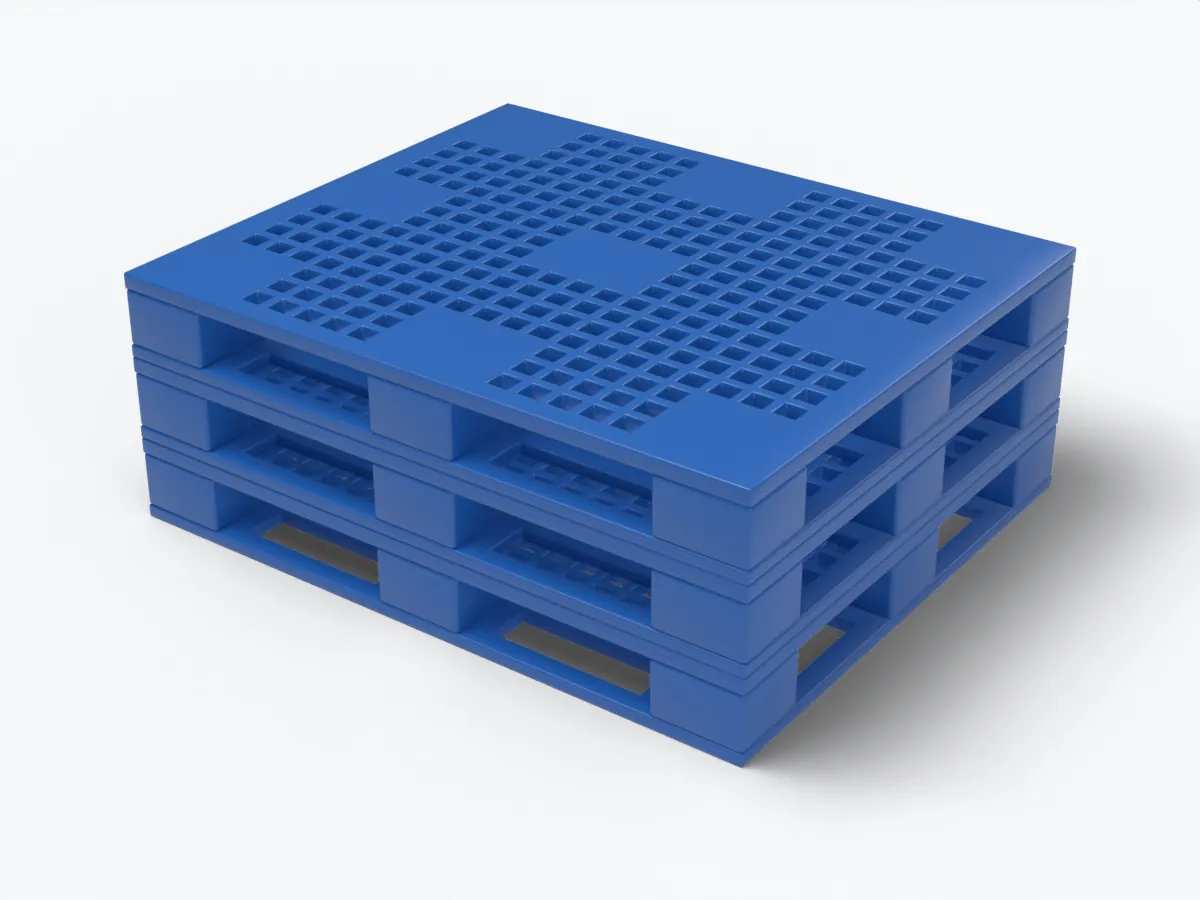
In this section
- 01.01 Nestable plastic palletsNestable plastic pallets drop into each other when empty, so a return trip carries far more. Deck, footprint and load ratings, and where nestables stop.
- 01.02 Rackable plastic palletsRackable plastic pallets with runners or a perimeter base and a racked load from the maker's sheet. How to match beam span, load and footprint.
- 01.03 Heavy duty plastic palletsHeavy duty plastic pallets listed by dynamic, static and racked load, not by adjective. Steel-reinforced and solid-deck models for drums, parts and rolls.
- 01.04 Plastic pallets with RFID tags and pocketsPlastic pallets with molded RFID pockets or tags for returnable loops: how tags are placed, what readers need, and how fleets are numbered.
- 01.05 Food grade plastic palletsFood grade plastic pallets with smooth or open decks that can be washed between loads. What the resin rule covers and what paperwork to ask for.
- 01.06 Plastic pharmaceutical palletsPharmaceutical pallets in plastic: non-absorbent decks, wipe-down surfaces and flame-retardant resins for drug, device and cleanroom logistics.
- 01.07 Plastic export palletsPlastic export pallets need no ISPM 15 treatment or stamp. Lightweight one-way and container-fit footprints for exporters and forwarders.
- 01.08 Used plastic pallets for saleUsed plastic pallets for sale in Grade A, Grade B and mixed lots. What each grade allows, how age is read from the date clock, and how to order.
- 01.09 Recycled plastic palletsRecycled plastic pallets molded from post-industrial and post-consumer regrind: where recycled resin works, where virgin is better, and what it costs.
- 01.10 Plastic pallets in bulk, by the truckloadPlastic pallets in bulk by the truckload: how many fit a 53-foot trailer nested or stacked, lead times on new runs, and how volume changes the price.
- 01.11 Stackable plastic palletsStackable plastic pallets: flat decks and runner or perimeter bases that carry loaded pallets on top, with construction, uses, limits and sizes.
- 01.12 Drum plastic palletsDrum plastic pallets for four 55-gallon drums: 48x48 and 44x44 decks, drum locators, ring loading, racking and how they differ from spill pallets.
- 01.13 Cold Storage plastic palletsCold storage plastic pallets for coolers, freezers and blast cells: cold-tough HDPE and PP copolymer, reinforced racking decks, open airflow tops.
- 01.14 Cleanroom plastic palletsCleanroom plastic pallets: smooth closed surfaces, virgin resin, light colors, static-dissipative and flame-retardant options for classified rooms.
The catalog index
Every pallet in this catalog is a molded part with a model number, so each type is described by how it is built rather than by a photo. The table below is the short version of each line. Open a line for its spec table, the sizes it is molded in, the jobs it handles and the jobs it should not be given.
The rackable column is a starting point, not a rating. A type marked "some models" has rack-rated and floor-only versions in the same family, and only the maker's sheet for the exact model settles which one you are buying.
| Type | Deck | Base and entry | Rackable? | Typical uses |
|---|---|---|---|---|
| Nestable | Open grid or solid | 9 legs, no bottom boards; four-way for forks and jacks | Rarely; most are floor-only | Return loops, one-way export, empties that ride back on the same trailer |
| Stackable | Solid or vented | Legs joined by runners or a perimeter base; four-way forks | Some models | Loaded floor stacks, block storage, conveyor lines |
| Rackable | Solid or open, often reinforced | Three runners or a full perimeter base; jack entry limited by the runners | Yes, at the maker's racked load and span | Selective beam racking, AS/RS, flow lanes |
| Heavy duty | Solid, thick-ribbed | Runners or perimeter base, often steel or structural-foam reinforced | Usually | Parts, machinery, rolls, filled totes |
| Drum | Solid with a raised lip or drum positions | Runners or perimeter base | Some models | Four 55-gallon drums on 48x48 or 44x44 footprints |
| Food grade | Smooth solid or open grid that drains | Any base; sealed reinforcement | Depends on the base | Washdown rooms, dairy, bakery, meat, produce |
| Pharmaceutical | Closed, smooth, wipeable | Runners or perimeter base; four-way forks | Some models | GMP storage, drug and device distribution |
| Cleanroom | Closed with no recesses | Smooth runners or legs with no hollow cavities | Some models | Classified rooms and transfer areas |
| Cold storage | Open grid for airflow | Runners or legs in a resin that stays tough cold | Some models | Coolers, blast freezers, frozen DCs |
| Export | Light open or solid | Usually nestable legs | Rarely | One-way container and air freight |
| RFID | Any deck | Any base, with molded tag pockets | Depends on the base | Pooled and returnable fleets that are scanned at docks |
| Used | Whatever the original model had | As built by the original maker | Grade A only, if the model was rack-rated | Floor storage, internal moves, budget fleets |
| Recycled | Usually solid or ribbed | Legs or runners | Some models | Industrial loads, one-way shipping, recycled-content goals |
What every line lists
A line in this catalog carries the same fields a maker prints on a spec sheet: footprint in inches, height, deck style, base style, entry, resin, molding process and the three load ratings.
The three ratings answer three different questions. Dynamic load is what the pallet carries while it moves on forks or a pallet jack. Static load is what it carries sitting flat on a floor, often under other loaded pallets. Racked load is what it carries spanning two beams with nothing underneath, and it is usually the lowest of the three.
Those numbers belong to a model, not to a type. Two 48x40 nestables from different molds can carry very different loads, so every quote names the model and points to the maker's sheet. The one figure this site quotes as an example is a published heavy-duty nestable 40x48 in PP copolymer: 48.25 x 40.25 x 6.5 in, 28.5 lb, rated 10,000 lb static and 3,500 lb dynamic, with 1,200 fitting on a 53-foot trailer.
Start from the job the pallet has to do
Most buyers know the job before they know the type. This table maps the common jobs to the catalog line that usually fits first.
| The pallet has to | Open this line | The reason |
|---|---|---|
| Ride back empty in a fraction of the space | Nestable | Legs drop into the pallet below, so an empty stack is short |
| Sit on two rack beams with a load | Rackable | Runners and reinforcement carry a published racked load |
| Stack loaded, three or four high on the floor | Stackable | A base with runners spreads the weight onto the load below |
| Carry dense or uneven loads | Heavy duty | Thicker ribs and reinforcement raise every rating |
| Hold four drums | Drum | A square deck sized to drum diameter, often with a lip |
| Go through a washer or a sanitation shift | Food grade | Smooth, drainable surfaces and a documented resin |
| Be wiped down in a GMP area | Pharmaceutical | Closed, non-absorbent deck with no crevices |
| Enter a classified room | Cleanroom | No hollow cavities or recesses to trap particles |
| Work in a freezer | Cold storage | Resin chosen for impact strength at low temperature |
| Leave the country without heat treatment | Export | Plastic is outside ISPM 15, and light models cut freight weight |
| Be counted at every dock door | RFID | Molded pockets hold tags a reader can see from the sides |
| Cost less and stay on the floor | Used, Grade B or mixed lots | Sound pallets with cosmetic wear, sold by grade |
| Carry recycled content | Recycled | Molded from regrind rather than virgin resin |
Resin and molding in two paragraphs
Nearly every pallet here is HDPE (resin code 2) or polypropylene (resin code 5), and the code is molded into the part next to the date clock. HDPE keeps its impact strength in the cold, which is why freezer and dairy models favor it. Polypropylene is stiffer for its weight, and PP copolymer adds back some of the toughness that plain PP loses at low temperature.
The molding process shapes what a pallet can do. Injection molding makes the high-volume nestables and many rackables in one shot. Structural foam gives thick, stiff sections for heavy-duty and rack work. Thermoforming welds two sheets into a light, hollow pallet. Rotational molding builds thick-walled, low-volume parts, and compression molding is common for pallets made from mixed regrind.
New, used, recycled or a full truck
New pallets come straight from a maker's current model list, in the colors and options that model offers. Used pallets are sorted into our own grades: Grade A is whole with no repairs, Grade B is sound with cosmetic wear, and mixed lots are assorted makers sorted only by footprint. Recycled pallets are new parts molded from reground plastic, which is a different thing from a used pallet.
Any of these can ship as a full truckload on a 53-foot van or as a smaller order by LTL freight. Nestables pack the most pallets per trailer; stackable and rackable bases stand taller, so fewer fit.
Getting a quote from the catalog
The quote form on this page asks for the details a spec sheet is checked against. We reply by email with the models or used grades that meet them and a delivered price for your ZIP. If you aren't sure of the type, describe the job and the heaviest load, and the reply will name the lines that fit.
- Footprint, such as 48x40, 48x45 or 1200x1000
- Type, or the job if the type is open
- Deck: solid, open grid or with a lip
- Heaviest load per pallet, and whether it will be racked
- Quantity, from a few dozen to repeat truckloads
- Delivery ZIP
Questions buyers ask
Which plastic pallet type is the strongest?
Strength is a property of the model, not the type. Heavy-duty and rackable lines carry the highest published ratings, but compare the maker's dynamic, static and racked figures for each model you are offered.
Can any plastic pallet go in a rack?
No. Only models with a published racked load should span two beams, and most nestables have none. Check the racked figure at your beam span and orientation before racking.
Are used and recycled plastic pallets the same thing?
No. A used pallet is an existing part that has already been in service. A recycled pallet is a new part molded from reground plastic.
Do you list every footprint for every type?
Not every type is molded in every size. 48x40 is the most common footprint across types, and each line lists the sizes its models come in.
Sources
- USDA APHIS: wood packaging material and its alternatives
- Cabka: plastic pallets for export and ISPM 15
- Rehrig Pacific: 40 x 48 heavy duty nestable pallet sheet
Last reviewed November 8, 2026.