05 Guide
Plastic pallets vs wood pallets
Plastic pallets win where a pallet makes many trips, gets washed, goes abroad or has to weigh the same every time; wood wins on first cost for one-way loads that never come back and on repair with a hammer. Tell us your loop, rooms and loads and we will quote the plastic models that fit, or say when wood is the better buy.
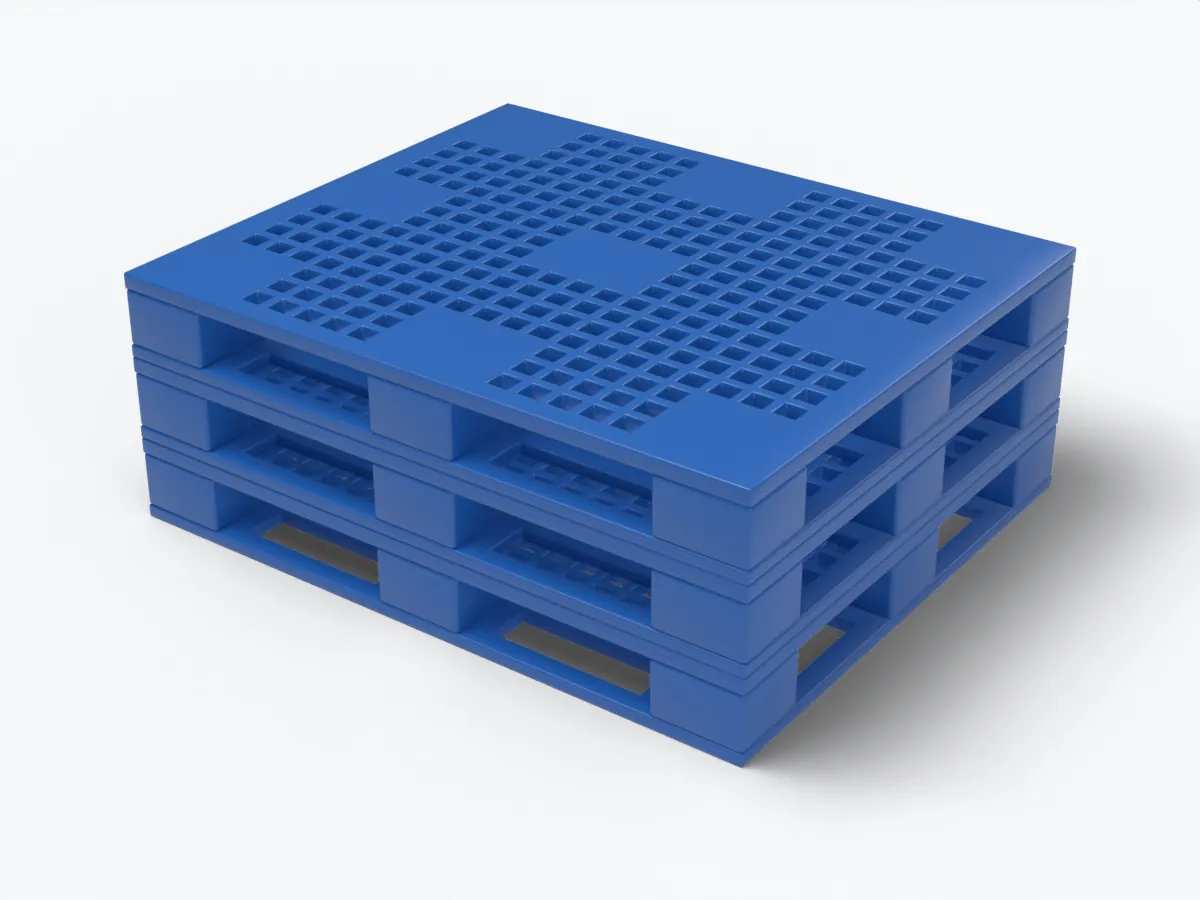
The short answer by job
The choice between plastic and wood comes down to how many times the pallet will be used and what it has to survive between uses. Neither material is the right answer for every dock.
Wood is cheap to buy, easy to repair and carries heavy loads in a rack. Plastic costs more per pallet up front, but it is molded to a fixed model with a rated load, does not absorb water, has no nails and needs no treatment to cross a border.
| Job | Better fit | Why |
|---|---|---|
| One-way outbound shipment, never returned | Wood, or a light plastic export model | The pallet is lost after one trip, so first cost decides |
| Closed loop between your plant and your customer | Plastic | Many trips spread the higher first cost |
| Washdown room in a dairy, bakery or meat plant | Plastic | Non-absorbent deck that can be cleaned and sanitized |
| Export to a country that regulates wood packaging | Plastic | Not subject to ISPM 15 treatment or marking |
| Automated conveyors, stretch wrappers, AS/RS | Plastic | Same dimensions and weight shot after shot |
| Heavy racked loads on a tight budget | Wood, or a rack-rated plastic model | Plastic must carry a published racked figure |
| Pallets that leave your control in an open pool | Wood | Lost plastic pallets cost more to replace |
Cost per trip, not cost per pallet
A new plastic pallet costs a good deal more than a new wood pallet, so on a single shipment wood is the cheaper buy. The comparison changes once you count trips. A plastic pallet that runs in a closed loop for years spreads its price over every load it carries, while wood pallets in the same loop break, get repaired and are replaced along the way.
The math depends on how many pallets come back. In a tight loop with good return rates, plastic usually wins. Where pallets go to customers who keep them, scrap them or mix them into their own stock, the plastic premium walks out the door with each one.
Used plastic narrows the gap. A Grade A or Grade B used pallet costs less than new and still has trips left in it, which is often the right buy for floor storage, internal moves and loads that do not need a rack rating.
Weight, size and handling
A plastic pallet comes out of a mold, so every pallet of one model has the same footprint, height and weight. Automated lines, stretch wrappers, conveyors and automated storage depend on that sameness, and a warped or oversized wood pallet can stop them.
Wood pallet weight varies with species and moisture. A pallet that left the mill green and then dried in a yard can weigh noticeably less a month later, which affects freight weight calculations and manual handling.
Plastic pallets have no nails, staples or splinters. That protects bagged goods, cartons and hands, and it removes the job of pulling protruding nails before a pallet goes back into service.
Nestable plastic pallets add one more advantage on the way back: empty, their legs drop into the pallet below, so a returning stack takes a fraction of the trailer height a stack of wood would.
Hygiene and food plants
Wood is porous. It soaks up water, milk, blood and cleaning chemicals, it can hold mold, and it sheds chips and splinters onto product and floors. That is why plants with washdown rooms are the most common converts to plastic.
Plastic is non-absorbent and can be pressure washed, run through a tunnel washer and sanitized between loads. The FSMA sanitary transportation rule requires transportation equipment used for food to be suitable and adequately cleanable for its intended use, and a solid-deck plastic pallet is easy to show as cleanable.
Plastic is not automatically food grade, though. The resin families are covered by 21 CFR 177.1520, but each finished model's food-contact status rests on the maker's documentation. Ask for it by model.
Export, racking and repair
Solid wood pallets entering a country that has adopted ISPM 15 must be heat treated or fumigated and marked. USDA APHIS lists plastic pallets as alternatives to wood packaging material that are not subject to its rules, so a plastic pallet ships with nothing to treat or stamp.
Wood usually racks well: a sound stringer or block pallet spans rack beams in most selective racks. Plastic pallets vary more by model: some models carry a strong published racked load, many nestables carry none. Check the racked figure on the maker's sheet before plastic goes into a rack.
Wood is repaired with a new board and a nail gun. A cracked plastic pallet generally is not repaired in the field; it is retired. The difference is what happens next: broken HDPE and PP have value as regrind and can be molded again, while broken wood is usually chipped or burned.
That end-of-life value is part of the comparison. When a plastic fleet is finished, it can be sold back as pallets or as regrind instead of paying for disposal.
Switching from wood to plastic
Most plants switch one area at a time: the washdown room, the export line, or the internal loop between production and the warehouse floor. Start with the footprint you already use so racks, trailers and wrappers stay the same, which for most US grocery and consumer goods is 48x40.
Then list the heaviest load per pallet, whether it is racked, the rooms it passes through and how many pallets the loop holds. Send that with the delivery ZIP through the quote form. We answer by email with the plastic models or used grades that meet it and a delivered price; truckloads ship on a 53-foot van and smaller orders go LTL.
Questions buyers ask
Are plastic pallets cheaper than wood pallets?
Not per pallet. A new plastic pallet costs more up front; it becomes cheaper per trip when it runs many loops and comes back.
Are plastic pallets stronger than wood?
It depends on the model. Plastic ratings are published per model, and many plastic pallets are strong on the floor but not rated for racks, where wood is often stronger for the money.
Do plastic pallets need heat treatment for export?
No. ISPM 15 applies to wood packaging, and USDA APHIS lists plastic pallets as alternatives that are not subject to its wood packaging rules.
Can plastic pallets be repaired like wood?
Generally not. A cracked plastic pallet is retired, and its resin can be sold as regrind and molded into new parts.
Sources
- USDA APHIS: wood packaging material and its alternatives
- Cabka: plastic pallets for export and ISPM 15
- 21 CFR 177.1520: olefin polymers in food-contact articles
- FDA: FSMA rule on sanitary transportation of human and animal food
Last reviewed November 8, 2026.