03 Industry · Cold Storage Warehouses
Plastic pallets for cold Storage Warehouses
Refrigerated warehouses use plastic pallets as captive bases for freezer racking, automated cranes and pallet flow lanes, where wood picks up ice and breaks. Send the footprint, rack type, heaviest load, room temperature and delivery ZIP through the quote form; we email back models rated for it and a delivered price.
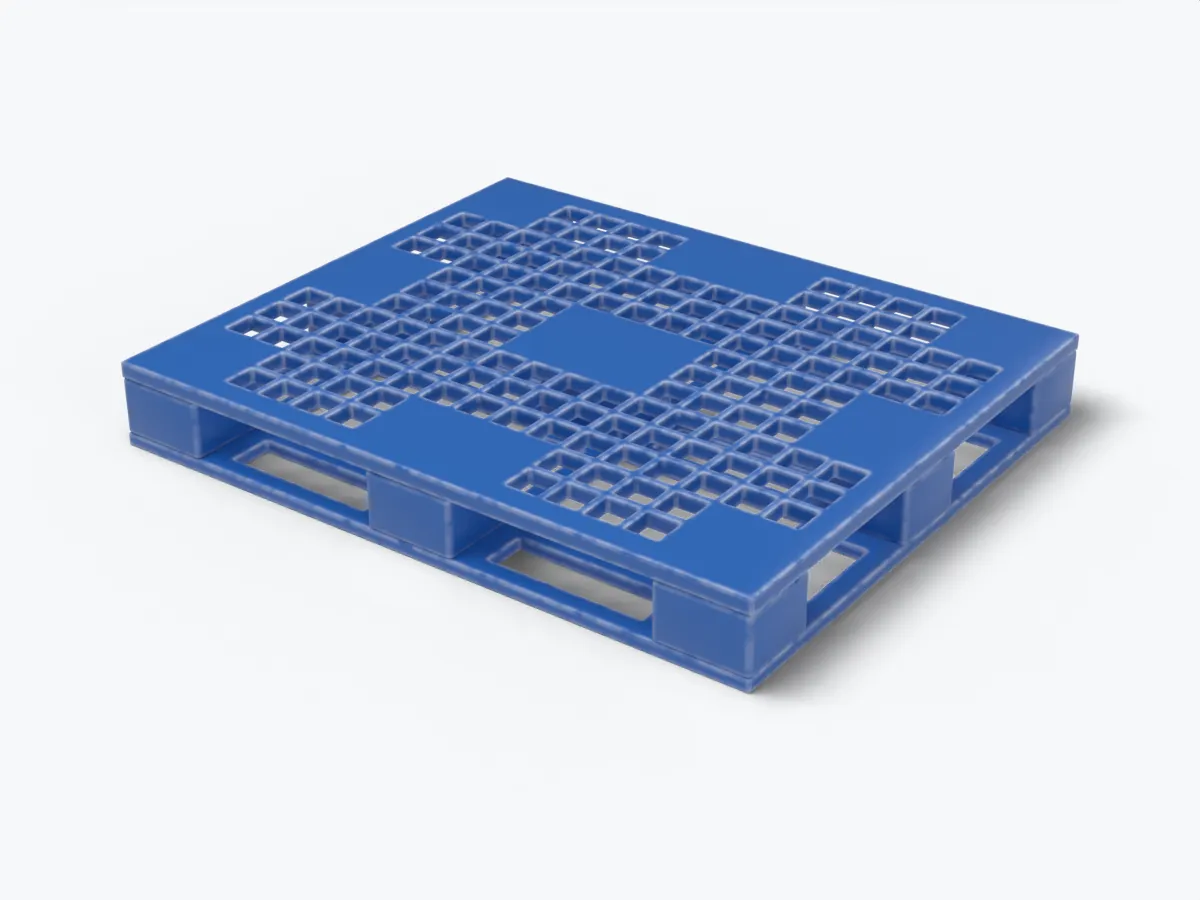
What a refrigerated warehouse handles
A public or contract cold store takes in other companies' product: frozen vegetables, meat and seafood, ice cream, bakery dough, prepared meals, and chilled dairy and produce in the cooler rooms. It arrives on whatever pallet the shipper used, often a one-way wood pallet of uneven quality.
Many warehouses re-work those loads onto their own captive pallets before putting them away. A captive fleet never leaves the building, so it can be specified once for the racks, the cranes and the temperature, and bought to last for years.
Blast-freezing service is the other big job. Product comes in warm in cases, goes into blast cells on pallets spaced for airflow, and comes out frozen solid a day or more later.
Reefer containers of imported seafood, lamb and beef arrive on mixed bases, often 1200x1000, and many are re-palletized at the door. Electric reach trucks with heated cabs work the freezer aisles, and cold shortens their battery shifts, so every avoided re-handle counts. Customer and lender inventory audits also go faster when each captive pallet carries a readable license plate.
Freezer rooms, docks and ice-up
Storage freezers run well below zero Fahrenheit, and ice cream rooms run colder still. Docks are kept at cooler temperatures, and the anteroom between dock and freezer is where trouble starts. Wood pallets carry moisture from outside; at the freezer door it turns to frost, bonds stacked pallets together and adds weight that nobody weighed.
Plastic doesn't absorb water, so a plastic pallet weighs the same in July as it did when it was molded. Frost on the surface brushes off. That is why automated freezers in particular run captive plastic fleets.
Cold changes how a pallet fails. Resins stiffen as they cool, which helps against slow creep in a rack, but impact strength falls. HDPE and impact-modified PP copolymer stay tough well below freezing; PP homopolymer doesn't. A cracked corner from a fork strike at the freezer door is the common damage, and a reinforced lead edge helps.
Racking styles and what each asks of a pallet
Selective rack puts the pallet across two beams, so the racked load is the governing number. Drive-in and drive-through rack hold pallets on two side rails at the edges only, which is a harder span than beams; ask the maker specifically for an edge-supported rating.
Push-back carts and pallet flow lanes move loaded pallets on wheels or rollers. Flow lanes want a bottom with runners that ride smoothly across the rollers and a maker who approves the model for flow use. Mobile racking adds sway when the carriages move.
Automated storage and retrieval cranes in high-bay freezers need every pallet within tight dimensional tolerances, flat underneath and the same height. One out-of-square base can fault a crane; a molded fleet removes that variable.
Sprinklers and the plastic pallet question
Freezers use dry-pipe or preaction sprinkler systems, since water standing in pipes would freeze. Sprinkler design standards generally treat stored plastic pallets as a harder fire load than wood unless the pallet model is listed as equivalent. Before switching a racked freezer to plastic, get the maker's fire listing for the exact model and run it past your fire protection engineer and insurer.
As a food warehouse, you are also a receiver and loader under FDA's FSMA sanitary transportation rule, which expects equipment that touches food loads to be adequately cleanable.
Footprints and pallet types for cold storage
48x40 is the size most US customers ship on and the size most racking is laid out for. Import loads may come in on 1200x1000.
| Job | Footprint | Pallet type | Ask the maker for |
|---|---|---|---|
| Selective freezer rack | 48x40 | Reinforced rackable, HDPE or PP copolymer | Racked load at freezer temperature |
| Drive-in rack | 48x40 | Reinforced rackable, perimeter base | Edge-supported racked load |
| Pallet flow lanes | 48x40 | Rackable with runners | Approval for flow use |
| Automated high-bay crane | As the crane spec | Captive molded pallet | Dimensional tolerance and flatness |
| Blast cells | 48x40 | Open-deck rackable | Airflow area and cold impact |
| Re-work from shipper wood | 48x40 | Captive rackable | Fire listing |
Quoting a captive fleet
Send the footprint, the rack style (selective, drive-in, flow, crane), the heaviest gross load, the coldest room it will see, the quantity and the delivery ZIP. We answer by email with models whose published ratings meet it and a delivered price. A fleet order fills 53-foot vans; a trial lot of a few pallets can go LTL so you can run them through the racks first.
Questions buyers ask
Why do automated freezers use plastic pallets?
Cranes need identical, flat, square bases, and plastic doesn't absorb moisture, ice up or change weight. A molded fleet keeps every pallet within the same tolerances.
Is a racked load rating valid in a freezer?
Only if the maker says so. Most sheets are written at room temperature; ask for the rating and impact behavior at your coldest room.
Are plastic pallets allowed in a sprinklered freezer?
Often yes, but sprinkler standards treat unlisted plastic pallets as a higher fire load. Get the model's fire listing and check with your fire protection engineer before switching.
What happens to a freezer fleet when it is worn out?
Cracked HDPE and PP still have regrind value. Send the count, footprint and resin, and we make an offer.
Sources
Last reviewed November 8, 2026.