04 Delivery · Louisiana
Plastic pallets delivered in Louisiana
We quote new and graded used plastic pallets for Louisiana plants, terminals and distribution buildings from Shreveport to Lake Charles, Baton Rouge and New Orleans. Send the footprint, type, deck, heaviest load, quantity and delivery ZIP on the quote form, and we reply by email with matching models and a delivered price.
The river corridor from Baton Rouge to the Gulf
The Mississippi between Baton Rouge and New Orleans is lined with refineries, chemical plants, grain elevators and terminals for about 85 miles. The Port of South Louisiana, centered on LaPlace and St. James Parish, is one of the largest ports by tonnage in the Western Hemisphere. The Port of Baton Rouge marks the upper end of deep-draft navigation, and the Port of New Orleans handles containers, breakbulk, steel and project cargo at the downriver end.
Barges reach this stretch from the whole Mississippi system, and ocean ships carry grain, petrochemicals and plastics resin out to world markets. Six Class I railroads meet at New Orleans, one of very few places in North America where that happens.
Chemicals, drums and totes
Louisiana's petrochemical plants make polyethylene and polypropylene resin, solvents, chlorine, fertilizer and many intermediates. Much of the finished output leaves in bulk, but additives, catalysts, lab samples and specialty products travel in steel or plastic drums and IBC totes.
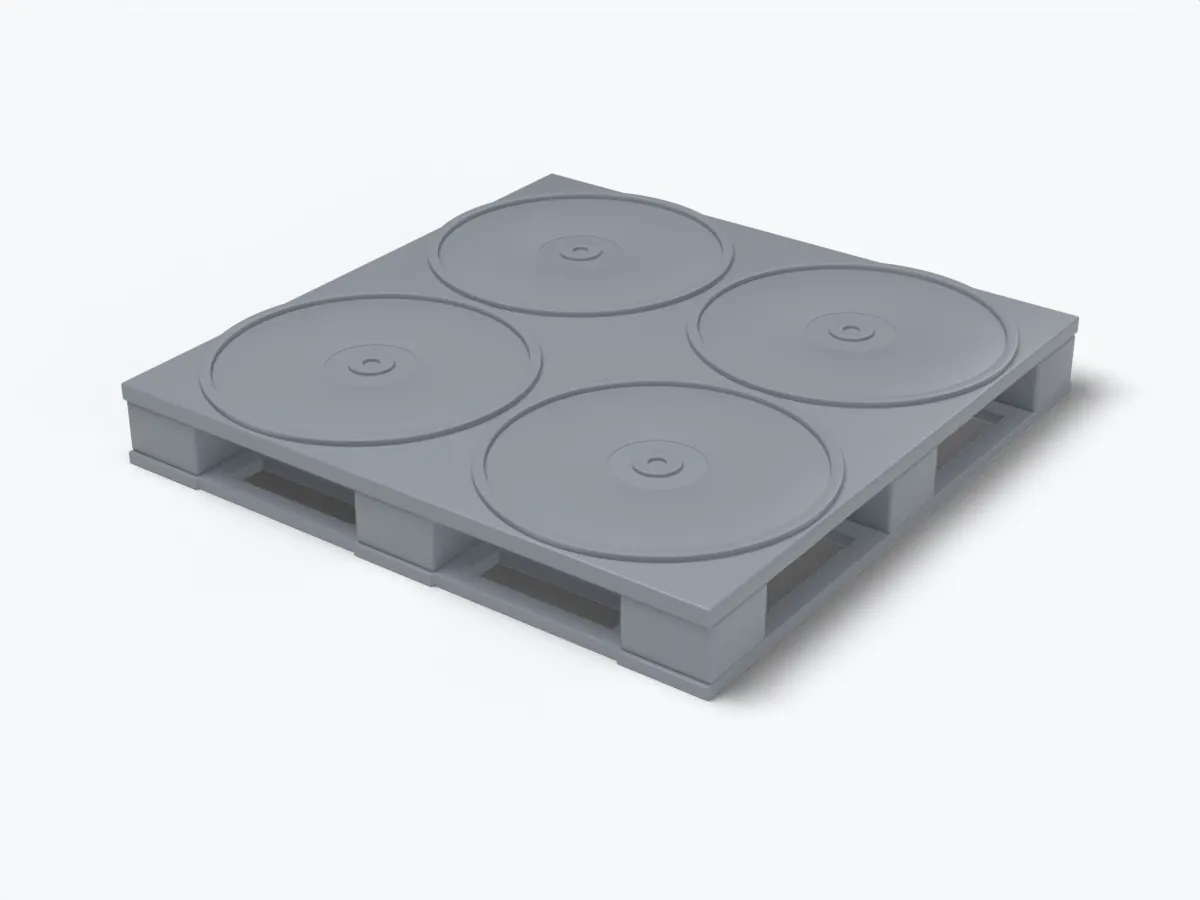
A drum pallet carries four drums on a 48x48 or 44x44 footprint, often with a lip or a spill sump molded into the deck. HDPE resists a wide range of acids, alkalis and salts, and it doesn't wick a leak into the deck the way wood does. Check the maker's chemical resistance data for the exact product you store, and its dynamic rating for four full drums.
| Industry | Where | Pallet to ask about |
|---|---|---|
| Petrochemicals and specialty chemicals | Baton Rouge to New Orleans river parishes, Lake Charles | 48x48 or 44x44 drum pallets with a containment deck |
| Resin bagging and export | River terminals, Port of New Orleans | Export pallets sized for the container and the receiving country |
| Seafood processing | Houma, Lafitte, Cameron, Delcambre | Solid-deck HDPE that takes ice, brine and washdown |
| Coffee and food imports | New Orleans warehouses | 48x40 rackables for bagged and boxed storage |
| Sugar cane milling | Acadiana and the bayou parishes | Heavy-duty pallets for bagged raw sugar |
| Oilfield service | Lafayette, Houma, Port Fourchon | Heavy-duty or drum pallets for parts and fluids |
Interstates linking the parishes
I-10 carries most east-west freight, from Lake Charles through Lafayette and Baton Rouge to New Orleans and Slidell. I-12 cuts north of Lake Pontchartrain from Baton Rouge to Slidell, bypassing the city. I-49 runs north from Lafayette through Alexandria to Shreveport, and I-20 crosses the north from Shreveport through Monroe toward Jackson. I-55 heads north from LaPlace through Hammond toward Mississippi.
Shreveport and Bossier City hold distribution and manufacturing in the northwest corner, closer to Dallas than to New Orleans. Monroe and West Monroe, on I-20 in the northeast, have paper mills and food plants, and Alexandria at the center of the state is a junction for I-49 and US 165 traffic heading to the piney woods.
Seafood, coffee and sugar
Louisiana lands a large share of the country's shrimp, oysters and crawfish, with docks and processors spread along the coastal parishes. Seafood plants run cold, wet and salty, so a solid HDPE deck that takes ice and a hose suits them, and FSMA's sanitary transport rule expects food equipment to be adequately cleanable.
New Orleans has long been one of the main US ports for green coffee, and roasters and warehouses there store bagged beans in rack. Sugar mills in the cane parishes grind each fall and ship raw sugar in bulk and bags. Both trades put dense, heavy loads on a pallet, so the dynamic and racked numbers on the maker's sheet matter more than its static figure.
Humidity, storms and plastic
Wood pallets stored outside in Louisiana's heat and humidity swell, grow mold and rot faster than they would inland. HDPE and PP copolymer absorb almost no water, which is one reason plants near the Gulf move to plastic for pallets that live in yards. Hurricane season can close terminals and roads, so give us a flexible delivery window for late summer and fall orders.
Delivery and buy-back
A truckload ships on a 53-foot van to your gate or dock; plant sites often need a safety orientation or a gate appointment, so tell us the rules. Smaller orders move LTL into Baton Rouge, New Orleans, Lafayette and Shreveport, with longer routing to coastal and rural parishes.
To sell used or cracked plastic pallets, send the count, footprint, resin code, condition and pickup ZIP. We reply with an offer for reusable pallets, or for regrind. Pallets that held chemicals need a note on what they carried.
Questions buyers ask
Do plastic pallets need ISPM 15 marks for export from New Orleans?
No. ISPM 15 covers wood packaging, and APHIS lists plastic pallets as an alternative to it. The importing country's other cargo rules still apply.
Which pallet suits drums at a chemical plant?
A 48x48 or 44x44 drum pallet with a containment deck, rated for four full drums. Check chemical resistance for the product you store.
Can you deliver inside a plant gate?
Yes, when the carrier can meet the site's gate and safety rules. Send them with the quote request.
Will you buy pallets that carried chemicals?
Often, but we need to know what they carried and whether they've been cleaned before we make an offer.
Sources
- USDA APHIS: wood packaging material and its alternatives
- Cabka: plastic pallets for export and ISPM 15
- FDA: FSMA rule on sanitary transportation of human and animal food
Last reviewed November 8, 2026.