03 Industry · Chemicals and Coatings
Plastic pallets for chemicals and Coatings
Chemical, coatings and resin plants put plastic pallets under 55-gallon drums, pails and bagged powders, in yards and filling rooms where spills and weather rot wood. Send footprint, drum count, heaviest load, chemicals it may meet and delivery ZIP on the quote form; we email back matching models and a delivered price.
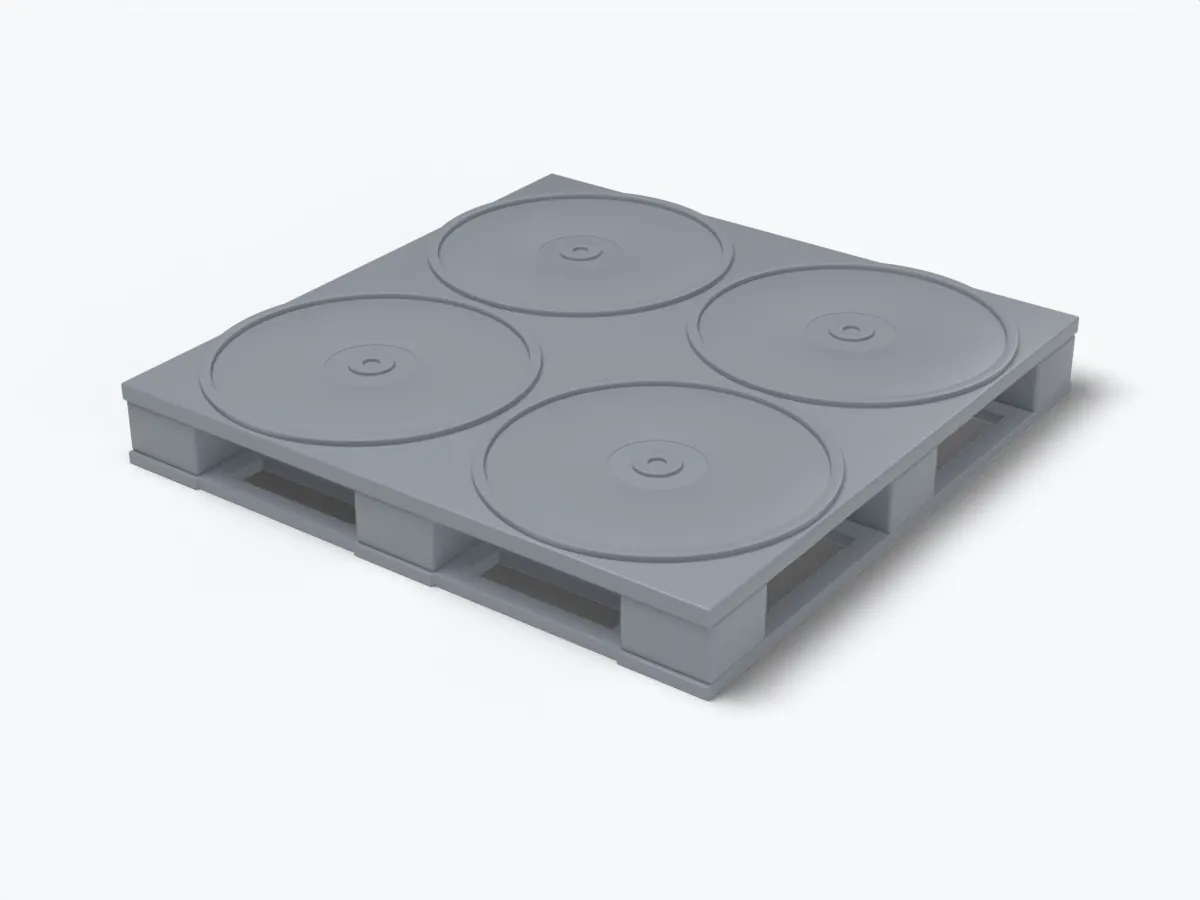
Drums, pails, totes and bags
The 55-gallon drum is the unit of the chemical trade, steel or plastic, set four to a pallet. A drum of a water-weight liquid weighs roughly 500 lb full, so four of them is about a ton before you count a denser product. That weight sits on four rings, not spread across the deck.
Coatings plants fill 1-gallon and 5-gallon pails and cans, stacked in tiers with tier sheets and wrapped. Resin, pigment and additive suppliers ship 50-lb or 25-kg bags and bulk bags. Intermediate bulk containers (275- and 330-gallon totes) usually come with their own integral base and don't need a separate pallet.
Each of those loads asks something different: drum rings load the deck at points, pails need a flat top that won't let the bottom tier tilt, and bags need a deck that won't tear paper.
Lubricant blenders, adhesive makers, water-treatment suppliers, agricultural chemical distributors and flavor-and-fragrance houses run the same drum and pail patterns with different hazards and densities.
Filling rooms, tank farms and the yard
Filling and blending rooms see spills, washdown and solvent wipe-ups. Wood soaks spilled product and becomes a disposal problem, sometimes a hazardous one; a plastic deck can be cleaned and kept.
A lot of chemical inventory sits outdoors in yards and near tank farms. Sunlight degrades unprotected polyethylene and polypropylene over time, so specify UV-stabilized resin for any pallet that lives outside, and expect colors to fade even when the structure holds.
Gulf Coast plants, from the Houston Ship Channel to Baton Rouge and Lake Charles, add heat, humidity and hurricane wind to the yard's list. Stack empties low and strap them down before storm season.
Hazardous materials storage often sits in rooms or buildings with spill containment, where drums go on spill pallets with a sump below the deck. Those are a separate product built to hold liquid; an ordinary drum pallet with an open grid lets a leak run through to the floor.
Chemical resistance and resin choice
HDPE (resin code 2) and polypropylene (resin code 5) resist many acids, bases, salts and alcohols. Some solvents, strong oxidizers and aromatic or chlorinated hydrocarbons can swell, soften or crack them over time, especially under load and heat.
Check the resin maker's chemical resistance chart against every product that could spill on the pallet, at the temperature it will see. If the answer is borderline, test a pallet before buying a fleet.
Plastic pallets also export without ISPM 15 heat treatment. USDA APHIS lists them as alternatives to wood packaging, which matters for chemical shippers sending drums overseas.
Footprints the chemical trade uses
48x48 is the common drum footprint, sized for four 55-gallon drums. The chemical industry also runs 48x42 and 44x44, and paint and coatings shippers often use 42x42.
| Load | Footprint | Pallet type | What to check |
|---|---|---|---|
| Four 55-gallon drums | 48x48 | Drum pallet, solid or locator deck | Dynamic load with ring loading |
| Drums in racks | 48x48 or 44x44 | Rackable drum pallet with runners | Racked load for four full drums |
| Pails and cans of coatings | 42x42 or 48x40 | Stackable, flat solid deck | Static load in a block stack |
| Bagged resin and pigment | 48x42 or 48x40 | Stackable, smooth deck | Deck snag points, static load |
| Yard storage | Any | UV-stabilized heavy duty | UV package and resin |
| Export drums | 48x48 or 1200x1000 | Export pallet | Receiver's size |
Static, flammables and residue
Flammable liquids bring ignition concerns. Plastic can build a static charge when drums slide or film rubs, so plants handling solvents in explosion-proof classified areas ground drums directly and may ask about conductive pallet grades. Flammable-liquid warehouses also have strict fire rules, plastic adds fuel load, and your insurer will weigh in.
A drum that weeps leaves a film that hardens on the deck. Scrapers, hot water and detergent remove most of it, but a pallet that carried pesticides, isocyanates or other toxic products should stay in that service or be retired through a recycler licensed to accept it. Mark dedicated pallets with a color or a hot-stamped legend so they never drift into a food-grade ingredient line the same company may run.
How to quote a chemical plant
Tell us the footprint, how many drums or pails go on each pallet and their full weight, whether loads are racked or stacked, the chemicals the pallet may meet, whether it lives outdoors, the quantity and the delivery ZIP. We reply by email with models and a delivered price. Drum-size truckloads ship on a 53-foot van.
When a fleet is worn out or stained, the resin may still be worth regrind value. Tell us what it carried, since contaminated plastic needs cleaning or a different outlet.
Questions buyers ask
What size pallet holds four 55-gallon drums?
48x48 is the usual size. Some plants use 44x44 or 48x42, depending on the drum and the racking.
Will plastic pallets hold up to solvents?
Many won't mind them, but some solvents and oxidizers attack HDPE and PP. Check the resin's chemical resistance chart for every product that might spill.
Is a drum pallet the same as a spill pallet?
No. A spill pallet has a sump that holds leaked liquid; a drum pallet is a shipping and storage base. Hazmat storage usually needs the spill pallet.
Do plastic pallets work outdoors in a chemical yard?
Yes, with UV-stabilized resin. Without it, sunlight weakens the surface over time.
Sources
- USDA APHIS: wood packaging material and its alternatives
- Cabka: plastic pallets for export and ISPM 15
Last reviewed November 8, 2026.