05 Guide
HDPE vs polypropylene pallets
HDPE (resin code 2) is the tougher resin in the cold and takes knocks without cracking; PP copolymer (resin code 5) is stiffer and lighter for the same job. Both shrug off water, so pick by room temperature, racking and weight, and send us the use for a quote on models in either resin.
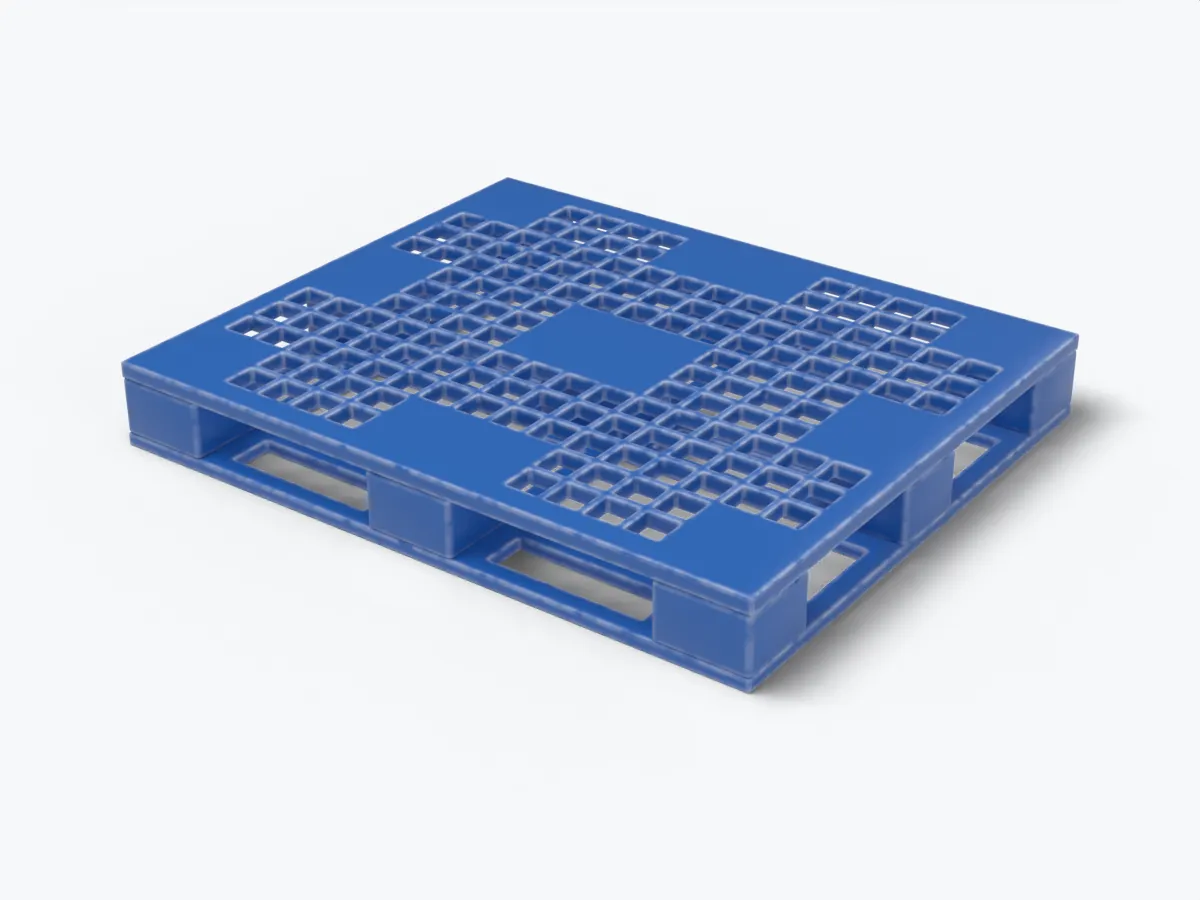
Two olefins, two different strengths
Almost every molded plastic pallet sold in the US is made from one of two polyolefins: high-density polyethylene or polypropylene copolymer. They look alike on the dock, they both float, and both are listed among the olefin polymers in 21 CFR 177.1520. The differences show up under a forklift in a freezer and under a load left in a rack.
The resin code molded into the part tells you which one you have. A chasing-arrows triangle with a 2 inside means HDPE. A 5 means polypropylene. Some pallets carry the letters as well: HDPE, PE-HD, PP or PP-C.
Neither resin is better across the board. Each one trades a little of one property for another, and pallet makers choose the resin that suits the model's job, then design the ribbing and wall thickness around it.
How the two resins compare
The table sums up the well-established behaviour of each material in pallet service. Exact figures depend on the grade of resin, any fillers or reinforcement, and the part design, so the comparison is about direction, not numbers.
| Property | HDPE (code 2) | PP copolymer (code 5) |
|---|---|---|
| Impact toughness in the cold | Better; resists cracking when struck in coolers and freezers | Good as a copolymer, but more prone to brittle cracks at low temperatures |
| Stiffness | More flexible under load | Stiffer, so a deck of the same design deflects less |
| Weight for the same job | Heavier part for equal stiffness | Lighter part for equal stiffness |
| Moisture | Does not absorb water | Does not absorb water |
| Creep under sustained load | Present; design and rating account for it | Present; design and rating account for it |
| Regrind | Sold and remolded as HDPE flake | Sold and remolded as PP flake |
Cold rooms and freezers favour HDPE
Every plastic gets less forgiving as it gets colder. HDPE holds its impact toughness better than polypropylene as the temperature drops, so a fork tip that glances off a frozen HDPE leg is more likely to leave a scuff than a crack.
That is why HDPE turns up in freezer distribution, ice cream and frozen food plants, and in blast-freezing rooms where loaded pallets go in warm and come out hard. A PP copolymer pallet can work in a cooler, but ask the maker for its rated temperature range before you put it in a freezer.
If your pallets cycle between a dock in summer and a freezer, ask for the ratings at both ends. The maker's sheet for the exact model is the only place that answer lives.
Stiffness, weight and racking favour PP copolymer
Polypropylene copolymer is stiffer than HDPE, so a deck molded from it bends less under the same load. For a maker that means less material to reach a given stiffness, and for a buyer it means a lighter pallet.
Lighter pallets matter on return freight and on manual handling. The Rehrig Pacific heavy-duty nestable 40x48 in PP copolymer weighs 28.5 lb and is rated 10,000 lb static and 3,500 lb dynamic, which shows what the resin can do in an injection-molded part.
Stiffness also helps in a rack, but it does not remove creep. Both resins keep deflecting slowly when a load stays on them for days, which is why every racked rating is lower than the static one and why it is set by the maker for one model, one span and one load pattern. Rack only on a published racked figure, whichever resin it is.
Washdown, food and export: either resin
Both resins are non-absorbent, so neither one soaks up water, blood, milk or brine the way wood does. That makes either a fit for washdown rooms, which is the reason dairies, bakeries and meat plants move to plastic in the first place.
Food-contact status belongs to the finished pallet, not the resin family. 21 CFR 177.1520 lists olefin polymers with conditions of use, but whether a given model meets them depends on the maker's compound and paperwork. There is no such thing as an FDA approved pallet; ask the maker for its statement on the model.
For export, the resin does not matter at all. ISPM 15 covers wood packaging, and USDA APHIS lists plastic pallets as alternatives to wood packaging material that it does not regulate. An HDPE or PP pallet ships without heat treatment either way.
Washing chemistry and temperature limits do vary by resin and by model. Follow the maker's limit for the exact pallet before you put it through a hot tunnel washer.
Additives, color and sunlight
Neither resin goes into the mold pure. Makers blend in pigments for color, and some compounds add stabilizers, fillers or reinforcing fibres to tune stiffness or weathering. The spec sheet or the maker's data names what a model contains when it matters.
Sunlight is the additive question most buyers meet. Ultraviolet exposure slowly embrittles and fades unprotected polyolefins, so pallets that will sit in an open yard, a rail siding or a farm field for months should be a model stabilized for outdoor storage. Faded, chalky color on a used pallet is often the first sign of long outdoor life.
Color itself is usually a fleet choice, not a strength choice. Blue, black, gray and natural pallets of one model carry the same ratings; plants pick colors to separate departments, customers or clean and dirty zones.
Which resin to ask for
You do not have to choose the resin before you ask. Send the footprint, the pallet type, the room temperature, the heaviest load and whether it will be racked, the quantity and the delivery ZIP. We reply by email with models that meet it, listing the resin of each, and a delivered price.
When a fleet is finished, the resin code still matters. Cracked HDPE and cracked PP each have value as regrind, so note the 2 or the 5 on the sell-back form and we can make an offer as pallets or as flake.
- Freezer, blast freezer or outdoor winter yard: start with HDPE
- Lightest pallet for return freight or hand lifting: start with PP copolymer
- Racked loads: either, on a published racked figure
- Washdown or food plant: either, with the maker's food-contact statement
- Selling a worn fleet: tell us the resin code, as each resin is reground on its own
Questions buyers ask
Are HDPE pallets better than polypropylene pallets?
Neither is better overall. HDPE is tougher in the cold; PP copolymer is stiffer and lighter for the same job. The model's design and published ratings matter more than the resin name.
How do I tell if a pallet is HDPE or PP?
Turn it over and find the resin code triangle. A 2 means HDPE and a 5 means polypropylene; some parts also carry the letters.
Which resin is best for a freezer?
HDPE is the usual choice because it keeps its impact toughness better at low temperatures. Confirm the rated temperature range on the maker's sheet either way.
Is HDPE food grade?
HDPE is one of the olefin polymers 21 CFR 177.1520 covers, but a finished pallet's food-contact status depends on the maker's compound and documentation for that model.
Sources
- USDA APHIS: wood packaging material and its alternatives
- Cabka: plastic pallets for export and ISPM 15
- 21 CFR 177.1520: olefin polymers in food-contact articles
- Rehrig Pacific: 40 x 48 heavy duty nestable pallet sheet
Last reviewed November 8, 2026.