03 Industry · Grocery Distribution
Plastic pallets for grocery Distribution
Grocery DCs use plastic pallets in the loops they control: DC-to-store perishables, automated put-away and display-ready half pallets, all on or around the 48x40 footprint. Send footprint, load, rack or automation type, quantity and delivery ZIP through the quote form, and we email models that meet it with a delivered price.
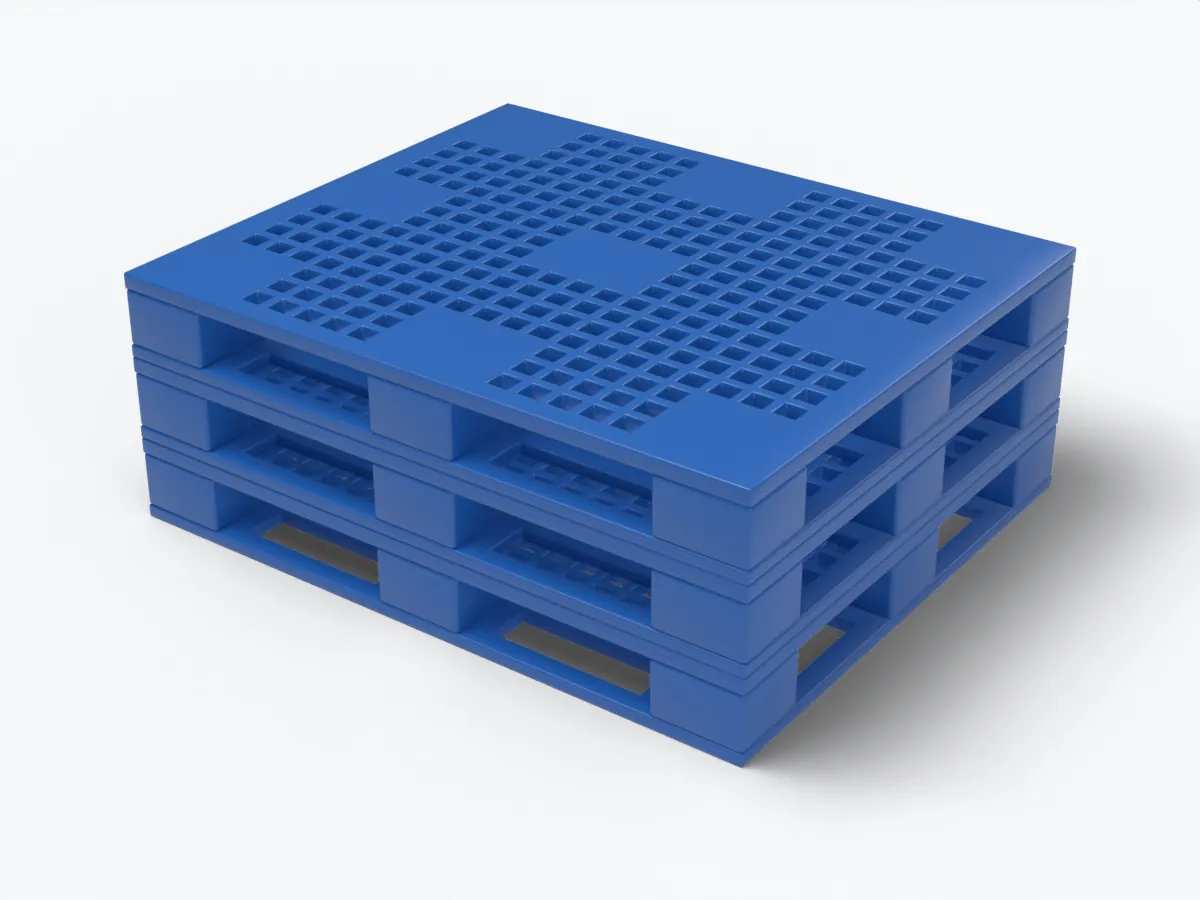
Where plastic fits in a wood-dominated network
Most dry grocery reaches a retailer's DC on pooled or whitewood 48x40 pallets owned by someone else. A grocer rarely replaces those. Plastic earns its place in the legs the retailer runs itself: from its own DC to its own stores and back, inside its buildings, and in programs where a supplier and the chain agreed to share a captive fleet.
The store-delivery leg is the strongest case. A trailer leaves the DC with mixed perishables, dairy, deli and frozen, the store unloads at the back door, and empties ride home on the backhaul. Nestable plastic pallets stack empty to a small fraction of their loaded height, so one return trip clears a store's backroom.
Building a mixed store order
Selectors build store orders case by case, heavy cans and jugs at the bottom, chips and paper on top, then stretch-wrap the column. A uniform deck with no broken boards or protruding nails helps the first layer sit square and keeps selectors' hands safe.
Orders are picked onto pallets from low-level slots by pallet jacks and end riders, which run their forks under the pallet from the short side hundreds of times a shift. Four-way entry with a chamfered lead edge, and a bottom without deep pockets that catch jack wheels, cut damage.
Perishables, frozen and the dock
A grocery DC holds three or four temperature zones under one roof: ambient dry grocery, a produce and dairy cooler, a meat and deli cooler, and a freezer. Pallets that cross zones carry condensation with them. Plastic sheds that water; wood soaks it up, and frozen wet wood gets heavy and brittle.
Food safety reaches the dock too. FDA's FSMA sanitary transportation rule expects equipment used with food loads to be adequately cleanable, and a DC is both a receiver and a loader under it. A captive plastic fleet can be washed on a schedule, which is hard to say about pallets that arrived from a hundred different shippers.
Store backrooms send back empty pallets, dairy crates, bread trays and baled cardboard on one backhaul. A nested stack straps neatly beside the bales. Chains running a plastic loop usually pair it with a wash line at the DC, so a pallet that carried leaking chicken doesn't go back out under bagged salad.
Automation wants identical bases
Automated storage, robotic layer pickers, shuttle systems and automatic guided vehicles are now common in large grocery buildings. These systems check every pallet at an induction station for height, overhang and bottom condition, and reject the ones out of tolerance.
Injection-molded pallets come out of the same tool with the same dimensions, so reject rates fall. Many automated DCs transfer inbound loads onto captive slave pallets at induction for exactly this reason. Ask the maker for dimensional tolerances, flatness and the bottom pattern so you can match the system integrator's spec.
Before switching a racked or automated building, also get the model's fire listing. Sprinkler standards treat stored plastic pallets as a more severe hazard than wood unless the model is listed otherwise, and your fire protection engineer and insurer will ask.
Footprints and pallet types for grocery
48x40 is the Grocery Manufacturers Association footprint, the size US grocery racking, trailers and store backrooms are built around. Half pallets (24x40) and quarter pallets (20x24) carry display-ready product from DC to sales floor without restacking.
Club stores and supercenters receive more full-pallet SKUs that roll straight to the sales floor, where a clean, uniform plastic base looks better than a broken whitewood one.
| Job | Footprint | Pallet type | What to ask |
|---|---|---|---|
| Store delivery and backhaul | 48x40 | Nestable | Nested height and dynamic load |
| Selective racking | 48x40 | Rackable with runners | Racked load and fire listing |
| Automated induction | Integrator's spec | Captive slave pallet | Tolerances, flatness, bottom pattern |
| Freezer zone | 48x40 | HDPE or PP copolymer rackable | Rating at freezer temperature |
| Display-ready promotions | 24x40, 20x24 | Half or quarter pallet | Static load with a full display |
Shrinkage, tracking and the request
Captive pallets leak out of a store loop through vendors, scrap haulers and other chains' trucks. Molded-in logos, a chain-specific color and RFID pockets make them identifiable and recoverable.
For a quote, send footprint, type, deck, the heaviest order you build, rack or automation details, color and branding, quantity and delivery ZIP. We answer by email with models and a delivered price, by the 53-foot van for a fleet.
Questions buyers ask
Do grocery DCs replace pooled wood pallets with plastic?
Rarely for inbound supplier freight. Plastic is used in loops the retailer controls: store delivery, internal storage and automation.
What footprint does US grocery use?
48x40, the GMA size. Display programs add 24x40 half and 20x24 quarter pallets.
How do we keep captive pallets from disappearing?
Use a chain-only color, a molded or hot-stamped logo and RFID tags, and make backhaul of empties part of each store route.
Sources
Last reviewed November 8, 2026.