06 Catalog section
Sell your plastic pallets
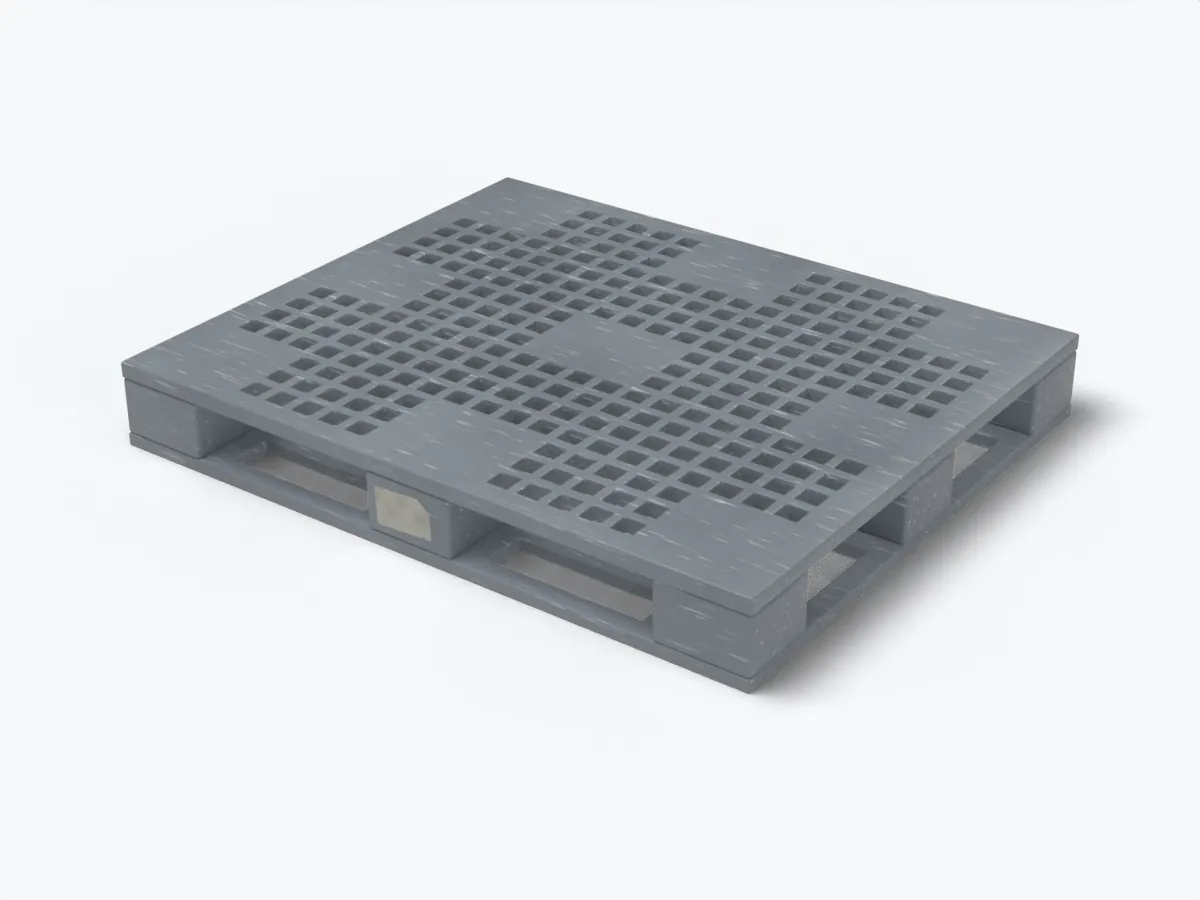
We buy plastic pallets a facility no longer needs: surplus new stock, whole used pallets and cracked ones headed for the grinder. Send the count, footprint, resin if you know it, condition and pickup ZIP, and we answer by email with an offer as pallets or as regrind.
In this section
- 06.01 Plastic pallet recyclingPlastic pallet recycling: how cracked HDPE and PP pallets are sorted, ground into regrind and molded again, and what a load is worth by the pound.
- 06.02 Who buys plastic palletsWho buys plastic pallets: resellers who want whole ones, fleet owners who want their own back, and recyclers who want the resin. Who pays the most.
- 06.03 How plastic pallet buyers price a lotHow plastic pallet buyers price a lot: footprint, maker and model, grade mix, resin, count, location and loading. What raises and lowers an offer.
- 06.04 Sell used plastic palletsSell used plastic pallets that are still whole: how we grade them, what we need to see, pickup by the truckload and how payment works.
- 06.05 Cracked and broken plastic palletsCracked and broken plastic pallets still have resin value. How damage is sorted, why mixed resins matter, and when a broken lot is worth a pickup.
The buy-back offer
A plastic pallet keeps value after it leaves a fleet. A whole one can carry loads for another buyer, and a broken one is still several pounds of HDPE or PP copolymer that a molder can use again.
Our buy-back desk takes both. Whole pallets are offered on as pallets to buyers who need that footprint. Cracked, warped and broken pallets are offered on as regrind, the flake a grinder makes so the resin can be molded into new parts.
Each offer is written for one lot. It says which part of the lot we expect to resell whole, which part goes to regrind, and who arranges the pickup. Nothing is binding until both sides confirm it in writing.
How selling works, step by step
The steps are the same whether you have one stack of surplus nestables or a dock full of cracked rackables.
- Count what you have, even roughly, and split the count by footprint if the lot holds more than one size.
- Read the underside of a few pallets: the resin code (2 for HDPE, 5 for PP), the maker's name and the date clock tell a buyer most of what it needs.
- Describe the condition in plain words: whole and clean, whole but marked, or cracked and broken, with a share for each if the lot is mixed.
- Send the request through the sell-back form with your pickup ZIP and how the pallets can be loaded: dock, forklift, or floor stacks only.
- We reply by email with an offer, as pallets, as regrind or split between the two, and the questions we still have.
- Once you accept in writing, the pickup and payment terms in the offer apply. A buyer may re-sort the lot on arrival, and the offer says how that is handled.
What we buy and how each is valued
Our used grades are our own, written so a seller and a buyer read them the same way. The grade decides which buyer a pallet goes to, and that decides how it is valued.
| Condition | What it means | How it is valued |
|---|---|---|
| Surplus new | Never loaded, from an overstock or a cancelled program | Per pallet, close to used Grade A or better if the model is current |
| Whole, Grade A | Whole deck, runners or legs intact, no repairs, clean enough to reuse | Per pallet, the strongest resale value |
| Whole, Grade B | Structurally sound, with scuffs, old labels, faded color or light wear | Per pallet, below Grade A |
| Mixed lot | Assorted makers, models and colors, sorted only by footprint | By the load, priced on the expected sort |
| Cracked or broken | Split decks, snapped runners, missing legs, warped parts | By weight as regrind, once the resin is known |
Where surplus pallets usually come from
Most lots we see come out of service for a business reason, not because the pallets wore out. Knowing the reason helps us place them, since a buyer wants to know why good pallets are for sale.
Tell us which of these fits your lot, or describe your own case in the request.
- A returnable program ended, and the customer's dock now holds pallets that will never travel back.
- A plant changed its footprint, for example from 48x45 automotive pallets to 48x40, and the old size is idle.
- A distribution center closed or merged, leaving racks of rackable pallets with nowhere to go.
- A food or pharma site replaced an older model with a newer one, and the retired pallets are still whole.
- Retail display or promotional pallets came back after a campaign, often half or quarter footprints.
- A contract packer lost an account, leaving dedicated pallets in the departed brand's color with nothing to carry.
- Export pallets arrived with inbound freight and the receiver has no use for them.
- Damage built up over years of forklift traffic, and the cracked ones were set aside in a corner of the yard or lot.
Pallets we can't buy
Some pallets on a dock are not the facility's to sell. Pooled and rented pallets often carry the owner's name molded or hot-stamped on the side and belong to that pool, so they go back to the owner, not to us.
We also can't take pallets that carried hazardous chemicals, oils or anything that soaks into the part, because a grinder can't clean it out. If a lot carried drums or totes of chemicals, tell us what they held before we make an offer.
Wood pallets, metal frames and pallets that are mostly wood with plastic parts are outside what this desk handles. Corrugated slip sheets, tier sheets and plastic totes are separate commodities too.
What makes an offer stronger
A lot that is sorted by footprint and condition before it is listed gets a clearer offer than one that has to be sorted on arrival. Photos of a typical stack, the deck and the underside settle most questions before anyone drives to the site.
A full load also matters. Pickup freight is a large part of what a buyer weighs, so a count that fills a 53-foot van is worth more per pallet than a partial lot in the same condition. If you expect more pallets to come out of service soon, say so, and the lot can be held until it is worth the trip.
Honesty about history helps too. A lot described as clean that turns out to have carried grease, paint or brine gets re-graded at the dock, and nobody enjoys that conversation. A lot described accurately, flaws included, keeps its offer.
Read more before you sell
Each page below covers one part of selling in more depth: who pays for which condition, how a buyer builds a price, what recycling does with the resin, and what to do with a fleet that is mostly broken.
Questions buyers ask
Do you buy plastic pallets that are cracked?
Yes. Cracked and broken pallets are offered on as regrind, valued by weight once the resin is known. A lot of only cracked pallets still needs enough weight to justify the pickup.
What do I need to send to get an offer?
The count, the footprint, the resin if the underside shows it, the condition and the pickup ZIP. Photos of the deck, the underside and a typical stack make the offer more exact.
Can I sell pallets that have another company's name on them?
Not if they belong to a pool or rental program; those go back to the owner. Pallets your company bought outright and branded with your own logo are fine to sell.
Do I have to sort the pallets first?
No, a mixed lot can be bought by the load. Sorting by footprint and condition before pickup usually raises the offer, because the buyer does less work on arrival.
Do you buy pallets from outside the continental US?
Our pickups are quoted to US addresses. Pallets sitting in Alaska, Hawaii or overseas cost so much to bring back that the freight usually outweighs their resale or resin value.
Sources
Last reviewed November 8, 2026.