01 Catalog line
Food grade plastic pallets
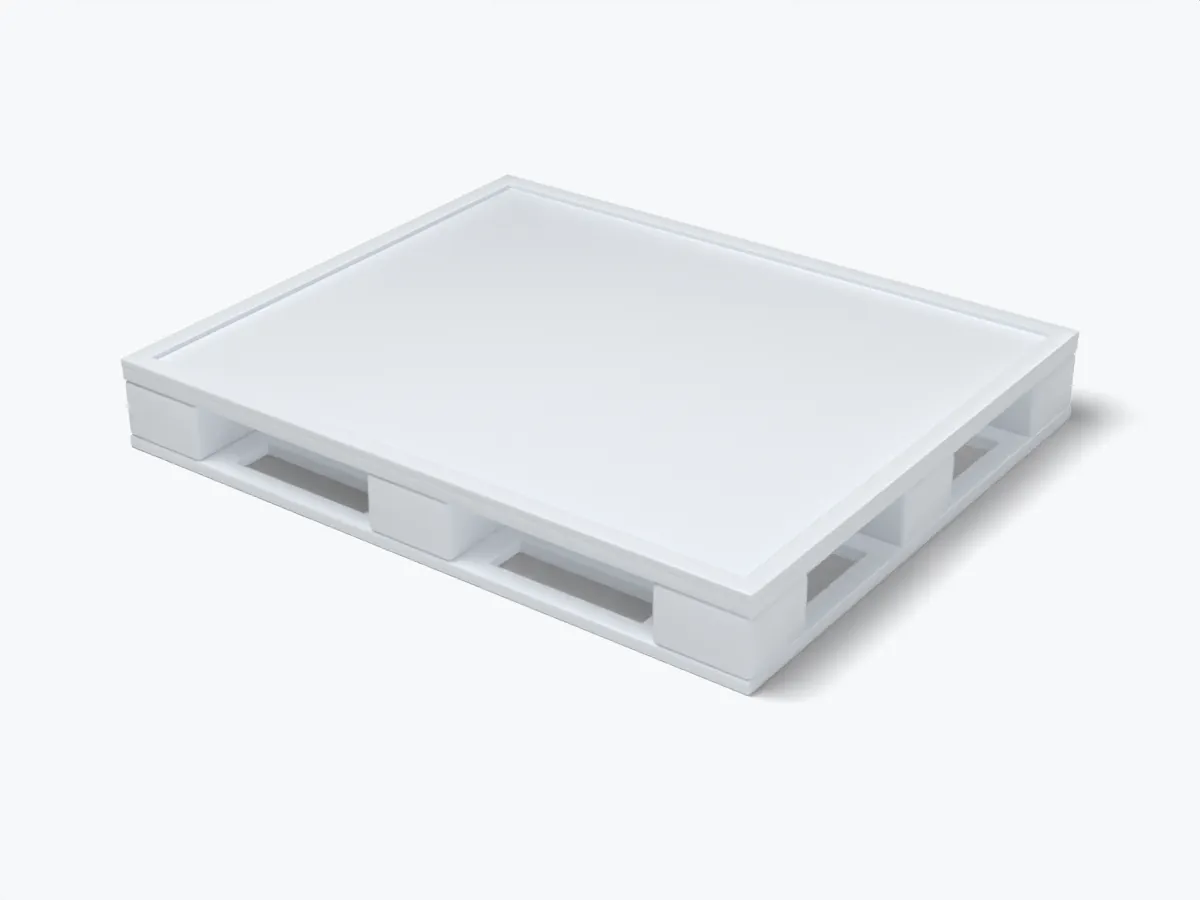
Food grade plastic pallets are HDPE or polypropylene pallets with smooth, drainable decks that can be washed and sanitized between loads, molded from resin the maker documents against 21 CFR 177.1520. Send your footprint, heaviest load, cleaning method and room temperature, and we'll quote models that come with that paperwork.
- Dynamic load
- Ask for the moving figure at your room temperature, cooler or ambient
- Static load
- Ask the loaded stacking limit for coolers, where loads sit longest
- Racked load
- Rack only models with a racked figure; ask how the steel is sealed
What food grade can mean on a pallet
There is no such thing as an FDA-approved pallet. FDA does not approve finished pallets. What exists is 21 CFR 177.1520, the regulation that lists the olefin polymers, meaning polyethylene, polypropylene and their copolymers, that may be used in articles that contact food. It sets conditions on composition, density, extractables and the types of food involved, and those conditions vary by polymer.
So a pallet's food-contact status depends on the resin it was molded from and on what its maker will put in writing. The usual document is a letter of compliance stating that the resin used for that model meets 21 CFR 177.1520, and for which conditions of use. Ask for it with the quote, and keep it in your sanitation file.
Most food on pallets is packaged: cases, crates, bottles and wrapped trays. If the pallet will touch unpackaged food directly, say so, because that narrows the models and the resin documents that fit.
Why food plants move to plastic
FDA's FSMA sanitary transportation rule requires vehicles and transportation equipment used for food to be suitable and adequately cleanable for their intended use. It applies to shippers, loaders, carriers and receivers moving food by road or rail in the US. Plastic pallets are non-absorbent and can be washed, so many plants use them as part of their own sanitation plan.
Wood has the opposite habits in a wet room. It soaks up water and cleaning chemicals, it splinters and sheds, and nails work loose. A plastic deck can go through a pallet washer or a hose-down with the rest of the line and come out the same part it went in.
Construction for washdown
| Feature | Why it matters | Ask the maker |
|---|---|---|
| Smooth top deck | Nothing for residue to cling to | Deck surface and any textured anti-slip areas |
| Drain holes or open grid | Water runs off instead of pooling | Where water collects after washing |
| Sealed or no hollow cavities | No hidden spaces that hold water | Whether blocks and runners are closed |
| Encapsulated reinforcement | Steel fully sealed in plastic can't rust or shed | How inserts are sealed and at which points |
| Rounded corners and edges | Easier to wipe and less chipping | Corner radius on the drawing |
| Virgin resin | Known composition for the compliance letter | Resin grade and the 21 CFR 177.1520 letter |
| Color choices | Zone coding: raw, cooked, allergen, waste | Colors offered on the model |
Rooms and temperatures
A food plant puts pallets through rooms that a dry warehouse never sees. Match the resin to the coldest and hottest place the pallet goes, including the washer.
| Room | Deck that works | Resin note |
|---|---|---|
| Washdown processing | Smooth solid or drainable grid | HDPE or PP; ask the washer temperature limit |
| Cooler | Solid for cases, open grid for airflow | HDPE or PP copolymer |
| Blast freezer and frozen storage | Open grid for airflow | HDPE keeps impact strength cold; plain PP turns brittle |
| Bakery near ovens | Solid | Ask the maximum service temperature |
| Dry ingredient storage | Solid, so bags don't sag | Either resin |
| Shipping dock and trailers | Any | Match the base to your racking and jacks |
Where food grade pallets fit, and where they don't
They fit dairies moving crates and cases out of coolers, bakeries running trays through washers, meat and poultry plants hosing down at shift change, produce packers in wet rooms, and beverage plants with sticky spills. The footprints follow the industry: 48x40 for grocery, 40x40 for dairy, 48x42 and 36x36 for beverage, and 1200x1000 for exporters.
They don't fit when the documents can't follow them. A pallet molded from regrind of unknown history won't come with a resin compliance letter, so recycled and mixed-lot used pallets belong in dry, non-contact areas. Used pallets from a known food fleet can work for packaged goods once washed, but ask what they carried before.
Keeping a food fleet clean
Plants that wash pallets on site usually run a tunnel washer with a hot detergent stage, a rinse and sometimes a sanitizer or chlorinated rinse, then an air knife or drip time. Others hose pallets down on a wash pad at shift change. Some sanitation teams verify the result with ATP swabs on the deck, the same check they run on line equipment.
Allergen programs often give allergen-carrying pallets their own color, so a pallet from that zone never ends up under an allergen-free run. Dry pallets before they return to a freezer, since water left in the ribbing turns to ice and adds weight and a slip hazard.
What to put in a food grade quote request
We reply by email with the models that meet the load and the room, a note of the compliance documents each maker offers, and a delivered price.
- Footprint and deck: solid, drainable grid or rimmed
- Heaviest load, and whether it is racked or stacked loaded
- Packaged or direct food contact
- Cleaning method: hand wash, hose-down or tunnel washer, and its temperature
- Coldest and hottest room the pallet enters
- Color, if you zone by color
- Quantity and delivery ZIP
Questions buyers ask
Is there an FDA-approved plastic pallet?
No. FDA regulates the resins allowed in food-contact articles under 21 CFR 177.1520, and a pallet's status depends on its maker's documentation for the resin used.
Is an HDPE pallet food grade?
HDPE is one of the olefin polymers 21 CFR 177.1520 covers, but the specific grade and its conditions of use matter. Ask the maker for a compliance letter for the exact model.
Can food grade plastic pallets go in a freezer?
Yes, if the resin suits it. HDPE holds its impact strength at low temperature better than plain polypropylene.
Can recycled plastic pallets be used for food?
They suit dry areas and packaged goods where no resin document is needed. For direct contact, choose virgin resin with a compliance letter.
Sources
- Cabka: plastic pallets for export and ISPM 15
- 21 CFR 177.1520: olefin polymers in food-contact articles
- FDA: FSMA rule on sanitary transportation of human and animal food
Last reviewed November 8, 2026.