01 Catalog line
Mixed lots of used plastic pallets
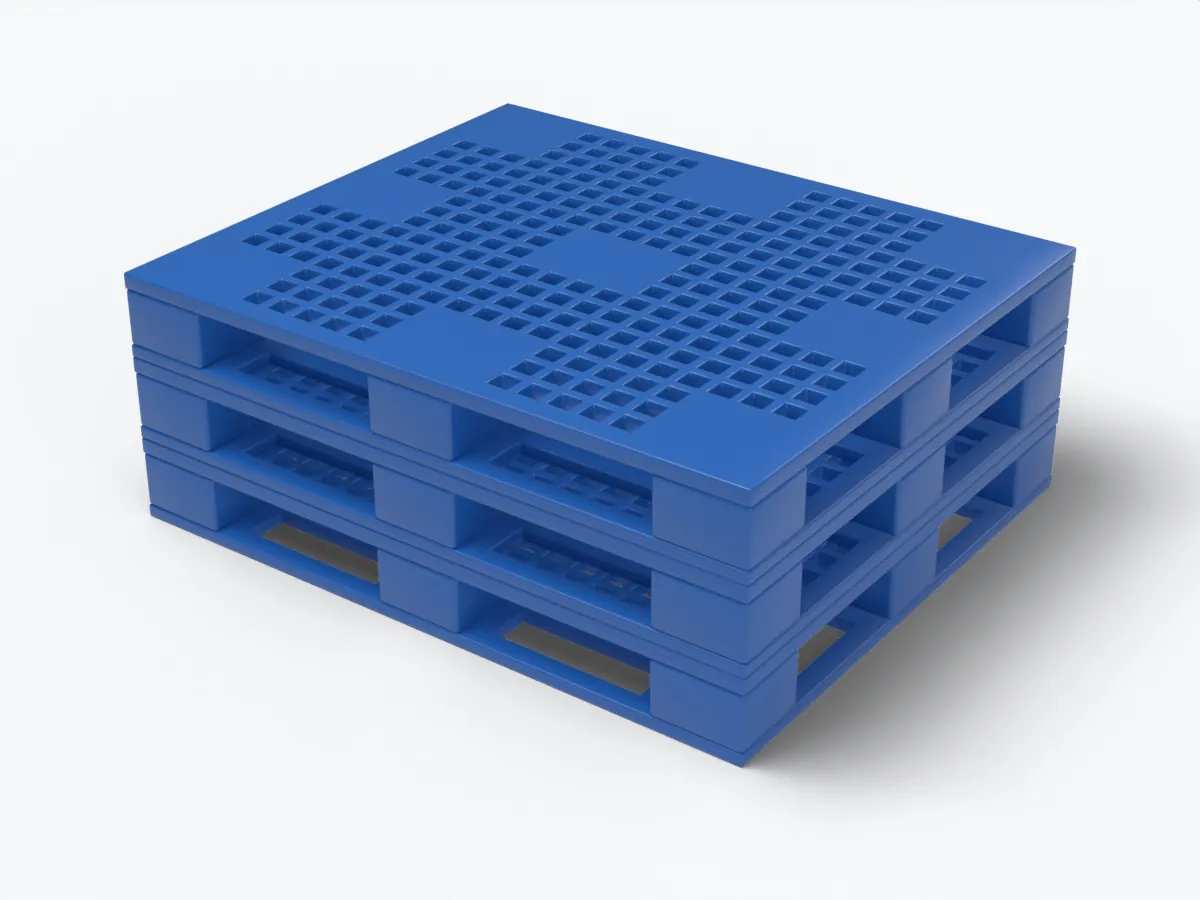
Mixed lots of used plastic pallets are assorted makers, models and colors, sorted only by footprint and sold by the load, at the lowest price per pallet of any used grade. Send the footprint, what the pallets will do, the quantity and the delivery ZIP, and we'll quote mixed loads to match.
- Dynamic load
- Every model differs; plan around the weakest pallet in the lot
- Static load
- Uneven heights make loaded stacks unstable; sort before stacking
- Racked load
- Not for racking as bought; sort out rack-rated models first
What a mixed lot contains
A mixed lot is what's left when used plastic pallets are sorted by footprint and nothing else. Every pallet in a 48x40 mixed lot is a 48x40, but beyond that the load can hold nestables beside runner-base pallets, blue beside black, light export models beside heavy rackables, and condition anywhere from near Grade A to well-worn Grade B.
Plainly broken pallets are pulled out when a lot is sorted to footprint, since cracked and broken plastic goes to regrind. Nobody grades the rest pallet by pallet, though. That missing labor is why a mixed lot costs least per pallet, and why it suits buyers who can live with variety or sort it themselves.
Where mixed lots come from
Distribution centers collect plastic pallets from dozens of inbound suppliers. Each one arrives under somebody's freight and stays behind. Over months they pile up as an assortment nobody owns a matching fleet of, and they leave as a mixed lot. Plants that receive parts from many vendors build up the same kind of pile.
Pallets stamped as the property of a rental pool or a named owner are pulled out, since they aren't the seller's to sell. What remains is unclaimed, unsorted and varied, which is exactly what the low price reflects.
What varies, and what it means for you
| What varies | Effect | How buyers handle it |
|---|---|---|
| Height | Stacks build unevenly and lean | Sort by height before floor-stacking loads |
| Base style | Legs, runners and perimeter bases take jacks differently | Group by base for jack-only areas |
| Weight | Hand handling varies pallet to pallet | Keep heavy models for heavy loads |
| Resin | HDPE and polypropylene in the same load | No effect in use; matters at regrind time |
| Color | A patchwork of fleet colors | Use where appearance doesn't count |
| Ratings | Each model has its own figures | Plan to the weakest, or sort known models out |
| Previous owner marks | Logos, serials, labels, even RFID tags | Remove or ignore; check tags won't confuse readers |
Mixed lots beside the graded loads
Some buyers use a mixed lot as a sampling exercise. Running several makers' designs side by side for a few months shows which one survives their forklifts, dock plates and wash water best, before they commit to a new fleet of one model. Keep notes on model and count as you sort, because anyone you resell matched stacks to will ask for both.
| Point | Mixed lot | Grade B | Grade A |
|---|---|---|---|
| Sorted by | Footprint only | One model or close models | One model |
| Condition | Varies widely | Sound, cosmetic wear | Whole and clean |
| Racking | No, as bought | Only if checked | If the model was rack-rated |
| Price per pallet | Lowest | Middle | Highest of the used grades |
| Suits | Sorters and one-way freight | Floor storage and internal moves | Racks, conveyors and fleet top-ups |
Load ratings in a mixed lot
Because every model has its own sheet, a mixed lot has no single rating. The safe rule is to plan your heaviest load around the weakest pallet in the lot, which is usually a light one-way nestable. If a load would be too heavy for that pallet, either sort the lot and keep the heavier models for those loads, or buy Grade A or Grade B of a single model instead.
Racking is out as bought. Rack-rated models sometimes turn up in a mixed lot, and a buyer who identifies them from their molded markings can pull them aside, check them to the Grade A standard and use them in racks within their published racked figure. The rest stay on the floor.
Who buys mixed lots
Landscapers, nurseries and event crews use them too, as temporary flooring, staging or ground protection under equipment, jobs where any sound deck will do. Buying a mixed lot also keeps serviceable plastic working longer, delaying the day it becomes regrind.
Mixed lots are a poor fit for racks, conveyors, automated storage, customer-facing loads and food contact, where one model with known ratings and history is the point.
- Resellers and sorters who grade and resell the pallets in smaller, matched quantities
- Plants with in-house labor that sort their own and keep the best for key jobs
- One-way shippers who need a floor under a load and won't see the pallet again
- Exporters sending loads abroad on one-way plastic with no ISPM 15 treatment
- Yards and growers storing goods outdoors, off the ground
- Sites replacing wood in dry storage where looks don't matter
Sold by the load
Mixed lots sell by the trailer, not by the pallet. Because heights vary, the count per 53-foot van isn't fixed: a lot heavy on nestables packs more pallets than one full of runner-base models. The quote gives an estimated count for each load and a delivered price for the load as a whole.
A lot may arrive as stretch-wrapped stacks of mixed height or loose-loaded on the trailer floor, and loose loading means hand unloading. If your crew needs bundles a forklift can lift, say so on the request.
Sorting your own pays when the labor exists. Separate by base style first, then by model, then by condition. Keep matched stacks for the jobs that need them, sell surplus matched models on, and send any pallets that crack in service back to regrind, where HDPE and PP still have value.
- Footprint
- What the pallets will do and the heaviest load
- Whether nestables are welcome or must be excluded
- Number of loads, and delivery ZIP
Questions buyers ask
How many pallets are in a mixed lot?
It varies with the mix of heights in the load. The quote gives an estimated count for each trailer and a delivered price for the load.
Are there broken pallets in a mixed lot?
Plainly broken pallets are pulled when the lot is sorted to footprint, but the rest are not graded one by one. Expect wide variation in condition.
Can I rack pallets from a mixed lot?
Not as bought. Identify rack-rated models from their markings, check each one, and rack only those within their published racked figure.
Can I exclude nestables from a mixed lot?
Say so on the request. Excluding one base style narrows what is on offer, but the result is still a lot sorted by footprint, not a graded load.
Sources
- USDA APHIS: wood packaging material and its alternatives
- Cabka: plastic pallets for export and ISPM 15
- 21 CFR 177.1520: olefin polymers in food-contact articles
Last reviewed November 8, 2026.