02 Catalog line · 48x42
48x42 plastic pallets
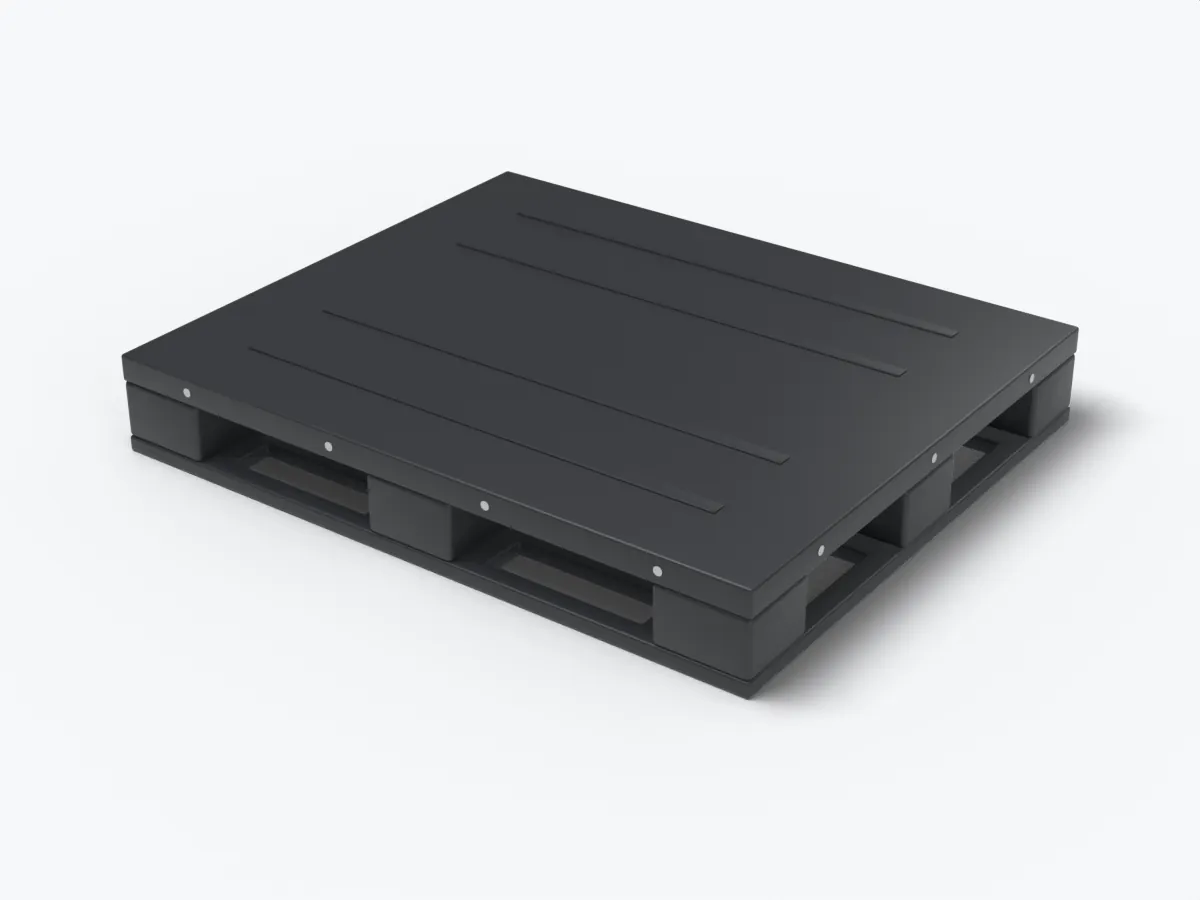
48x42 plastic pallets are 48 in long and 42 in wide (1219 x 1067 mm), a footprint chemical and beverage shippers use for loads that crowd a 48x40. We quote stackable, rackable and heavy-duty 48x42 models; send the load, deck, racking plans, quantity and delivery ZIP.
- Dynamic load
- Bagged and liquid loads shift on forks; ask for the model's figure
- Static load
- Ask what the floor rating allows if loaded pallets stack two high
- Racked load
- Rack only a 48x42 with a published racked load at your beam span
Dimensions and fit for 48x42
This footprint is 48 in in the runner direction and 42 in across, or 1219 x 1067 mm. It adds 2 in of width to the grocery size, enough to carry a case pattern or a container base that would hang off a 40 in deck.
| Item | Count or size | Working |
|---|---|---|
| Footprint | 48 x 42 in | 1219 x 1067 mm |
| 53-ft van, straight | about 26 | 42 + 42 = 84 in across, 630 / 48 = 13 rows |
| 53-ft van, turned | about 30 | 48 + 48 = 96 in across, 630 / 42 = 15 rows |
| 20-ft container | about 9 | one lane 42 in across (4 deep) plus one lane 48 in across (5 deep), 90 in of 92.4 |
| 40-ft container | about 20 | same two lanes: 474 / 48 = 9 and 474 / 42 = 11 |
| Deck area | 2,016 sq in | 48 x 42 |
Chemical and beverage shippers
Industry size tables list 48x42 under chemicals and beverage. On the chemical side it carries pails, bagged resins and powders, and cased bottles of cleaners and solvents. On the beverage side it carries case patterns for bottled drinks that were laid out around a slightly wider deck.
Both trades value a deck that does not absorb what spills on it. A cracked jug of cleaner or a burst case of soda leaves wood stained and soaked. A molded HDPE or PP deck can be hosed off, and it has no fasteners to tear a bag of powder on the way down.
| Load | Deck to ask for | Watch for |
|---|---|---|
| Five-gallon pails of lubricant or sealant | Solid with a raised lip | Pail rims cutting a soft deck |
| Bagged resin pellets or fertilizer | Solid, flat | Bags sagging and pellets spilling |
| Cased cleaners and solvents | Solid, wipeable | Resin compatibility with the contents |
| Bottled juice, tea and sports drinks | Open grid or solid | Wet floors in a bottling hall |
| Aluminum cans in layers | Solid with tier sheets | Layer shift during braking |
| Kegs of draft beer or kombucha | Solid with a lip or keg seats | Rolling cylinders during cornering |
| Totes of glycerin or antifreeze | Heavy-duty solid | Concentrated weight under the tote's feet |
Models molded in 48x42
The 48x42 catalog is modest. Most models are stackable or rackable, because chemical and beverage loads tend to be heavy and stored in stacks or racks rather than shipped one way.
Read each model's sheet for its dynamic, static and racked loads. A solid-deck 48x42 and an open-grid one in the same family can differ in both stiffness and rating.
- Stackable pallets on runners for loaded floor stacks of pails and cases
- Rackable models with three runners or a perimeter base
- Heavy-duty solid decks for bagged powders and resins
- Lipped decks that keep pails and bottles from sliding toward the edge
- Used 48x42s from chemical and bottling fleets, sold as Grade A, Grade B or a mixed lot
Getting the most floor positions
In a 53-foot van, which is about 100 in wide and 630 in long inside, the turned load is the better one. With the 48 in sides across, two take 96 in and 15 rows of 42 in fit in the length, so about 30 positions against about 26 for the straight load. Beverage and chemical loads are often heavy enough to reach the trailer's weight limit first, so check gross weight as well as count.
Containers are 92.4 in wide inside, which is too narrow for two pallets turned (96 in). A mixed pattern helps: run one lane with the 42 in side across and one with the 48 in side across, which uses 90 in. That gives about 9 in a 20-foot box and about 20 in a 40-foot box.
Bottling lines, conveyors and bagged loads
Bottling plants move full pallets on roller and chain conveyors from the palletizer to the stretch wrapper and on to the dock. The runners have to run with the chain, and the bottom has to be flat enough to track without snagging. Ask which way a model's runners run before it goes on your line.
Robotic palletizers and slip-sheet systems want a deck that is flat and the same height every time, which a molded pallet gives and a repaired wood one may not. If a robot builds the load, ask for the deck height and flatness tolerance on the drawing.
In chemical warehouses, pallets of bagged powder are often double-stacked on the floor. Bags sag into wide gaps, so a solid top spreads the weight better than an open grid and keeps fines from sifting through to the floor.
Where the size is used
48x42 is a North American footprint. It runs alongside 48x40 in chemical plants and bottling operations here, and it is rarely the receiving size abroad. Chemical exports usually move to the receiver's standard footprint, such as 1200x1000 in Europe.
Plastic pallets fall outside ISPM 15, the wood packaging standard, and APHIS treats them as an alternative to wood packaging material, so a plastic 48x42 needs no heat treatment mark if a load does go overseas.
Requesting a 48x42 quote
Tell us what goes on the pallet and how heavy it gets, whether loaded pallets are racked or stacked, the deck you want, the quantity and the delivery ZIP. We answer by email with the models or used grades that meet it and a delivered price; a full order goes on a 53-foot van and a smaller one by LTL.
Questions buyers ask
What is a 48x42 pallet used for?
Mostly chemicals and beverage. The extra 2 in of width over a 48x40 fits case and pail patterns built for that deck.
How many 48x42 pallets fit on a 53-foot van?
About 30 one high when turned with the 48 in sides across, or about 26 loaded straight.
Do I need ISPM 15 marks on plastic 48x42 pallets for export?
No. ISPM 15 covers wood packaging, and APHIS lists plastic pallets as an alternative that its wood packaging rules do not cover.
Will a plastic 48x42 run on my palletizer and conveyors?
Usually, if its runners run the way the chain does and its deck height matches what the line was set for. Send the line's spec with your quote request.
Is a solid or open deck better for bagged chemicals?
Solid. Bags sag into wide openings, and fine powder sifts through an open grid onto the floor.
Sources
- USDA APHIS: wood packaging material and its alternatives
- Cabka: plastic pallets for export and ISPM 15
Last reviewed November 8, 2026.