03 Industry · Dairy Plants
Plastic pallets for dairy Plants
Dairy plants run plastic pallets under milk crates, cultured cups, cheese blocks and bagged powder, in coolers and on floors that are hosed down every shift. Send the footprint, the heaviest load and your delivery ZIP through the quote form, and we reply by email with the models that fit and a delivered price.
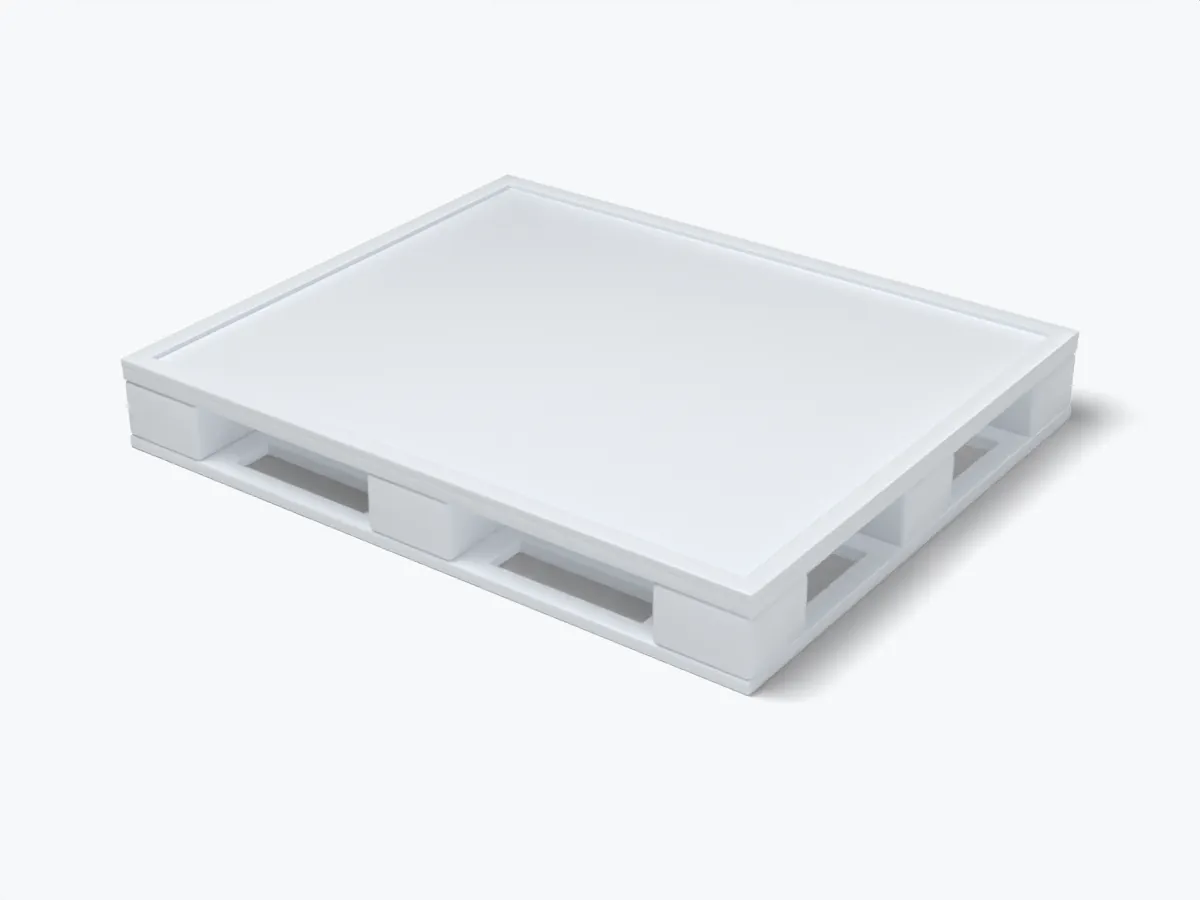
What a dairy puts on a pallet
Fluid milk leaves the filler in plastic crates or corrugated cases, stacked several high and wrapped onto the pallet. Milk weighs roughly 8.6 lb per gallon, so a full stack of gallons is one of the densest loads in food distribution, and the dynamic rating is the first number to check.
Cultured lines (yogurt, sour cream, cottage cheese) ship trays of cups that are light per case but tall per stack. Butter goes out in cases. Cheese plants move blocks in boxes and barrels into aging rooms, where they sit on racks for weeks or months before cutting and packing.
Dry dairy is a different load again: milk powder, whey and lactose in multiwall bags or bulk bags. Bags slump and pinch, so the deck needs a smooth top with no raised ribs that cut paper plies.
Coolers, washdown and the aging room
Processing floors are cleaned with hot water, caustic and chlorinated or acid sanitizers. Wood soaks that up, swells and sheds splinters; a molded HDPE or PP copolymer pallet sheds water, takes the same chemicals and can be inspected wet. Many plants also color-code pallets by zone, one color for raw-milk receiving and another for finished goods, so a pallet from the tanker bay never drifts into packaging.
Finished-goods coolers run just above freezing. HDPE keeps its toughness at those temperatures and takes a forklift tine on a cold dock better than plain polypropylene homopolymer, which turns brittle as it cools. PP copolymer sits between the two and is common in dairy fleets.
The cheese aging room is where plastic pallets are worked hardest. A pallet that spans two beams under a full load for months can creep (sag slowly) even when it passed a short racked test. Ask the maker how its racked rating was tested and for how long, and prefer a model with steel or fiberglass reinforcement in the deck if the hold is long.
Ice cream plants sit at the cold end of dairy. Hardening tunnels and deep-freeze storage run far below the cheese cooler, and tubs and novelty cartons there belong only on cold-tough resin. Evaporators and spray dryers making whey protein and lactose add hygroscopic powder that cakes in wood grain.
Rules that reach a dairy pallet
FDA's sanitary transportation rule under FSMA requires equipment used to move food to be suitable and adequately cleanable. It applies to shippers, loaders, carriers and receivers moving food by road or rail in the US, and a pallet that can be washed and checked between trips is an easy part of meeting it.
Grade A plants also answer to their state milk regulator under the Pasteurized Milk Ordinance. Ask your sanitarian what they expect of pallets in processing and filler rooms before you write the spec.
21 CFR 177.1520 lists the olefin polymers (polyethylene, polypropylene and their copolymers) allowed in food-contact articles. It governs the resin, not the finished pallet. There is no such status as an FDA approved pallet; what you can get is the maker's letter on the resin and colorants for that model.
Footprints and pallet types for dairy
40x40 is the footprint long tied to dairy, sized around the square milk crate. 48x40 is what a grocery DC expects at its receiving door, so many plants run both: 40x40 inside and on store routes, 48x40 for warehouse customers.
| Load | Footprint | Pallet type | Number to check |
|---|---|---|---|
| Milk crates on store routes | 40x40 | Hygienic stackable, open deck | Dynamic load at full crate height |
| Cases to grocery DCs | 48x40 | Food grade rackable with runners | Racked load on the customer's beams |
| Cheese in aging racks | 48x40 | Reinforced rackable, closed deck | Racked load and creep over the hold |
| Bagged powder and whey | 48x40 | Stackable, smooth solid deck | Static load under a second pallet |
| Empties going back to the plant | 40x40 or 48x40 | Nestable | Nested stack height per trailer |
Quoting a dairy fleet
Give us the footprint, the deck you want (open for drainage or solid for bags), the heaviest load and whether it will be racked, the cooler or freezer temperature, the quantity and the delivery ZIP. We answer with models that meet those numbers. A full order goes on a 53-foot van; a smaller one moves LTL.
Grade A used pallets can serve dry storage and the dock. For filler rooms and product-contact areas, buy new so the resin letter matches the pallet. When a crate-route fleet is cracked from years of dock work, we buy it back as regrind.
Questions buyers ask
Why is 40x40 called the dairy pallet?
It fits the square milk crate in a neat block with little overhang. Plants that sell to grocery DCs often keep 48x40 as well.
Which resin works best in a dairy cooler?
HDPE stays tough near freezing and is the common pick. PP copolymer also works; plain PP homopolymer is the one to avoid in the cold.
Can plastic pallets sit in a cheese aging rack for months?
Only a model rated for it. Ask for the racked load and how long it was tested, and look for reinforcement in the deck.
Do I need an FDA approved pallet for a dairy plant?
That status doesn't exist. Ask for the maker's letter that the resin meets 21 CFR 177.1520 and what your state milk regulator expects.
Do dairy pallets need to be white?
No. White and blue are common in processing because dirt and chips show up; any color works if your zone plan assigns it.
Sources
- 21 CFR 177.1520: olefin polymers in food-contact articles
- FDA: FSMA rule on sanitary transportation of human and animal food
Last reviewed November 8, 2026.